Pike Press Between Benches
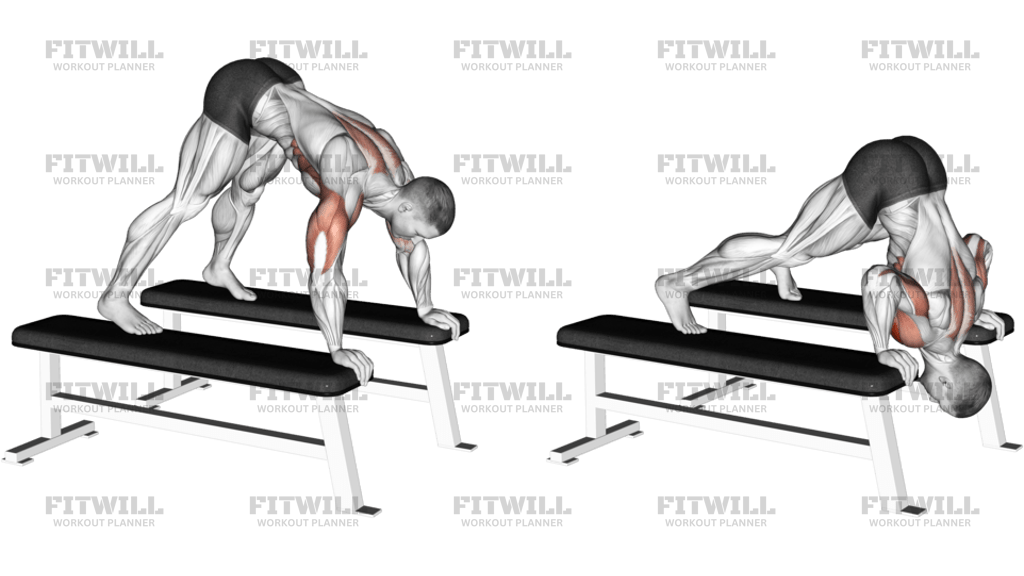
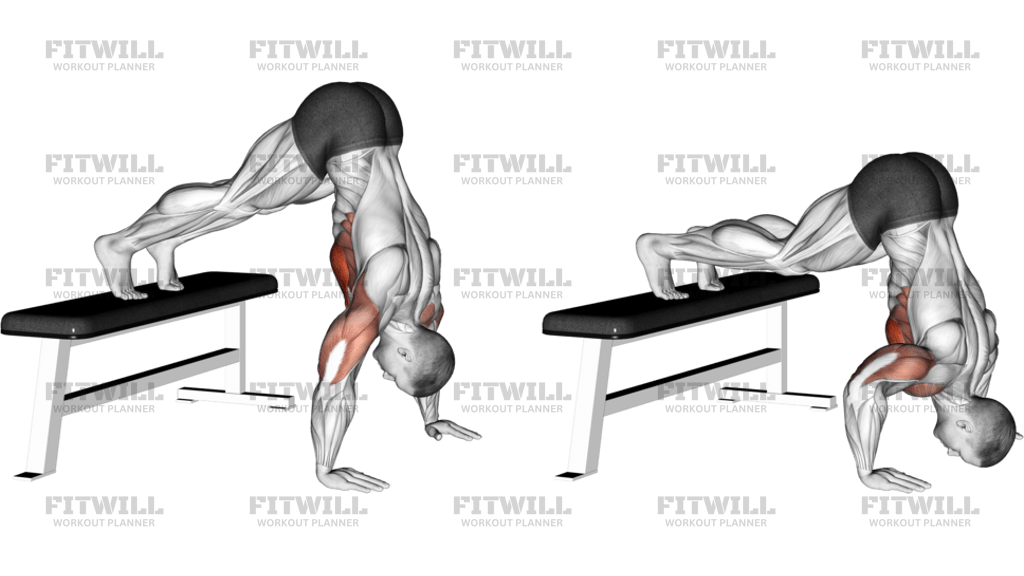
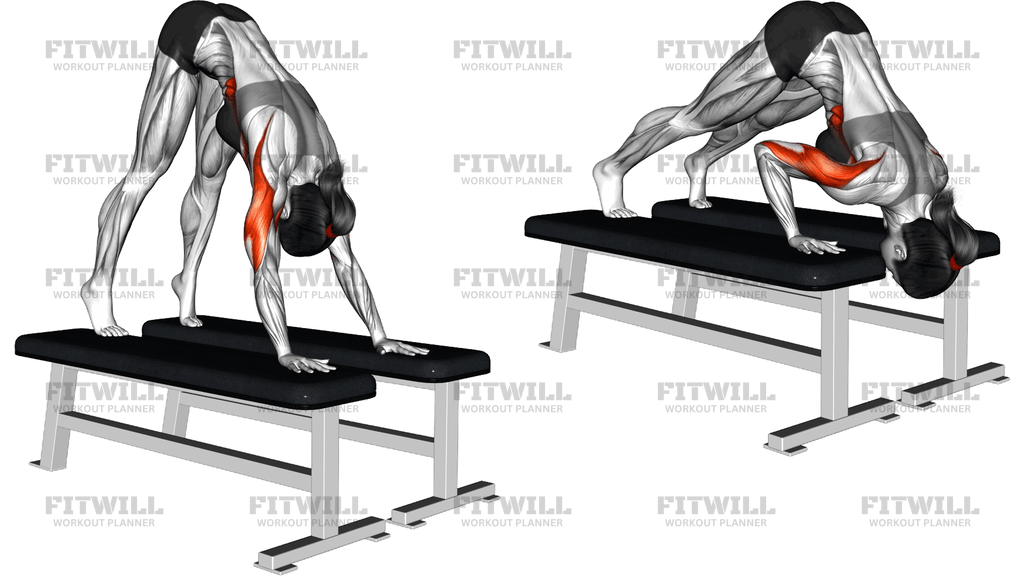
Pike Press Between Benches is a bodyweight shoulder press built around a fixed, elevated setup: your hands support you on one bench while your feet stay on another, creating a strong inverted-V position. That arrangement shifts a large share of the load onto the shoulders and triceps while the upper back and core work to keep the torso from collapsing as you press.
This exercise is especially useful when you want a pressing pattern that feels closer to an overhead press than a standard push-up. Because the hips stay high and the head travels down between the benches, the delts have to produce most of the force while the scapulae and trunk stabilize the body. It is a practical option for home training, calisthenics progressions, or accessory work when you want shoulder-dominant strength without external weights.
The setup matters more here than in many bodyweight drills. Your hands should be on the front bench with a grip that is roughly shoulder width, and your feet should be planted on the rear bench so the body forms a stable pike rather than a sagging plank. Keep pressure through the palms, lengthen through the legs, and tuck the ribs enough that the lower back does not take over when fatigue rises.
Each repetition should follow a clear vertical press path. Lower your head toward the gap between the benches by bending the elbows and letting them track at a slight diagonal, then press back up until the arms are straight and the shoulders are active without shrugging excessively. The goal is not to dive aggressively into the bottom; it is to own the path, keep the neck neutral, and preserve a smooth tempo from the first rep to the last.
Pike Press Between Benches can be a strong shoulder builder for beginners and advanced trainees alike, provided the range of motion matches current mobility and strength. Shorten the depth if the shoulders pinch, bring the feet closer if the load is too high, and slow the lowering phase if you want more control. When it is done well, this movement teaches pressing strength, shoulder stability, and body control in one compact exercise.
[ Workout Log & Planner ]
Put your next workout in Fitwill
Keep your plan and training log ready when you are.


Instructions
- Place one bench in front of you and one behind you, then set your hands shoulder-width on the front bench and your feet hip-width on the rear bench.
- Walk your feet back and your hands forward until your body forms a high inverted V, with your hips stacked above your shoulders and your legs mostly straight.
- Press firmly through your palms, keep your fingers spread, and brace your ribs so your lower back does not sag as you start the rep.
- Bend your elbows and lower your head between your hands toward the space between the two benches.
- Keep your forearms close to vertical and let your elbows track slightly back and out, not straight to the sides.
- Lower under control until your head is as deep as you can reach without neck strain or shoulder pinching.
- Exhale and drive through the palms to press your body back up, extending the elbows until your arms are straight again.
- Keep the pike shape at the top, then reset your breathing and repeat for the planned number of reps.
- Step down carefully from the benches after the last rep and release the setup before standing up.
Tips & Tricks
- Move your feet farther back only if you can keep the hips high; if the torso starts flattening, the load shifts away from the shoulders.
- Keep the head traveling between the benches, not forward in front of the hands, so the press stays closer to a vertical line.
- Use a smaller range of motion if the front of the shoulders feels jammed at the bottom.
- If your elbows flare wide, move your hands a touch narrower and think about pointing the elbows diagonally back on the descent.
- Squeeze the glutes and lightly tuck the pelvis to stop the lower back from arching as fatigue builds.
- A slow three-second lowering phase makes this variation much harder without needing extra equipment.
- Stop the set when the top position turns into a shrug or the hips start dropping between reps.
- Keep the benches steady and non-slippery; this exercise depends on a solid hand platform and secure footing.
- If the movement feels too heavy, bring your feet closer to your hands before you reduce the range.
Frequently Asked Questions
What does Pike Press Between Benches train most?
It mainly trains the shoulders, especially the delts, with the triceps and upper back helping to stabilize and finish the press.
Is Pike Press Between Benches more like a push-up or an overhead press?
It is closer to an overhead press because your torso stays in a pike position and the arms press the body upward almost vertically.
Where should my hands and feet go on Pike Press Between Benches?
Place your hands on the front bench about shoulder width apart and your feet on the rear bench about hip width apart so the body stays stable.
How deep should I go in Pike Press Between Benches?
Lower until your head moves between the benches and your shoulders stay comfortable, but do not force depth if the neck or front of the shoulder feels compressed.
Can beginners do Pike Press Between Benches?
Yes, but many beginners should start with their feet closer to their hands or use a floor pike push-up before taking this version.
Why do my elbows flare out during Pike Press Between Benches?
Usually the hands are too wide or the load is too hard. Narrow the grip slightly and think about bending the elbows back on a diagonal instead of straight out to the sides.
What should I do if Pike Press Between Benches bothers my neck?
Shorten the range and keep the back of the neck long. If the pressure is still there, use an easier pike angle before trying more depth.
How can I make Pike Press Between Benches harder?
Move your feet farther back, slow the lowering phase, or pause briefly near the bottom while keeping the hips high.
What is a good substitute if I do not have two benches?
A floor pike push-up or feet-elevated pike push-up gives a similar shoulder press pattern with less or more load, depending on the setup.