Cable Bent-Over One-Arm Lateral Raise
Cable Bent-Over One-Arm Lateral Raise is a shoulder isolation exercise that uses a low cable and single handle to load the rear and side delts while your torso stays hinged forward. The bent-over position changes the line of pull so the working arm has to lift against constant cable tension instead of a free weight that gets easier near the top. That makes the exercise useful for building shoulder control, upper-back awareness, and cleaner delt recruitment.
This movement is especially good when you want to train the shoulder from a slightly different angle than a strict standing lateral raise. The working side is the arm away from the machine, and the torso stays braced so the lift comes from the shoulder rather than the lower back or a twist through the ribs. The cable keeps tension on the repetition from the bottom to the top, which is why setup matters so much here.
A good rep starts with a stable hinge, soft knees, and a neutral spine. The hand should travel out and slightly back in an arc that feels like lifting the elbow away from the floor, not yanking the handle with the hand. If the weight is too heavy, the torso will rotate, the shoulder will shrug, and the cable will pull the body out of position before the delt can do the work.
Because the line of pull is angled, this exercise is usually best done with moderate to lighter loads and deliberate tempo. It fits well in shoulder accessory work, upper-back focused sessions, or as a rear-delt finisher after presses and rows. The goal is not to win with load; it is to keep the shoulder blade and upper arm organized while the cable provides steady tension through the whole lift.
If you are new to Cable Bent-Over One-Arm Lateral Raise, start with a short range and a strict pause near the top so you can feel the shoulder working without swinging. Use the handle and cable path to your advantage, keep the ribs quiet, and reset each repetition from the same hinged body position. Done well, it is a precise shoulder builder that rewards control more than brute strength.
[ Workout Log & Planner ]
Put your next workout in Fitwill
Keep your plan and training log ready when you are.


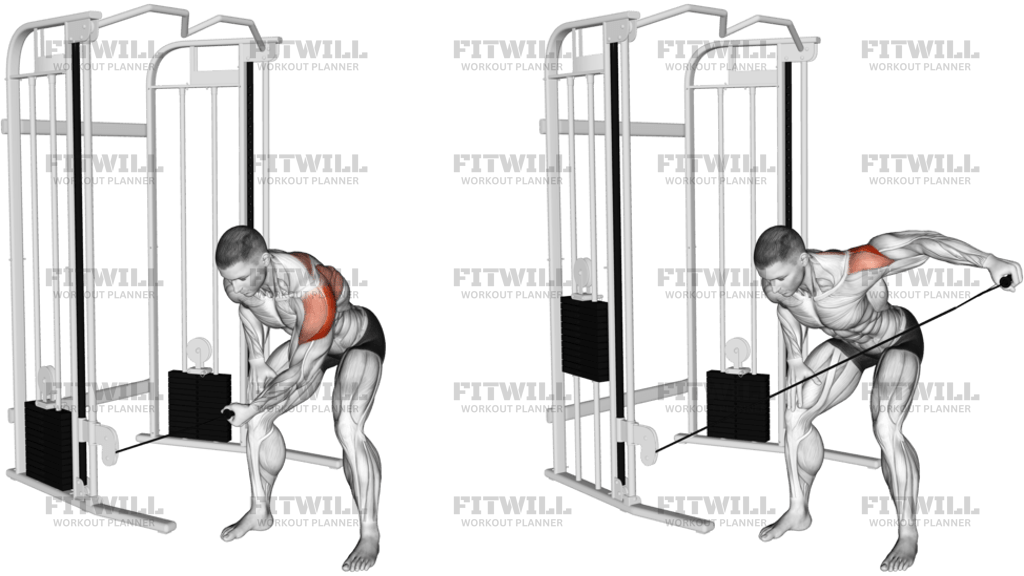
Instructions
- Set the cable pulley low and attach a single handle.
- Stand side-on to the stack, grab the handle with the outside hand, and step far enough away that the cable is taut at the start.
- Hinge forward at the hips with a flat back, soft knees, and your free hand braced on your thigh or knee for support.
- Let the working arm hang slightly in front of your body with a soft elbow and your shoulder set down, not shrugged.
- Brace your torso before each rep so your chest and hips stay square to the floor.
- Lift the handle out and slightly back in a smooth arc until the elbow reaches about shoulder height or just below it.
- Pause briefly at the top without twisting your torso or turning the thumb up aggressively.
- Lower the handle slowly until the arm returns to the start and the cable stays under control.
- Keep breathing steady, exhaling as you raise the handle and inhaling on the way down.
- Finish the set by bringing the handle back to the stack with control before you stand upright.
Tips & Tricks
- Keep the cable line coming from a low angle behind you; if the stack is too far forward, the raise starts to feel like a front-delt pull instead of a side-delt lift.
- Use your free hand on the thigh or knee to lock in the hinge and stop the torso from rotating as the handle rises.
- Think about leading with the elbow, not the hand, so the delt moves the arm instead of the forearm doing all the work.
- Stop just below shoulder height if the top range makes you shrug or roll the shoulder forward.
- Choose a load that lets the last few reps stay smooth; once you have to swing your ribcage or step into the pull, the weight is too heavy.
- Keep the elbow slightly bent the whole time so the joint stays stacked and the cable does not yank the arm straight.
- Lower the handle slowly enough that you can feel the delt resist the cable instead of letting the stack drop you back down.
- If your neck takes over, reset the shoulder down and away from the ear before starting the next rep.
- A small pause at the top usually works better than a big swing because the target muscle has to finish the rep, not momentum.
- Use a shorter range on your first sets if your torso keeps opening up or the cable pulls you out of position.
Frequently Asked Questions
What does Cable Bent-Over One-Arm Lateral Raise target most?
It primarily targets the deltoids, with the upper back helping you keep the shoulder blade steady while the arm lifts.
Why use a cable instead of a dumbbell here?
The cable keeps tension on the delt through the whole arc, especially at the bottom where a dumbbell has very little resistance.
How bent over should I be?
Hinge until your torso is clearly forward and almost parallel to the floor, but stop before your lower back rounds or your ribs flare.
Can beginners do Cable Bent-Over One-Arm Lateral Raise?
Yes. Start light, use a short range, and brace one hand on your thigh so you can keep the torso fixed.
What should my hand and elbow do during the rep?
The elbow should lead the lift in a smooth arc, while the hand follows the cable handle without turning the rep into a rowing motion.
Should I lift all the way to shoulder height?
Only if you can stay square and avoid shrugging. Many lifters get better shoulder tension by stopping just below shoulder height.
What is the most common mistake with the handle and cable?
Pulling too much with the hand and twisting the torso. Keep the cable line smooth and let the shoulder do the lifting.
Can I use this as a rear-delt exercise?
Yes, the bent-over setup makes it a good rear-delt accessory, although the side delt still does a lot of the work.