Circles Knee Stretch
Circles Knee Stretch is a standing mobility drill that guides the knees through a small circular path while the feet stay planted and the torso stays tall. It is typically used to warm up the lower body before squats, lunges, running, or any session that needs smoother knee and ankle motion.
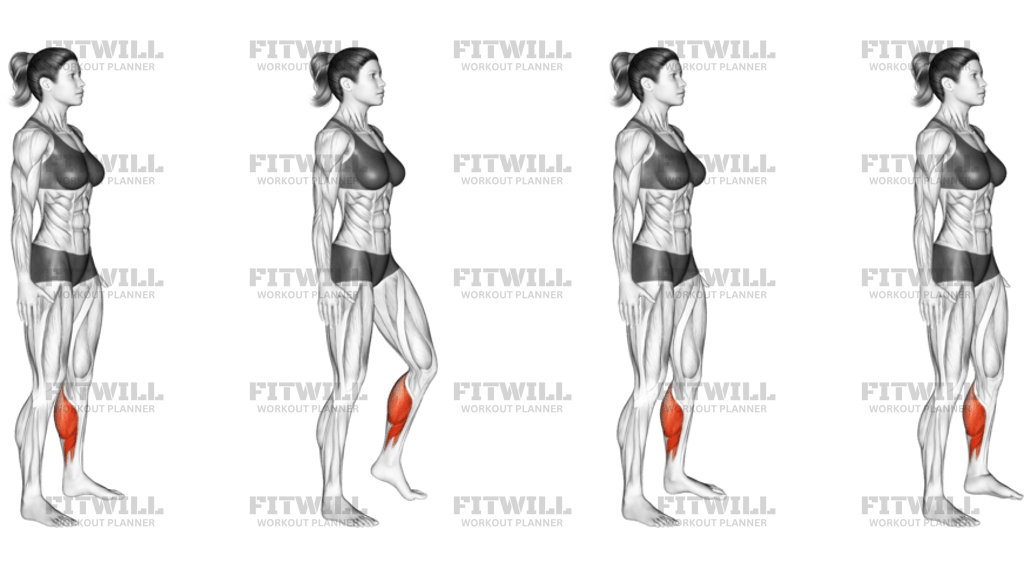
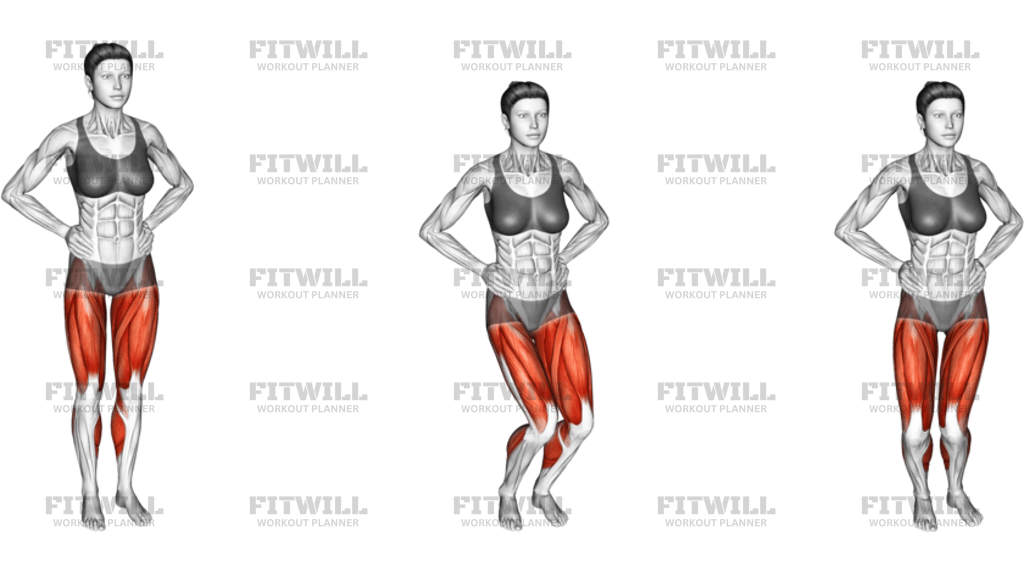
The image shows an upright stance with the hands on the hips and the knees slightly bent, which is a useful setup because it keeps the pelvis quiet while the lower legs do the moving. That position helps you feel whether the circle is actually happening around the knee line instead of turning into a hip sway, a forward fold, or an uncontrolled twist.
Keep the motion small and deliberate. The goal is not to force a deep stretch, but to trace a smooth circle with the knees while the feet stay flat and the arches stay organized. When the circle gets too large, the heels lift, the hips rock, and the movement stops being a clean knee drill. A short, even path is usually more useful than a dramatic one.
This drill is most effective when the knees feel stiff and you want a low-impact way to prepare the joints for work. It can also be a good recovery or reset movement between harder exercises because it encourages circulation without loading the legs heavily. Breathe steadily, keep the range pain-free, and stop if the motion feels pinchy or unstable instead of loose and controlled.
[ Workout Log & Planner ]
Put your next workout in Fitwill
Keep your plan and training log ready when you are.


Instructions
- Stand on the exercise mat with your feet about hip-width apart and your toes pointing forward, then place both hands on your hips.
- Soften both knees slightly and stack your ribs over your pelvis so your torso stays tall and centered over your feet.
- Shift the knees forward just enough to feel the lower legs load without lifting the heels or rolling onto the toes.
- Guide both knees toward one side to begin a small circle, keeping the chest quiet and the hips level.
- Continue the circle through the back and the other side so the motion stays smooth instead of jerky.
- Keep the movement small enough that your feet stay flat and your pelvis does not sway from side to side.
- Breathe out through the more demanding part of the circle and inhale as you pass through the easiest portion.
- Complete the desired reps, then reverse direction and repeat the same number of circles on the other side.
- Finish by standing tall again before walking away or moving into the next drill.
Tips & Tricks
- Keep the circle small enough that both feet stay glued to the mat.
- Think of the knees tracing a smooth loop over the midfoot, not a big hip circle.
- If the heels lift, the circle is too large or the weight has drifted too far forward.
- Hands on the hips should stay quiet; if your shoulders start to lean, reset the stance.
- A slight knee bend is enough, so do not sink into a squat to create more motion.
- Move both knees together so one leg does not twist ahead of the other.
- Keep the arches active so the lower leg stays organized instead of collapsing inward.
- Use this as a warm-up when the knees feel stiff after sitting or before lower-body training.
- If the motion feels pinchy inside the knee, shorten the path or stop and switch drills.
Frequently Asked Questions
What does Circles Knee Stretch train?
It improves knee mobility and control while also warming the ankles, calves, and hips.
Should my feet move during the circle?
No. Keep the feet planted and let the knees trace the circle while the lower body stays organized.
How big should the knee circles be?
Small. The path should stay smooth without heel lift, hip sway, or twisting through the torso.
Can beginners do this exercise?
Yes. It is a low-impact bodyweight drill, so beginners can use a very small range and slow tempo.
Why do I feel this in my calves?
The calves help stabilize the lower leg and keep the feet grounded, so some tension there is normal.
What is the most common mistake?
Turning it into a hip circle or bouncing through the path instead of making a controlled knee loop.
Should I do both directions?
Yes. Complete the same number of circles in each direction so the movement stays balanced.
When is this best used in a workout?
It works well in the warm-up, between lower-body sets, or during recovery sessions when the knees feel stiff.