Alternating Step Out
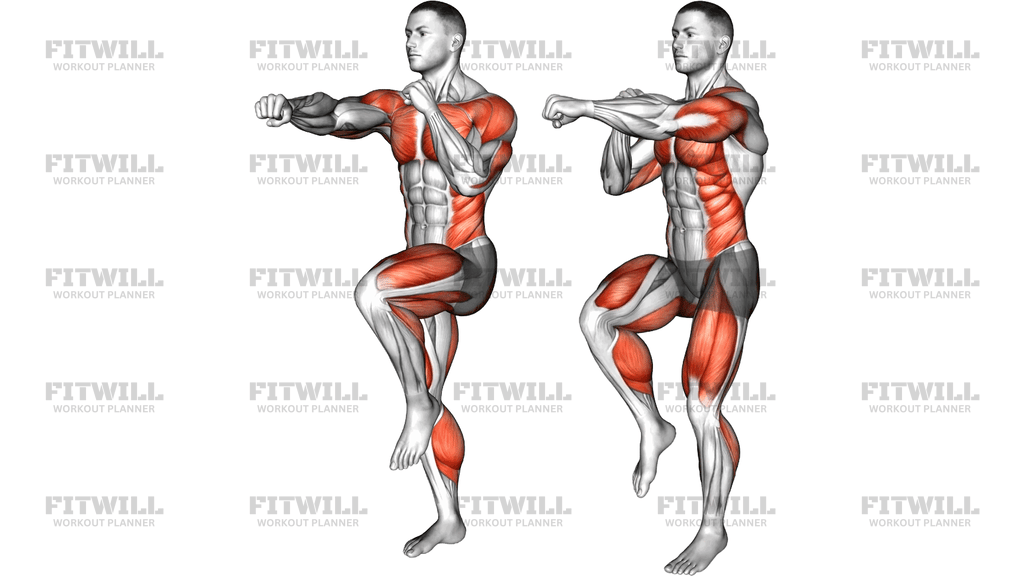
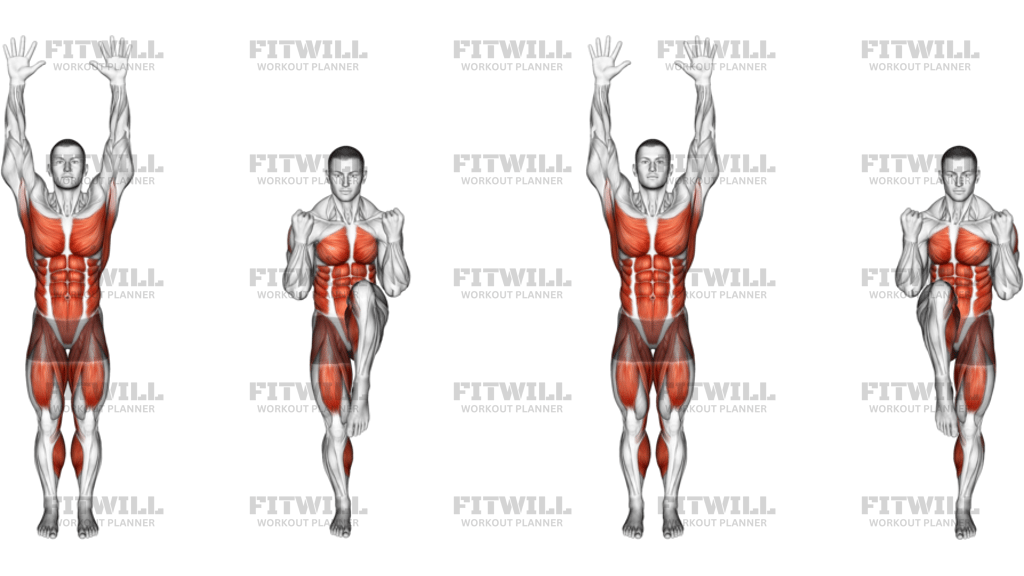
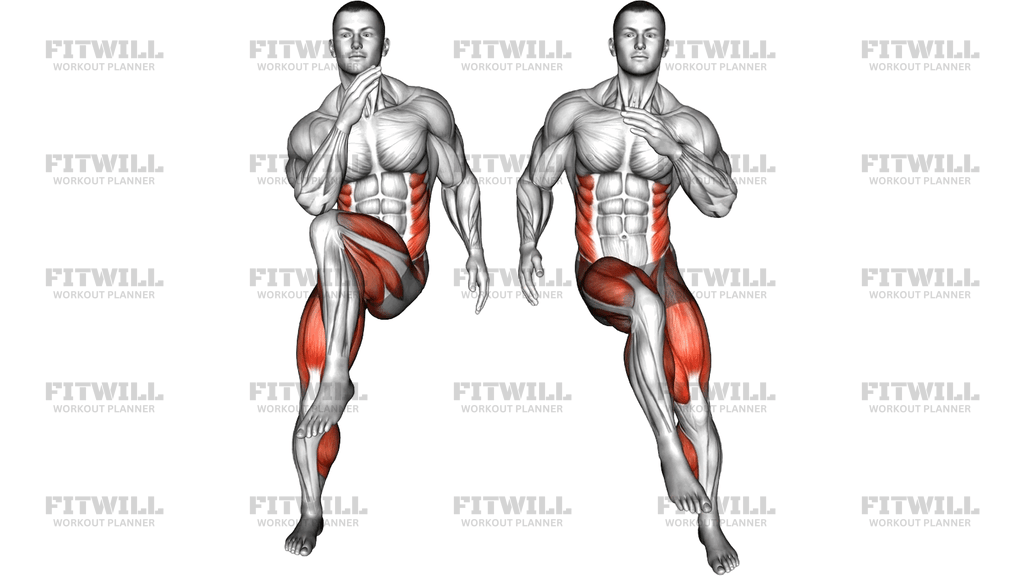
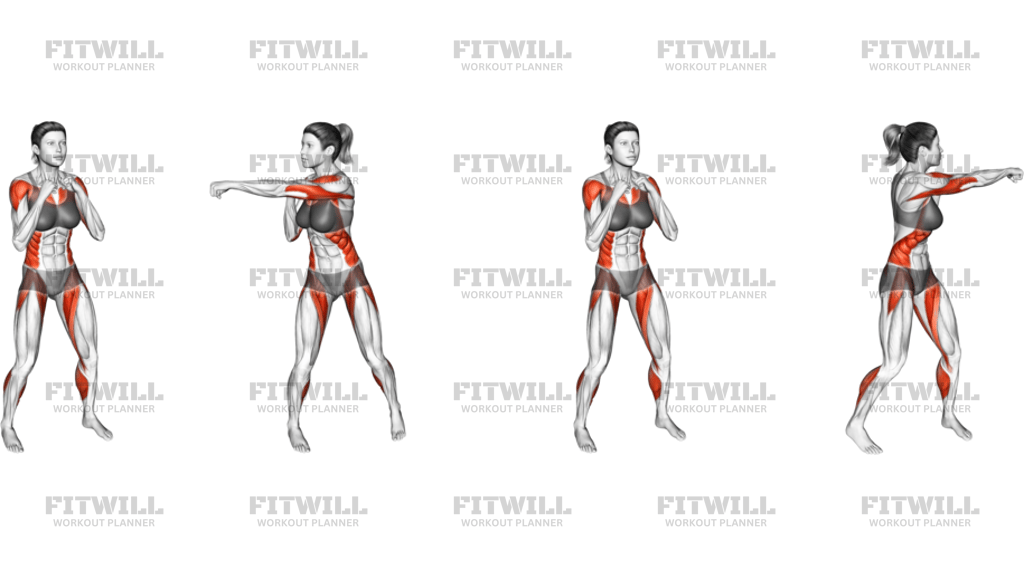
Alternating Step Out is a bodyweight lateral lower-body drill that teaches you to shift your weight cleanly from side to side while keeping the torso tall and the knees aligned. In the image, the stance is narrow at the start, then each repetition steps one leg out to the side, loads the hip and knee of that working leg, and returns to center before alternating to the other side. It is more useful as a controlled athletic warm-up, movement prep, or conditioning drill than as a pure strength exercise.
The movement trains the quads, glutes, adductors, outer hip stabilizers, calves, and trunk to work together when the body moves laterally. That makes it relevant for field sports, court sports, and any workout that needs side-to-side control. Even though the exercise looks simple, the setup matters: if the feet are too close, the step is too long, or the chest collapses forward, the working leg loses tension and the drill turns into a sloppy shuffle instead of a useful pattern.
A good rep starts from a neutral, athletic stance with the feet under control, the chest lifted, and the hands held in front of the body for balance. Step one foot out to the side, sit into that hip, and keep the opposite leg long enough to help you balance without locking the knee. The planted foot should stay flat and the knee should track over the middle toes as you load the side you stepped toward.
Return by pressing the floor away through the whole foot, bringing the body back to center, and then alternating to the other side. The tempo should be smooth and deliberate, with no crash into the bottom of the step and no sway through the trunk. Breathe steadily, exhale as you push back to center, and keep the neck relaxed so the hips and legs can do the work.
Use Alternating Step Out when you want a low-impact lateral pattern that reinforces coordination, balance, and lower-body control without needing equipment. It fits well in warm-ups, circuit training, general conditioning, or as a prep movement before squats, lunges, jumps, or change-of-direction work. If the knees cave inward, the hips drop unevenly, or the step becomes noisy and rushed, shorten the range and slow the pace until each side feels stable and repeatable.
[ Workout Log & Planner ]
Put your next workout in Fitwill
Keep your plan and training log ready when you are.


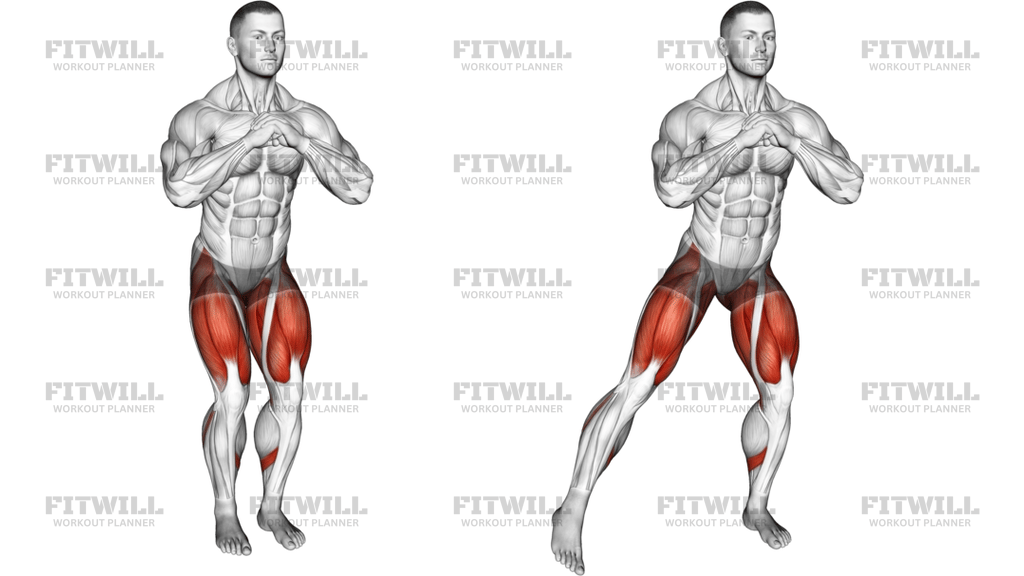
Instructions
- Stand tall with your feet about hip-width apart and your hands lightly in front of your chest for balance.
- Keep your weight centered over both feet, ribs stacked over your pelvis, and eyes forward before you start.
- Step your right foot out to the side and let the right knee bend as you sit into the right hip.
- Keep the left leg straighter but relaxed so it can help you balance without locking out hard.
- Track the right knee over the middle toes and keep the right foot flat as you load the step.
- Press through the whole right foot to return to the middle with control.
- Repeat the same step-out on the left side, alternating sides for the full set.
- Keep the movement smooth and quiet, and exhale each time you drive back to center.
Tips & Tricks
- Make the step wide enough to load the hip, but not so wide that your trunk has to lunge over to reach it.
- Keep your toes mostly forward so the knee can track cleanly instead of collapsing inward or twisting out.
- Use the first inch of the step to control the descent; do not drop into the side step.
- Think of pushing the floor away with the whole foot, not just the inside edge of the arch.
- If the trailing leg starts crossing behind you, shorten the step and stay square to the front.
- Keep your hands up at chest height so you do not lean or swing your arms to create momentum.
- Treat each side like its own rep and reset your balance before switching directions.
- If you feel it mostly in the low back, reduce the range and keep the ribs from flaring forward.
Frequently Asked Questions
What muscles does Alternating Step Out work?
It mainly hits the quads, glutes, adductors, and outer hip stabilizers, with the calves and core helping keep each side stable.
Is this exercise the same as a side lunge?
It is similar, but the Alternating Step Out is usually more of a controlled step-and-shift drill than a deep side lunge.
Should my planted foot stay flat during the step out?
Yes. Keep the foot flat so you can load the hip and knee evenly instead of rolling onto the outside edge.
How low should I go on each side?
Go only as low as you can while keeping the torso tall, the knee tracking over the toes, and the opposite leg under control.
Can beginners do Alternating Step Out?
Yes. Beginners usually do best with a shorter step, slower tempo, and no added load.
What is the biggest form mistake to watch for?
The most common mistake is letting the knee cave in or the torso lean too far toward the stepping leg.
Where does this fit in a workout?
It works well in warm-ups, conditioning circuits, agility prep, or as a bridge into squats, lunges, and jump work.
How can I make the drill harder?
You can increase speed without losing control, step farther out, or add a light external load once the side-to-side pattern stays clean.