Crawl To Crab
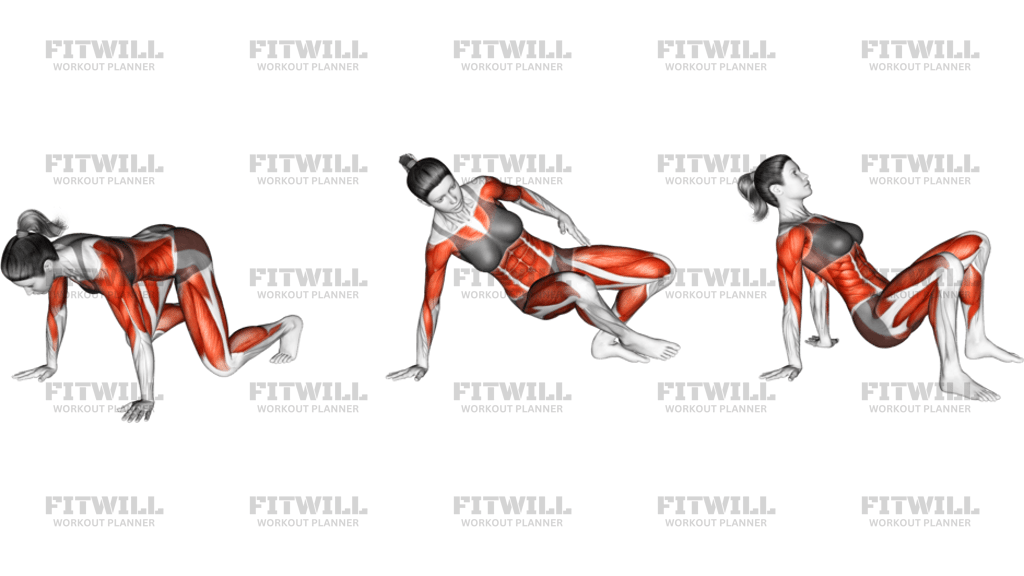
Crawl To Crab is a floor transition drill that moves you from an all-fours crawl into a crab or reverse-tabletop position using only body weight. The exercise asks you to shift your weight, rotate your hips, and control your hands and feet as you travel across the floor, so it trains coordination as much as strength. It is useful when you want a movement that builds shoulder stability, trunk control, hip mobility, and body awareness at the same time.
The crawl phase emphasizes a braced torso, steady shoulder position, and quiet hips while you move on hands and feet. The crab phase adds the opposite demand: you must open the chest, support your body behind you, and keep the hips lifted without collapsing into the shoulders or lower back. Because the movement changes orientation mid-rep, your setup matters. If your hands are too far behind you, your wrists and shoulders will feel strained; if your crawl is too rushed, the transition becomes sloppy and the hips swing instead of rotating under control.
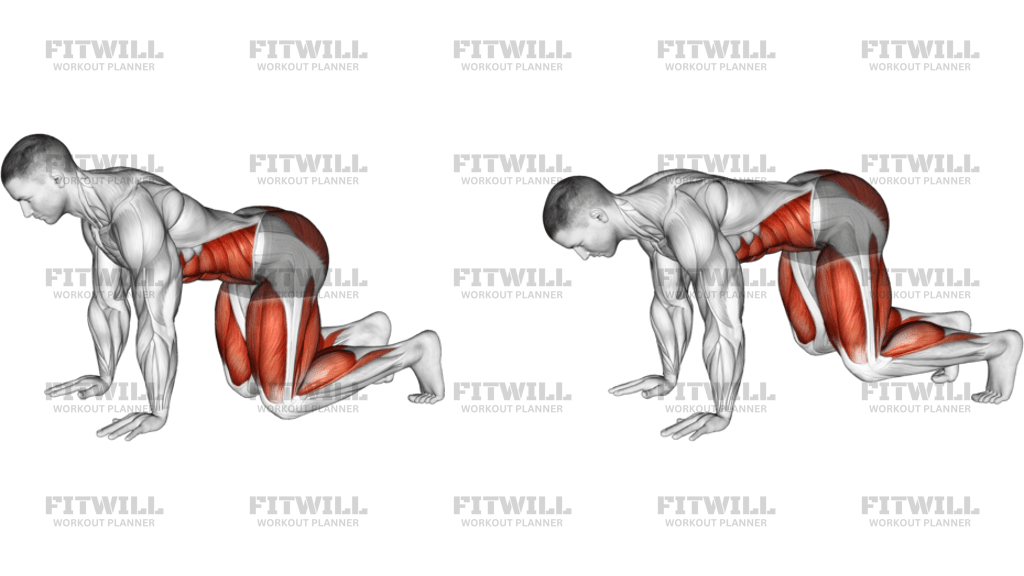
A clean rep starts from a stable crawl with the knees under the hips and the hands under the shoulders. From there, you step and rotate through the middle of the movement until you can sit into the crab position with both hands behind you and the feet planted. In the finish, the chest should stay open, the ribs should not flare, and the weight should be shared by the hands and feet rather than dumped into the wrists or neck. Return the same way with control so the transition stays smooth and repeatable.
This drill works well in warm-ups, movement prep, conditioning circuits, and athletic sessions that need floor agility without heavy loading. It is especially useful for beginners who need practice moving between quadruped, seated, and bridged floor positions, and for more advanced trainees who want a coordination challenge before faster ground-based work. The main goal is not speed; it is precise control through the crawl, the turn, and the crab position.
[ Workout Log & Planner ]
Put your next workout in Fitwill
Keep your plan and training log ready when you are.


Instructions
- Start on all fours with your hands under your shoulders, knees under your hips, and toes tucked so you can travel smoothly.
- Keep your spine long and your head neutral, then lift your knees a few inches so you are supporting yourself on your hands and feet.
- Move one hand and the opposite foot at the same time to begin the crawl, keeping your hips low and square to the floor.
- After a controlled crawl step, rotate your body by turning onto one hand and bringing the other side of the body through the middle.
- Shift your weight into a seated crab position with both hands on the floor behind you and your fingers turned away from your body or slightly out as tolerated.
- Plant both feet, press through your hands, and lift your hips into the reverse-tabletop crab shape without shrugging your shoulders.
- Open your chest and keep your ribs from flaring while you hold the top position for a brief pause.
- Reverse the path with control by lowering the hips, rotating back through the middle, and returning to the crawl without collapsing into the floor.
- Breathe out during the transition and breathe in as you re-establish each stable position.
- Repeat for the planned distance or number of transitions, keeping every rep smooth rather than fast.
Tips & Tricks
- Keep your shoulders active in the crawl so your upper back does not sink between your hands.
- If your wrists feel crowded in crab, turn your fingers slightly out and place your hands a little farther from your hips.
- The crawl step should stay low and quiet; if your hips bounce up and down, shorten the step.
- Rotate through the torso and hips together instead of spinning only through the shoulders.
- In the crab hold, push the floor away and keep the chest open rather than letting the elbows collapse.
- A small pause in the crab position makes the transition cleaner and helps you own the reverse-tabletop shape.
- Use a smooth floor and enough space to travel without bumping your feet or hands into each other.
- Stop the set if your neck starts jutting forward or if the transition turns into a fast flop between positions.
Frequently Asked Questions
What does Crawl To Crab train?
It trains shoulder stability, trunk control, hip mobility, and coordination through a crawl-to-reverse-tabletop transition.
What is the start position for this drill?
Start on hands and knees or in a low crawl position with the shoulders stacked over the hands and the hips ready to travel.
What should the crab position look like?
Your hands should be behind you on the floor, your feet planted, your chest open, and your hips lifted into a reverse tabletop.
Should my hands point forward or backward in the crab?
Most people do best with fingers angled slightly out or away from the hips so the wrists can stay comfortable while supporting body weight.
What is the most common mistake in Crawl To Crab?
Rushing the transition and losing control of the hips is the most common problem, especially when moving from crawl to crab.
Is this exercise good for beginners?
Yes, beginners can use it as a low-load coordination drill as long as the crawl and crab positions stay comfortable and controlled.
How can I make the movement easier?
Take smaller steps, keep the crawl lower to the floor, and pause longer in each position before rotating to the other side.
How can I make it more challenging?
Travel farther, slow the transition down, or add a short hold in the crab position without letting the hips sag.
What if my wrists hurt in the crab position?
Shorten the time under load, adjust the hand angle slightly outward, and keep the hands a little farther from the hips so the wrists are not forced too far back.