Spider Plank
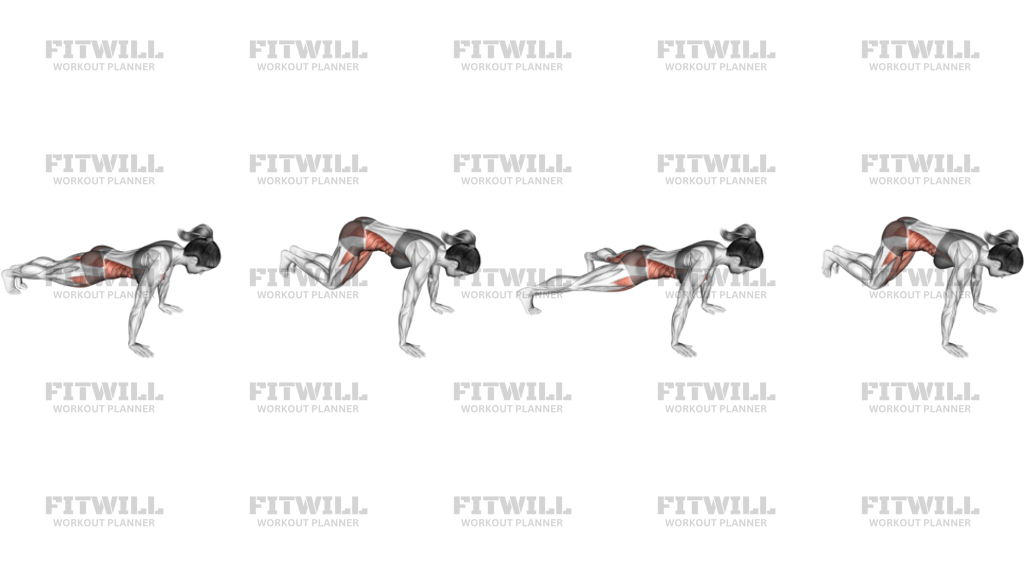
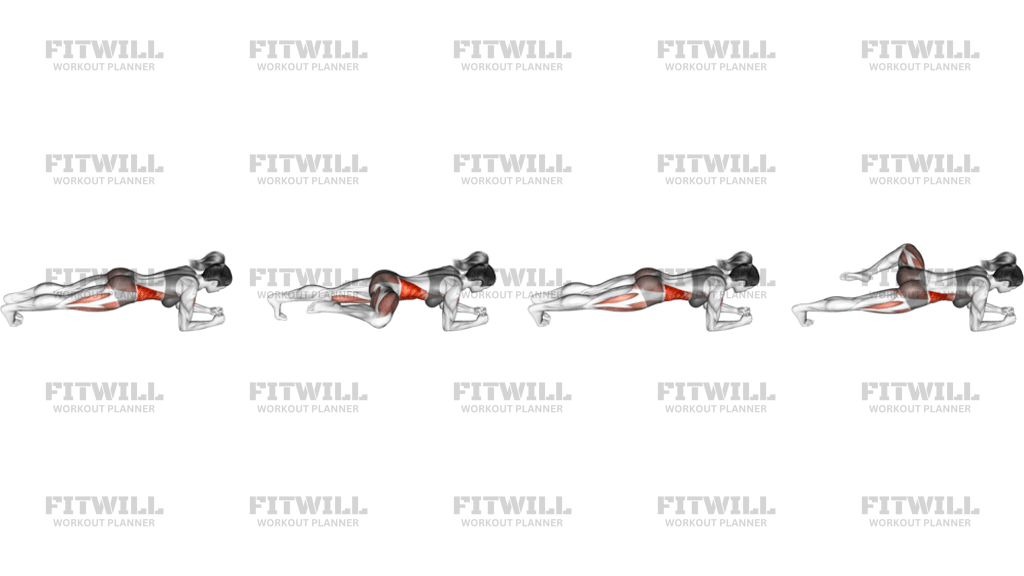
Spider Plank is a bodyweight plank variation that combines isometric trunk control with a controlled knee drive toward the elbow. The movement is usually done from a forearm plank, with the shoulders stacked over the elbows and the feet set far enough apart to keep the hips steady while one leg moves. It trains the ability to keep the torso quiet while the hip moves, which is why it shows up in core work, athletic warmups, and conditioning circuits.
The exercise emphasizes the anterior core, obliques, hip flexors, and glutes while the shoulders and upper back work hard to keep the plank position from collapsing. That combination makes the drill useful when you want core strength that carries over to crawling, sprinting, climbing, and other patterns that demand trunk stiffness with alternating leg motion. The quality of the rep matters more than how far the knee travels.
Setup is the main determinant of success. If the elbows are too far forward, the shoulders take over; if the feet are too narrow, the hips wobble and the spine twists. A good Spider Plank starts with a straight line from head to heels, a braced midsection, and a slight posterior pelvic tilt so the low back does not sag as the knee comes forward. The goal is to keep the supporting side still while the moving knee tracks cleanly toward the same-side elbow.
Each repetition should look smooth, not rushed. Drive one knee out and forward under control, bring it close to the elbow without bouncing, then return the leg to the plank and reset before switching sides. Keep breathing short and deliberate so the brace stays intact through the movement. The nonworking side should not shift or rotate to chase extra range.
Spider Plank is a good choice when you want a bodyweight core drill that can be scaled by stance width, range of knee travel, or tempo. It is beginner-friendly if the athlete can hold a solid forearm plank first, but it becomes sloppy quickly when fatigue causes hip sway, shoulder shrugging, or a low back arch. Treat it as a controlled anti-rotation exercise with an active leg drive, not as a fast mountain climber replacement.
[ Workout Log & Planner ]
Put your next workout in Fitwill
Keep your plan and training log ready when you are.


Instructions
- Place your forearms on the floor with your elbows under your shoulders and your feet extended behind you.
- Step the feet slightly wider than hip width so you can keep the hips level during the knee drive.
- Lift into a forearm plank and line up your head, shoulders, hips, and heels.
- Brace your abs and lightly tuck your pelvis so your low back stays flat.
- Drive one knee forward and out toward the same-side elbow without letting the torso twist.
- Pause for a moment when the knee reaches its highest controlled position.
- Return that foot to the plank position under control and re-stiffen the body.
- Alternate sides for the planned number of repetitions while keeping your breathing steady.
Tips & Tricks
- Think of the plank as the main lift: if your forearm support position fails, shorten the knee drive before you chase more range.
- Set the feet a little wider on purpose; a narrow stance usually turns this into a hip-roll drill instead of a controlled core exercise.
- Keep the elbows planted directly under the shoulders so the front delts do not turn the set into a shoulder endurance hold.
- Reach the knee toward the elbow, not across the body, if you want to avoid excessive spinal rotation.
- Exhale as the knee comes forward and keep the ribs from flaring as you return to the plank.
- If the low back starts to arch, squeeze the glutes harder and reduce the knee travel for the rest of the set.
- Move slowly enough that each rep has a clear start, drive, pause, and reset rather than a swinging rhythm.
- Stop the set when the shoulders shrug or the hips start to drift side to side.
Frequently Asked Questions
What does Spider Plank train most?
It mainly trains the core to resist rotation while one leg drives forward, so the abs, obliques, and hip flexors work together.
Is Spider Plank done on the hands or forearms?
This version is shown from a forearm plank, with the elbows under the shoulders and the body supported on the forearms and toes.
Should my hips stay square during the knee drive?
Yes. A small amount of movement is normal, but the pelvis should stay mostly level instead of twisting open as the knee comes forward.
How wide should my feet be?
Slightly wider than hip width is usually enough to keep the plank stable without making the exercise too easy.
What is the most common mistake?
The most common mistake is rushing the knee drive and letting the lower back sag or the hips swing side to side.
Can I make Spider Plank easier?
Yes. Shorten the knee travel, widen the feet, or hold each plank position longer between reps until you can control the motion.
Does this exercise count as cardio or strength work?
It can serve both purposes, but its main value is core strength and trunk control with a conditioning effect when done for time.
How do I progress Spider Plank?
Progress by slowing the tempo, adding a longer pause at the top of the knee drive, or increasing the number of controlled reps per side.