Pike To Cobra
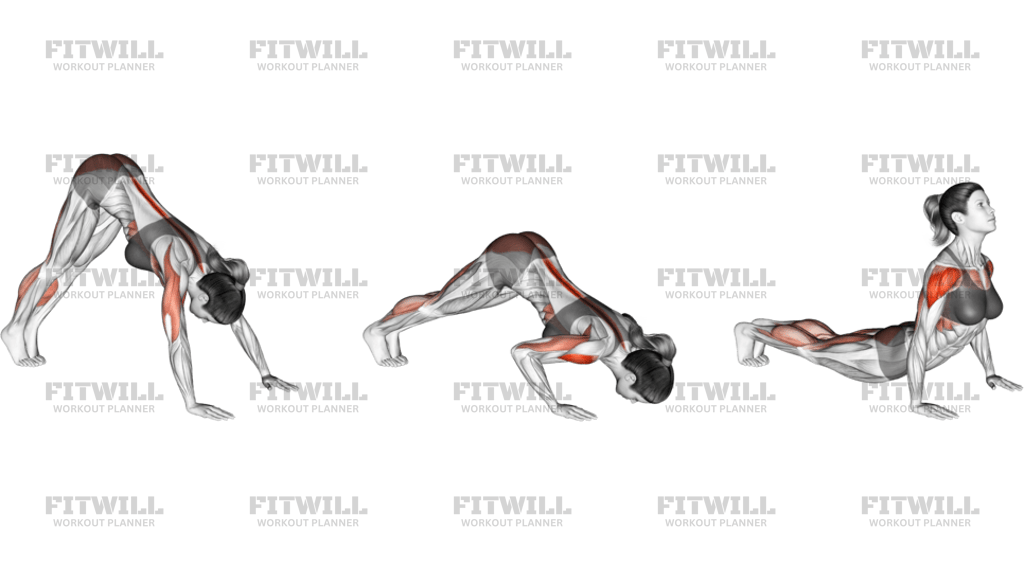
Pike to Cobra is a bodyweight floor drill that moves from a high pike into a pressed, chest-open cobra position. It is useful when you want to train shoulder mobility, spinal extension, and trunk control in the same repetition instead of treating them as separate drills. The exercise is most effective when the transition is smooth and deliberate, because the quality of the path matters more than the size of the range.
From the pike side, the body is organized around the shoulders, upper back, and core. The hands stay planted while the torso travels forward and the hips descend into extension. That forward shift asks the shoulders to work through flexion and the scapulae to stay controlled, while the abdomen prevents the lower back from taking over. When the rep is done well, you should feel active support through the shoulders and core rather than a loose collapse into the floor.
The setup matters because the transition changes leverage quickly. A stable hand position, a strong tripod through the palms, and a controlled pike angle make it easier to slide into cobra without dumping into the wrists, low back, or neck. Keep the ribs from flaring early, move the chest forward first, and let the hips follow instead of forcing the finish position. The exercise can be used as a mobility warm-up, a movement-quality drill, or a low-load accessory between heavier upper-body sessions.
Pike to Cobra is best performed with a calm tempo and a comfortable range. If the cobra position feels pinchy in the low back, shorten the travel and focus on length through the spine and shoulders. If the wrists complain, elevate the hands on a bench or reduce the amount of forward travel. The goal is a repeatable flow that builds shoulder opening, upper-back extension, and torso control without losing clean body alignment.
[ Workout Log & Planner ]
Put your next workout in Fitwill
Keep your plan and training log ready when you are.


Instructions
- Start in a high pike with your hands flat on the floor, shoulder-width apart, feet hip-width apart, and hips lifted into an inverted V.
- Press evenly through the palms, keep the arms long, and brace your midsection so your ribs stay controlled before you move.
- Shift your shoulders forward over your hands while lowering your chest between the arms.
- Let the hips travel forward and down as the spine lengthens into extension.
- Finish in a cobra-like position with the chest open, shoulders down, and the neck long.
- Pause briefly at the end of the range without collapsing into the low back.
- Exhale as you move forward and inhale as you return or reset.
- Push the floor away and lift the hips back up into pike under control.
- Repeat for the planned number of reps with the same smooth path each time.
Tips & Tricks
- Keep the movement smooth through the shoulders and spine instead of dropping the hips suddenly.
- If your low back feels compressed, shorten the cobra finish and keep more tension in the abdomen.
- Think about moving the chest forward first; the hips should follow, not lead the rep.
- Spread the fingers and press through the whole hand so the wrists do not take all the load.
- Do not shrug at the top; keep the shoulders moving down and away from the ears.
- A small bend in the elbows is fine if it helps you stay smooth and pain-free.
- Use a slow tempo so you can feel the transition rather than bouncing between positions.
- If the floor is too demanding, elevate the hands on a bench or step to reduce wrist and shoulder stress.
Frequently Asked Questions
What does Pike to Cobra train?
It mainly trains shoulder mobility, spinal extension, and trunk control, with the upper back and arms helping stabilize the transition.
Is Pike to Cobra a stretch or a strength exercise?
It is both. The pike-to-cobra transition opens the shoulders and chest while still asking the core and shoulder girdle to control the movement.
Where should I feel the exercise most?
You should feel it across the shoulders, upper back, chest, and midsection. The low back should not feel like it is doing all the work.
Can beginners do Pike to Cobra?
Yes. Beginners should use a shorter range, move slowly, and stop before the cobra position turns into a painful lumbar arch.
Why do my wrists feel overloaded in this movement?
The hands carry a lot of bodyweight during the forward transition. Spreading the fingers, pressing through the whole palm, or raising the hands on a bench can help.
Should my elbows stay locked out?
Keep the arms long, but do not force a hard lock if that makes the shoulders shrug or the wrists ache. A soft, controlled elbow angle is acceptable.
How is this different from a standard cobra stretch?
Pike to Cobra includes the forward shift from a high pike, so it asks the shoulders and core to control the transition instead of just holding the end position.
When should I use Pike to Cobra in a workout?
It fits well in a warm-up, mobility block, or accessory circuit where you want controlled shoulder opening without heavy loading.