Dumbbell Single Spider Curl With Chest Support
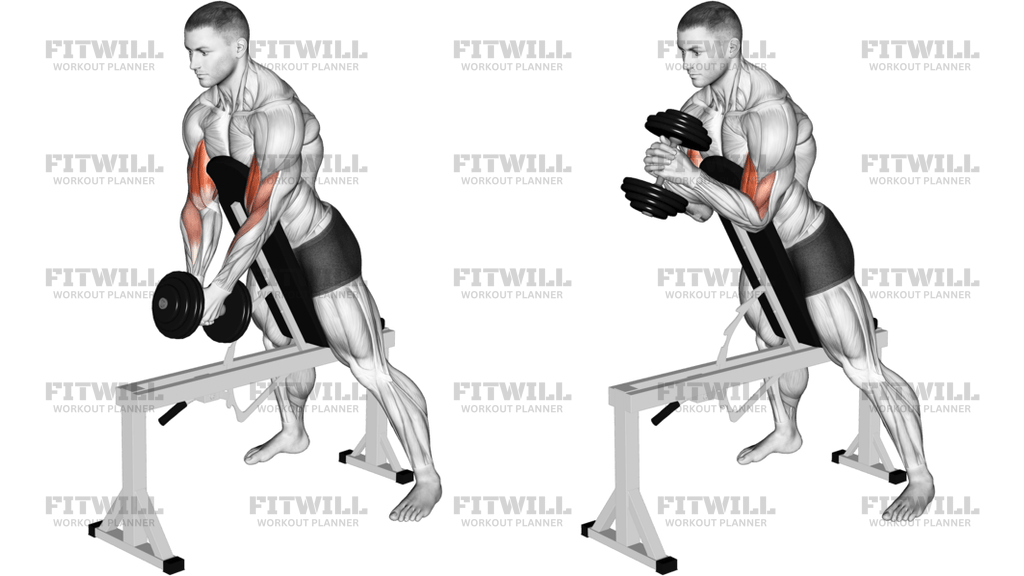
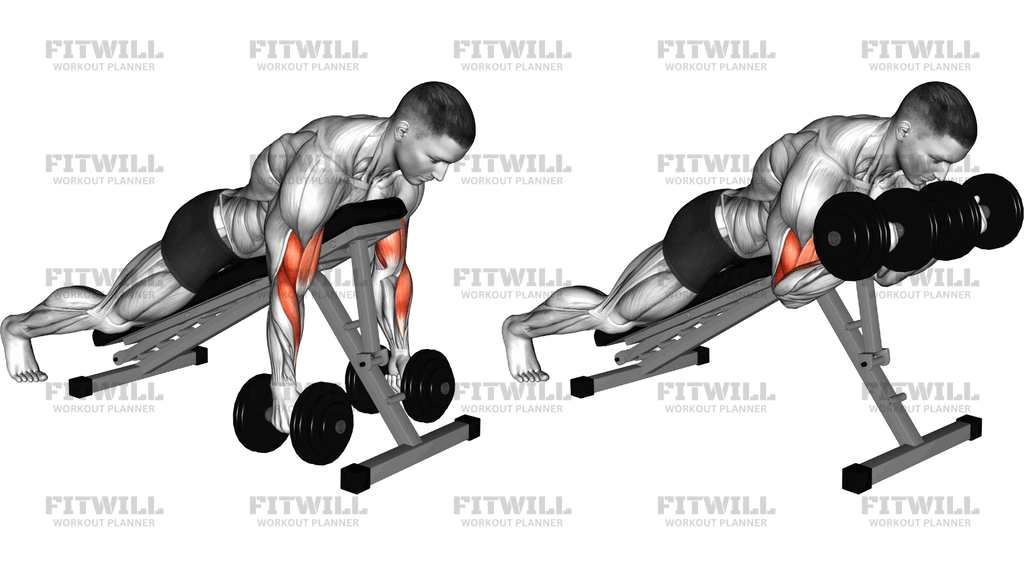
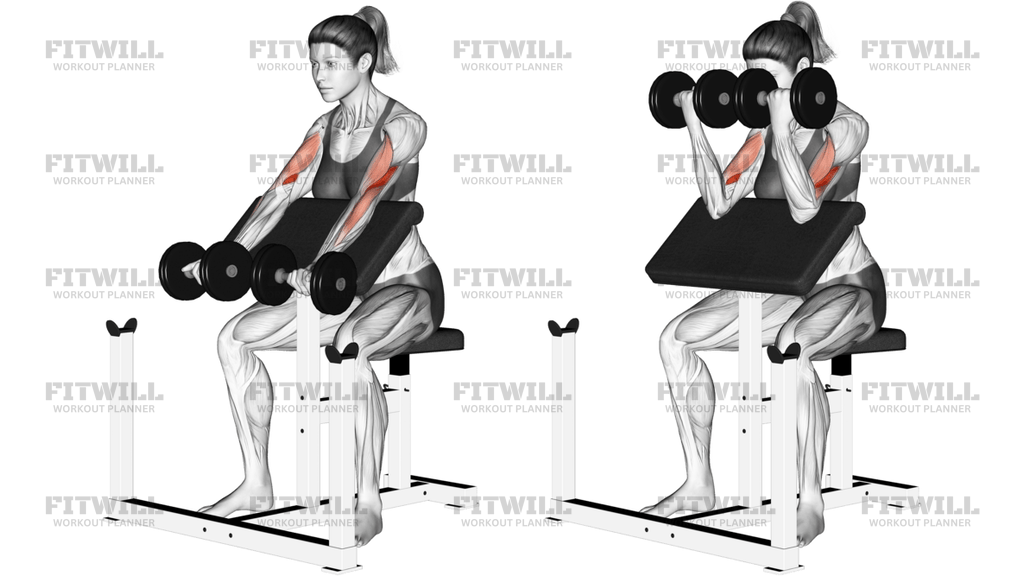
Dumbbell Single Spider Curl With Chest Support is a strict arm exercise built to keep the biceps working without help from hip drive, shoulder swing, or leaning back. The chest support changes the feel of the curl immediately: your torso is fixed to the pad, your upper arm starts from a dead hang, and the only real job left is to flex the elbow with control.
This variation is especially useful when you want cleaner biceps work than a standing curl usually provides. The biceps do most of the work, while the brachialis, brachioradialis, and forearm flexors help stabilize the elbow and wrist. Because the chest is braced against the bench, the set tends to feel more localized and more honest, which makes it a strong choice for accessory work, arm days, or any program that needs strict tension instead of body English.
The setup matters a lot. Set your chest on the sloped bench pad, let the working arm hang straight down, and keep your feet planted wide or staggered so you can stay balanced without pushing your torso off the pad. If you are using one dumbbell at a time, keep the non-working arm quiet and out of the way so the curling side stays honest from the first rep to the last.
Each repetition should begin from a fully controlled stretch, then curl up in a smooth arc until the dumbbell reaches the front of the shoulder or upper chest line. Keep the upper arm still against the support, then lower the weight slowly until the elbow nearly straightens again. That combination of a fixed chest, steady wrist, and controlled lowering phase is what makes Dumbbell Single Spider Curl With Chest Support such a good choice for strict biceps training.
Use this exercise when you want to clean up technique, reinforce elbow flexion strength, or keep tension on the biceps without involving the lower back. It works well for moderate-to-higher rep accessory sets, but only if the load stays light enough to prevent shrugging or twisting through the torso. If the chest starts lifting off the pad, the weight is too heavy or the set is too tired to stay productive.
[ Workout Log & Planner ]
Put your next workout in Fitwill
Keep your plan and training log ready when you are.


Instructions
- Set your chest against the sloped bench pad and plant your feet in a staggered stance for balance.
- Let the working arm hang straight down with a dumbbell under your shoulder and your wrist stacked over your forearm.
- Keep your shoulder slightly forward of the pad so the upper arm can stay still during the curl.
- Brace your midsection against the bench before you start the first rep.
- Curl the dumbbell up in a smooth arc toward the front of your shoulder without letting the elbow drift back.
- Squeeze the biceps hard at the top, but keep the wrist straight instead of bending it toward your face.
- Lower the dumbbell slowly until the elbow is almost fully straight and the biceps are loaded in the bottom position.
- Exhale as you curl up, inhale as you lower, and keep the torso pinned to the pad.
- Finish the set by lowering the dumbbell under control and stepping away from the bench without swinging.
Tips & Tricks
- Use a lighter dumbbell than you would for a standing curl; the chest support removes most cheating, so the biceps do the work.
- Keep the upper arm quiet. If the elbow slides back behind your torso, the shoulder starts helping too much.
- Pause for a brief squeeze at the top instead of chasing a bigger curl with the shoulder.
- Lower for two to three seconds to keep tension on the biceps and forearm flexors.
- Keep your chest glued to the pad. If you have to lift off the bench to finish reps, the load is too heavy.
- A neutral or slightly staggered stance helps you stay braced without rocking through the hips.
- Do not let the wrist bend back at the bottom; stack the dumbbell over the forearm so the elbow stays comfortable.
- If one side is much weaker, keep the reps single-arm and match the weaker side's clean range instead of forcing the stronger side higher.
- Stop the set when the curl turns into a shrug or torso twist, because those are the first signs the bench support is being lost.
Frequently Asked Questions
What does Dumbbell Single Spider Curl With Chest Support work most?
It mainly targets the biceps, with the brachialis and forearms helping to control the elbow and wrist.
Why use chest support for this curl?
The chest support removes body swing and makes the biceps work through a stricter range. That usually gives you a cleaner contraction than a standing curl.
Should my elbow stay in one place on the pad?
Yes. Let the upper arm stay nearly fixed while the forearm curls, and avoid letting the elbow drift far behind the bench as you lift.
How heavy should I go on Dumbbell Single Spider Curl With Chest Support?
Go lighter than you expect and pick a weight you can lower slowly without the chest coming off the pad or the wrist collapsing.
Is Dumbbell Single Spider Curl With Chest Support beginner-friendly?
Yes, as long as the bench is stable and the weight is light. The fixed chest position actually makes it easier to learn strict elbow flexion.
What are the most common mistakes on this exercise?
The usual mistakes are shrugging, swinging the dumbbell, bending the wrist back, and letting the torso leave the pad to finish the rep.
Can I do this with both arms at once?
You can, but the single-arm version makes it easier to keep each side honest and match the range of motion side to side.
What bench angle works best for Dumbbell Single Spider Curl With Chest Support?
A sloped pad that lets your chest stay supported while your arms hang freely is ideal. The goal is to keep the arms vertical at the bottom without needing to lean or kick the weight.
How should I breathe during the rep?
Exhale as you curl the dumbbell up and inhale as you lower it. That keeps the torso braced while the arm moves.