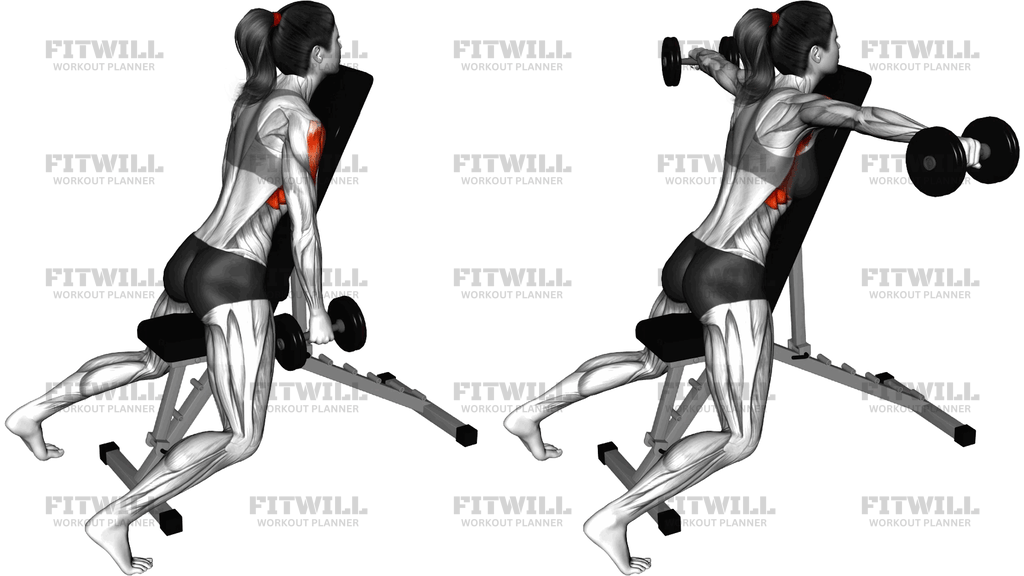
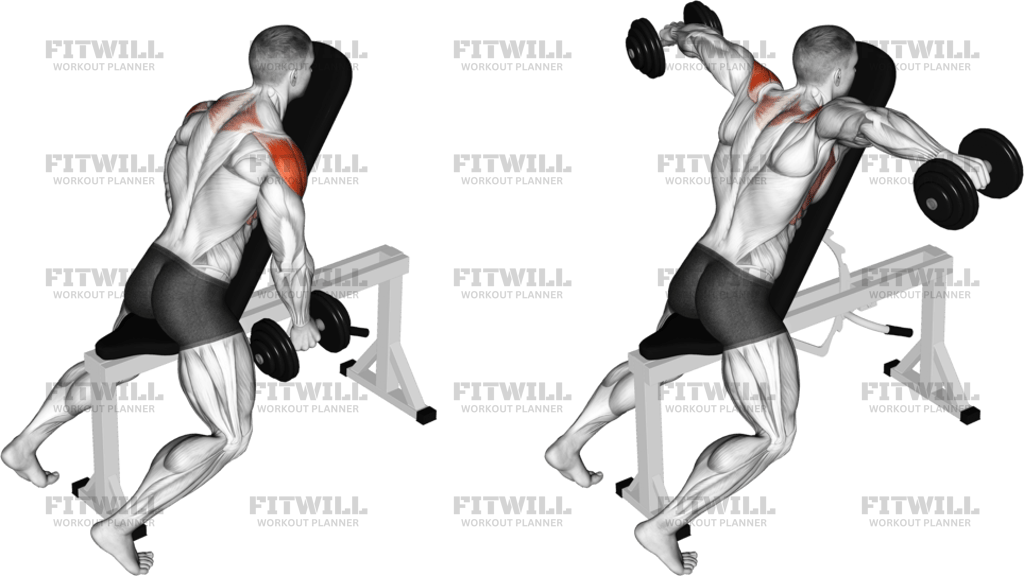
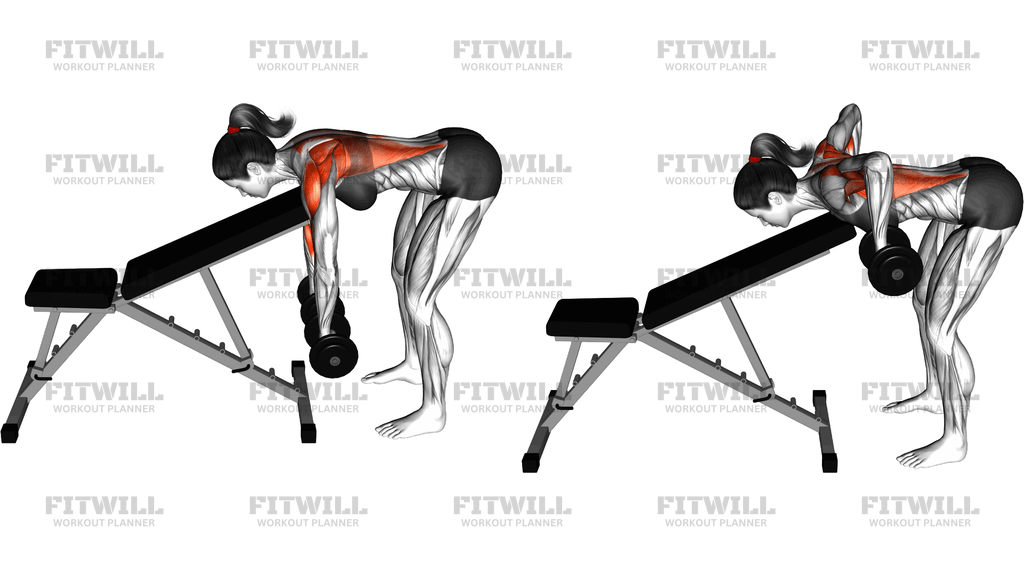
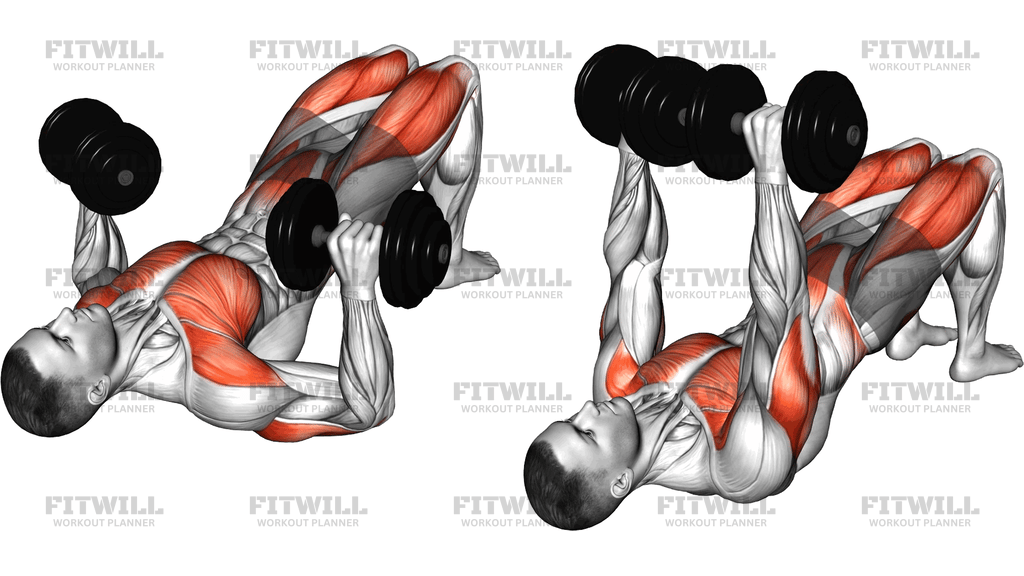
Dumbbell Incline Around The World
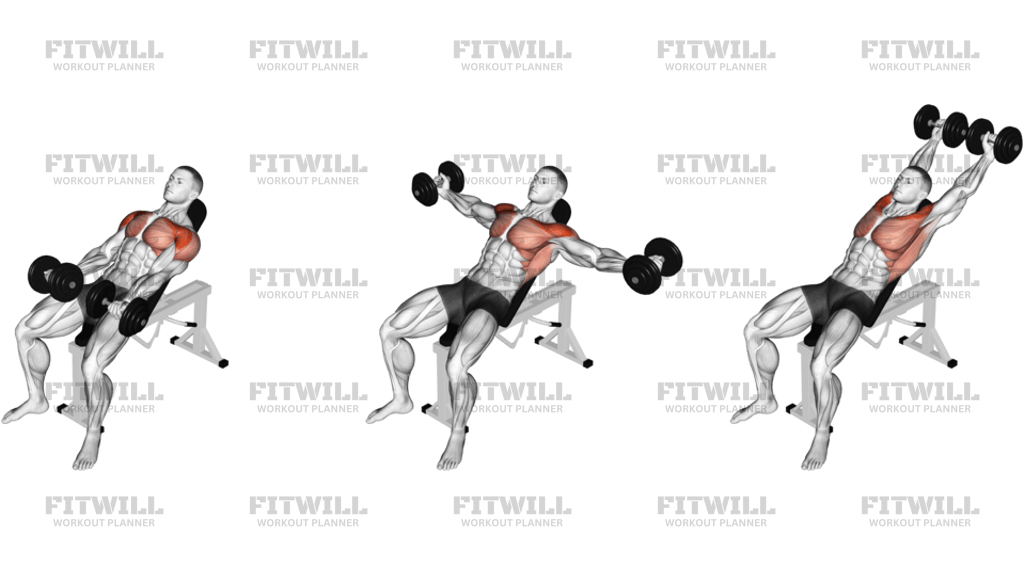
Dumbbell Incline Around The World is a shoulder-dominant accessory move performed on an incline bench with a long, sweeping arc. The dumbbells travel from the thighs, out and up around the body, and finish above the upper chest or face, which makes the exercise feel more like a controlled halo than a press. It is useful when you want to build deltoid strength, shoulder control, and a little extra upper-chest and upper-back support without relying on heavy loading.
The setup matters because the bench angle changes how much of the work stays in the shoulders and how much drifts into the neck and upper traps. A low to moderate incline usually gives the cleanest path: the upper back is supported, the chest stays open, and the arms can follow a smooth arc without the lifter needing to arch hard or shrug to finish the rep. That makes Dumbbell Incline Around The World a better fit for quality reps than for ego lifting.
Start light and keep a soft bend in the elbows from the first rep to the last. The hands should trace the same path every time, sweeping out wide and then finishing together or nearly together overhead before returning under control. If the dumbbells start feeling like a press, the elbows straighten, or the shoulders climb toward the ears, the load is too heavy or the range is too aggressive.
Dumbbell Incline Around The World works well as warm-up work for pressing days, accessory volume for shoulder training, or a finishing movement when you want to keep tension high without grinding. It can also be useful for lifters who need more comfort in the overhead pattern but do better with a supported torso than with standing raises. The goal is a smooth, repeatable shoulder arc, not a fast rep count.
Safety comes down to control, range, and posture. Keep the head on the bench, let the ribs stay down, and stop the set before the lower back takes over to help finish the overhead position. If the front of the shoulder feels pinched, shorten the arc, lower the incline, or reduce the weight until the movement feels smooth and unforced.
[ Workout Log & Planner ]
Put your next workout in Fitwill
Keep your plan and training log ready when you are.


Instructions
- Set an incline bench to a low or moderate angle and sit back with your upper back and head supported, feet flat on the floor, and a dumbbell in each hand resting near your thighs.
- Hold the dumbbells with your palms facing in and keep a soft bend in both elbows so the arms stay slightly unlocked.
- Pull your ribs down, brace lightly, and keep your chest open without driving your lower back off the bench.
- Start the dumbbells just outside your thighs, then sweep them out in a wide arc as you raise them toward shoulder height.
- Continue the same arc upward until the dumbbells meet or nearly meet above your upper chest or face, keeping the shoulders away from your ears.
- Pause briefly at the top with your neck long and wrists stacked over the handles.
- Reverse the arc slowly, lowering the dumbbells back out and down along the same path until they return beside your thighs.
- Exhale as the weights travel up, inhale as they lower, and reset the dumbbells on your thighs or the floor before the next rep if needed.
- Stop the set if the elbows straighten, the shoulders shrug, or you lose the smooth arc that makes the movement effective.
Tips & Tricks
- Use lighter dumbbells than you would for a press; the long lever makes the movement feel heavier quickly.
- Keep the same elbow bend through the entire rep so the movement stays an arc instead of a half-press.
- A lower incline usually feels better for the shoulders than a steep bench angle.
- Let the dumbbells travel in the same plane on every rep instead of drifting forward or behind your head.
- Keep your wrists neutral so the dumbbells do not tip backward as they rise overhead.
- Lower the weights more slowly than you lift them to keep tension through the full sweep.
- If your ribs flare or your low back arches, shorten the range and keep your torso pinned to the bench.
- Stop before the shoulders shrug; the rep should finish with control, not by climbing into the neck.
- Use the smoothest arc you can repeat, even if that means a smaller range on the first few sets.
Frequently Asked Questions
What muscles does Dumbbell Incline Around The World work?
It mainly trains the deltoids, with the upper chest, triceps, serratus, and upper back helping control the long arc.
Is Dumbbell Incline Around The World a press or a fly?
Neither one exactly. It is a shoulder arc with a fixed elbow bend, so the movement stays smooth instead of turning into a straight-arm press or fly.
What bench angle should I use for Dumbbell Incline Around The World?
A low to moderate incline, roughly 30-45 degrees, usually keeps the shoulders in the cleanest path and reduces shrugging.
Should my elbows stay bent during Dumbbell Incline Around The World?
Yes. Keep a small, consistent bend so the dumbbells follow a true arc instead of turning into a pressing pattern.
Why do I feel Dumbbell Incline Around The World in my neck?
That usually means the load is too heavy or the shoulders are shrugging at the top. Lighten the dumbbells and keep the head and upper back relaxed against the bench.
Can beginners do Dumbbell Incline Around The World?
Yes, if they start with very light dumbbells and a shorter range until the arc feels smooth and repeatable.
How many reps should I do for Dumbbell Incline Around The World?
Moderate to higher reps work best because the exercise is about control and tension, not maximal load.
Can I do Dumbbell Incline Around The World on a flatter bench?
Yes, but a lower incline usually gives a cleaner shoulder path and makes it easier to keep the movement from turning into a shrug.