Dumbbell Incline Two Front Raise With Chest Support
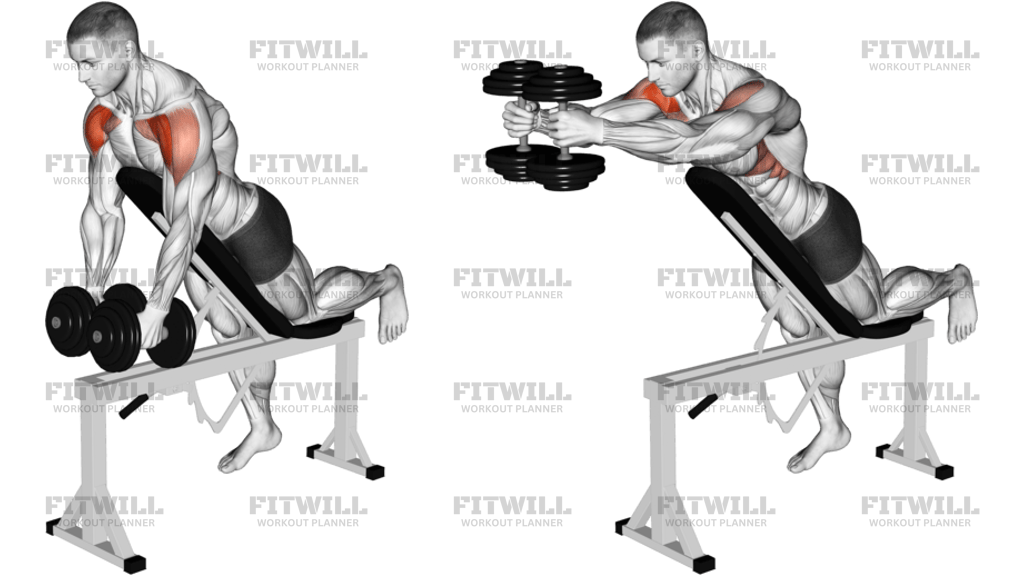
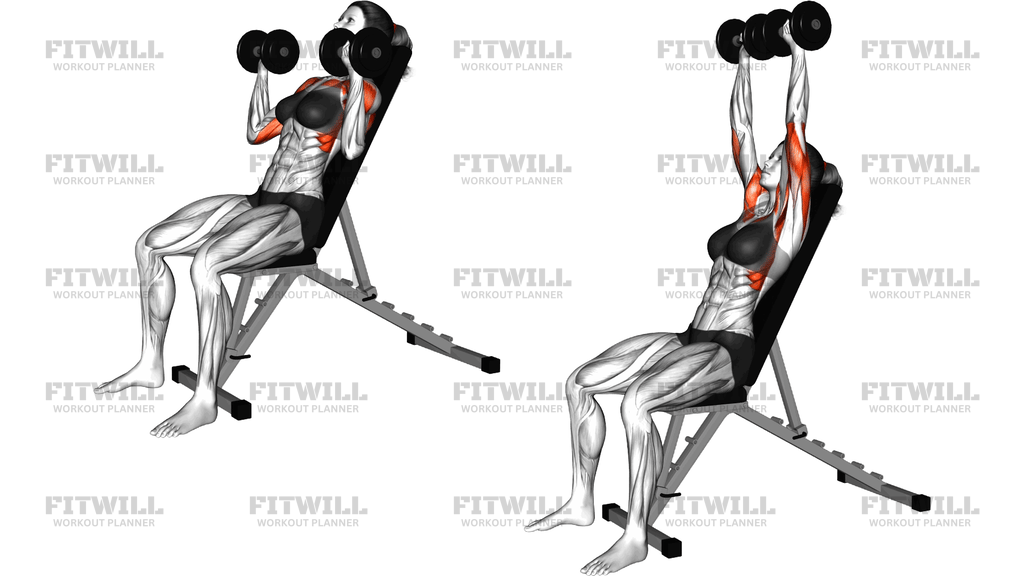
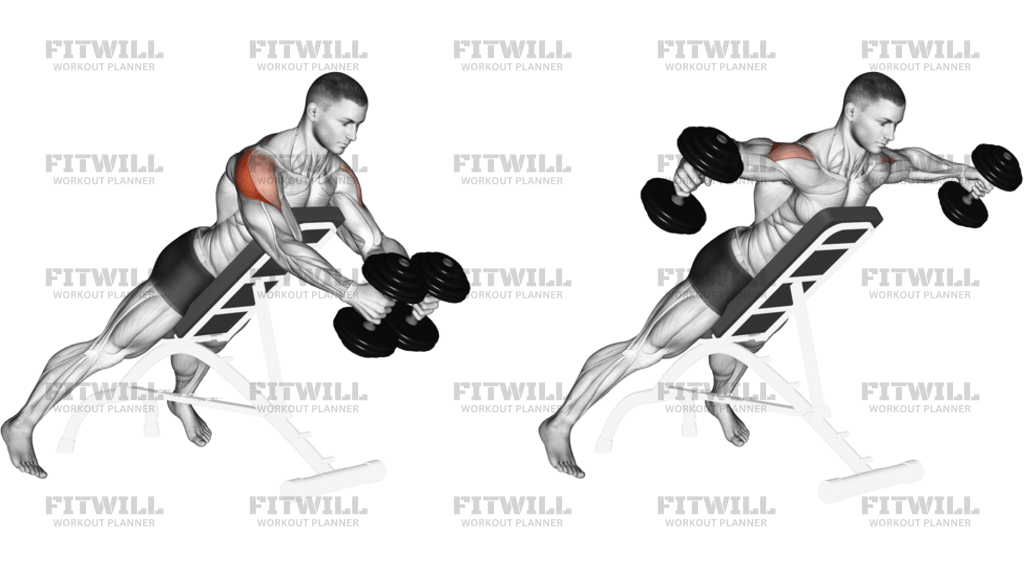
Dumbbell Incline Two Front Raise With Chest Support is a chest-supported shoulder isolation exercise performed face-down on an incline bench while raising two dumbbells in front of the body. The bench support removes most of the body English that often appears in standing front raises, so the shoulders have to do the work instead of the hips, lower back, or leg drive. That makes the movement useful when you want a cleaner anterior-delt stimulus with less cheating.
The incline angle changes the feel of the raise. With the chest anchored to the pad, the upper body stays quiet and the dumbbells travel from hanging below the shoulders to roughly shoulder height in a forward arc. The front delts do the primary work, while the upper chest, triceps, upper back, and traps help stabilize the shoulder girdle and keep the arms moving smoothly. Because the torso is supported, small technique flaws become easier to spot and easier to correct.
Set the bench at a moderate incline, lie face down with the chest firmly on the pad, and brace the feet against the floor or bench supports so your body does not slide as the weights move. Keep the neck long and the ribs gently down against the bench. Each repetition should start from a dead hang under control, then rise forward without shrugging the shoulders or swinging the torso. The finish position is usually around shoulder level, not above it, unless the loading and shoulder mechanics stay perfectly clean.
This exercise fits well in accessory shoulder work, hypertrophy sessions, or warm-up sets where you want direct front-delt tension without turning the set into a full-body heave. It can also be a good choice for lifters who struggle to keep standing front raises strict. Use a load that allows smooth control on the way down, a brief pause at the top if desired, and a pain-free range of motion that does not jam the front of the shoulder.
Fitwill
Log Workouts, Track Progress & Build Strength.
Achieve more with Fitwill: explore over 9600 exercises with images and videos, access built-in and custom workouts, perfect for both gym and home sessions, and see real results.
Start your journey. Download today!




Instructions
- Set an incline bench to a moderate angle and lie chest-down with your sternum and upper ribs supported on the pad.
- Plant your feet firmly for balance and let both dumbbells hang straight down under your shoulders with a neutral, controlled grip.
- Set your shoulder blades in a quiet, stable position and keep your neck long before the first rep starts.
- Brace your midsection against the bench so your torso stays fixed while the arms move.
- Inhale, then raise both dumbbells forward in a smooth arc until they reach about shoulder height.
- Keep a slight bend in the elbows and avoid shrugging or rolling the shoulders forward as the weights rise.
- Pause briefly at the top without losing chest contact with the bench.
- Lower the dumbbells along the same path until the arms are fully controlled again under the shoulders.
- Exhale during the lift or as the dumbbells pass the hardest part of the range, then reset before the next repetition.
Tips & Tricks
- Keep the bench incline moderate; if it is too steep, the movement starts to resemble an upright front raise and the support advantage drops off.
- Choose dumbbells you can lift without bouncing the chest off the pad or rocking the hips into the bench.
- Think about lifting the weights forward and slightly up, not straight out to the sides and not into an overhead press path.
- Stop the raise around shoulder height if going higher makes you shrug or twist the wrists to finish the rep.
- Keep the thumbs and pinkies level with each other so one arm does not drift higher than the other.
- Let the dumbbells descend slowly enough that you can feel the front delts working on the way down.
- If the front of the shoulder pinches, shorten the range slightly and keep the elbows a little softer.
- Use the bench to remove momentum, not to rest passively between reps; stay braced through the whole set.
Frequently Asked Questions
What muscle does Dumbbell Incline Two Front Raise With Chest Support target most?
The front delts are the main target, with the upper chest, traps, and triceps helping stabilize the movement.
Can beginners perform this exercise?
Yes. The chest support actually makes it easier to learn because it removes most torso swing and lower-back cheating.
How high should the dumbbells go?
For most lifters, shoulder height is enough. Going higher is only useful if you can keep the shoulders down and the bench contact steady.
What is the biggest form mistake on the bench?
Shrugging the shoulders or losing chest contact with the pad. If the upper traps take over, the front delts are doing less of the work.
Why use chest support instead of standing front raises?
Chest support removes momentum, so the reps stay strict and the shoulders have to create the movement instead of the whole body helping.
Should I use both dumbbells at the same time?
Yes, this version is usually performed bilaterally. Raise both dumbbells together so the torso stays square on the bench.
What bench angle works best?
A moderate incline is usually best. A very steep bench reduces the chest-support effect, while a very low angle can make the bottom position awkward.
What if the front of my shoulder feels irritated?
Shorten the range, lighten the load, and stop the lift below the painful zone. If pain persists, swap to a different shoulder exercise.