Band Bent-Over Rear Lateral Raise
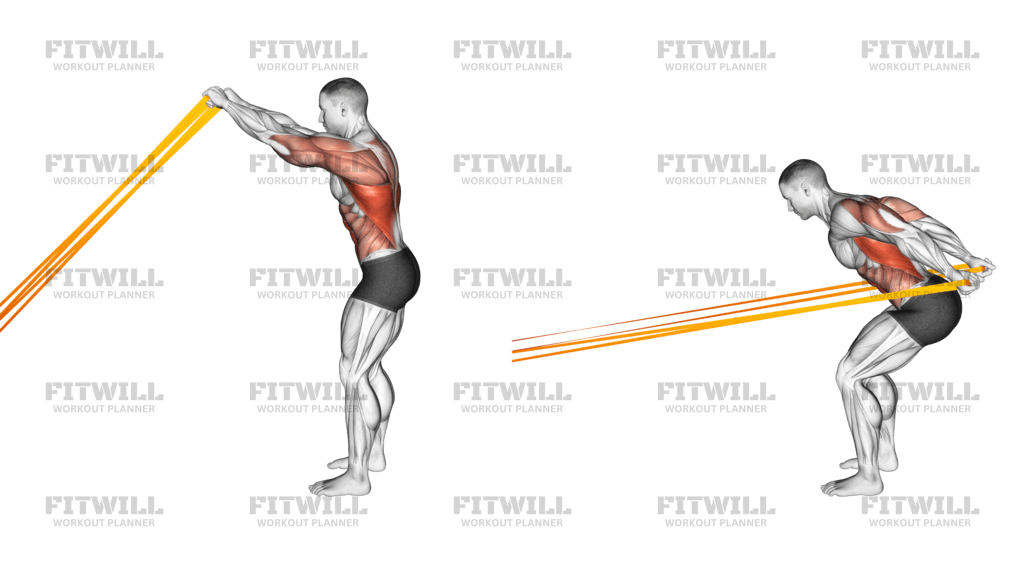
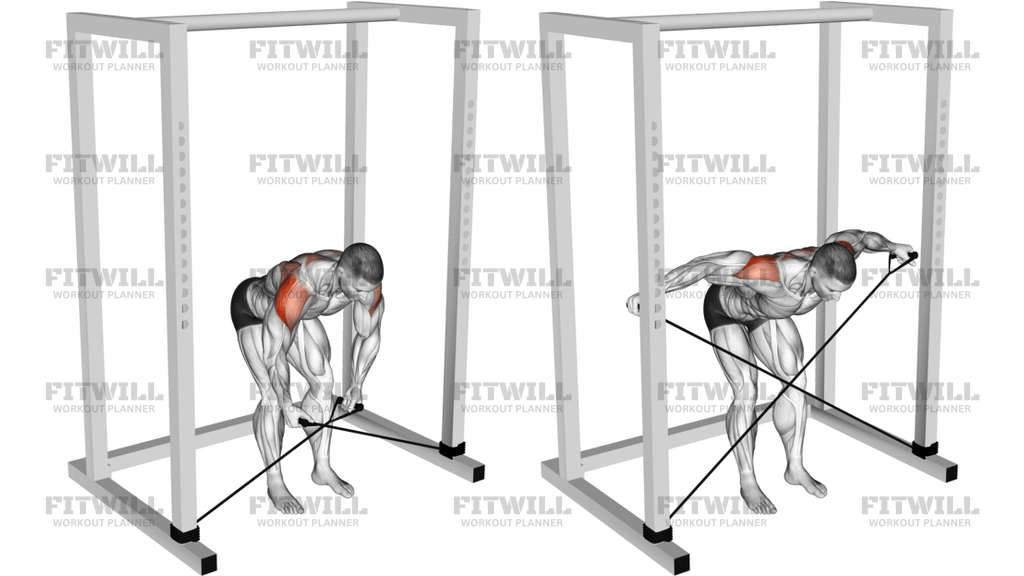
Band Bent-Over Rear Lateral Raise is a bent-hip rear-delt raise performed with band tension pulling from low anchors. The exercise trains the back side of the shoulders while also asking the mid traps, rhomboids, and other upper-back muscles to keep the shoulder blades organized as the arms move out and back. It is a useful choice when you want a rear-deltoid emphasis without needing a machine or heavy external load.
The setup matters because the hinge position creates the angle that makes the movement feel like a rear-delt raise instead of a shrug or a standing upright row. With the torso tipped forward, the arms can travel in a wide arc away from the body while the shoulders stay packed down. That lets the back of the shoulder do the work instead of the neck taking over. If the chest lifts or the torso rises during the set, the band is usually too heavy or the stance is too loose.
A clean repetition starts with the hands below the shoulders, a soft bend in the elbows, and steady tension already in the band. From there, sweep the arms out and slightly back until the upper arms reach about shoulder height or just below it. The elbows should stay at the same angle through the rep, and the wrists should follow the line of the forearms instead of bending back. Pause briefly at the top, then lower under control until the arms return to the hanging start position.
This movement fits well in shoulder accessory work, upper-back training, posture-focused sessions, and warm-ups before pressing or pulling. It is also a practical option when you want high-quality rear-delt volume with joint-friendly resistance that is easy to scale. The main goal is not to fling the band higher and higher; it is to keep the hinge, shoulder path, and scapular control consistent from the first rep to the last.
Use lighter tension if the neck tightens, the lower back takes over, or the shoulders shrug toward the ears. Keep the range pain-free and stop the set when the shoulders can no longer move cleanly through the arc. Done well, this exercise builds controlled rear-shoulder strength and upper-back stability without asking for a lot of load.
[ Workout Log & Planner ]
Put your next workout in Fitwill
Keep your plan and training log ready when you are.


Instructions
- Anchor the band low on both sides, hinge at the hips until your torso is almost parallel to the floor, and keep a soft bend in your knees with your head in line with your spine.
- Hold the band ends or handles with your arms hanging below your shoulders, palms facing in, and let the band start with light tension before you lift.
- Set your ribs down, brace your midsection, and keep your shoulders away from your ears before the first rep.
- Lead the movement by driving your elbows out and slightly back in a wide arc, not by shrugging or pulling with your hands.
- Raise until your upper arms are about level with your shoulders or just below that line if your upper traps start taking over.
- Pause for a moment at the top and squeeze the rear shoulders without letting your torso rise.
- Lower the arms slowly back to the hanging start position and keep tension on the band all the way down.
- Reset in the hinge after each rep, breathe out as you lift, and breathe in as you lower.
- Stop the set if you lose the hinge, start jerking the band, or feel the lower back taking over.
Tips & Tricks
- Keep the hip hinge fixed. If your chest keeps popping up between reps, the band is too heavy or your stance is too narrow.
- Think about sweeping the hands out rather than lifting them up. A shrugging path shifts work into the upper traps.
- Maintain the same slight elbow bend from start to finish so the shoulders, not the triceps, control the arc.
- Let the rear delts finish the rep. If your shoulder blades pinch hard before the arms are level, shorten the range slightly.
- Choose a band tension that lets you pause at the top without twisting your torso.
- Keep your neck long and your gaze a few feet in front of you on the floor to avoid cranking the cervical spine.
- Match the tension on both sides before you start. Uneven band length or anchor height makes one shoulder do more work.
- Use slower lowering reps if the band feels too easy at the bottom and too fast at the top.
- Finish the set before your lower back rounds, especially if you are holding the hinge for several reps.
Frequently Asked Questions
What muscle does Band Bent-Over Rear Lateral Raise target most?
The rear delts are the main target, with the mid traps and rhomboids helping control the shoulder blades.
Why do I need to hinge forward for this band rear raise?
The forward hinge puts the rear delts in a better line of pull and keeps the movement from turning into a shrug.
How high should the arms go in the bent-over position?
Stop around shoulder height or slightly below if the upper traps start to dominate.
Should my elbows stay bent during the rep?
Yes, keep a small, fixed elbow bend and move the whole arm as one unit.
What should I feel working during the set?
You should feel the back of the shoulders working first, with some upper-back assistance, not a lot of lower-back tension.
Is this exercise good for shoulder warm-ups?
Yes, light sets work well before pressing or rowing because they wake up the rear delts and upper back.
What if the band pulls me out of position?
Reduce the tension, widen your stance, or shorten the range until you can keep the hinge steady.
Can beginners use this movement?
Yes, as long as the band is light enough to keep the torso still and the reps smooth.
How is this different from a dumbbell reverse fly?
The band adds more resistance near the top of the rep, while the dumbbell version is usually heaviest near the bottom.