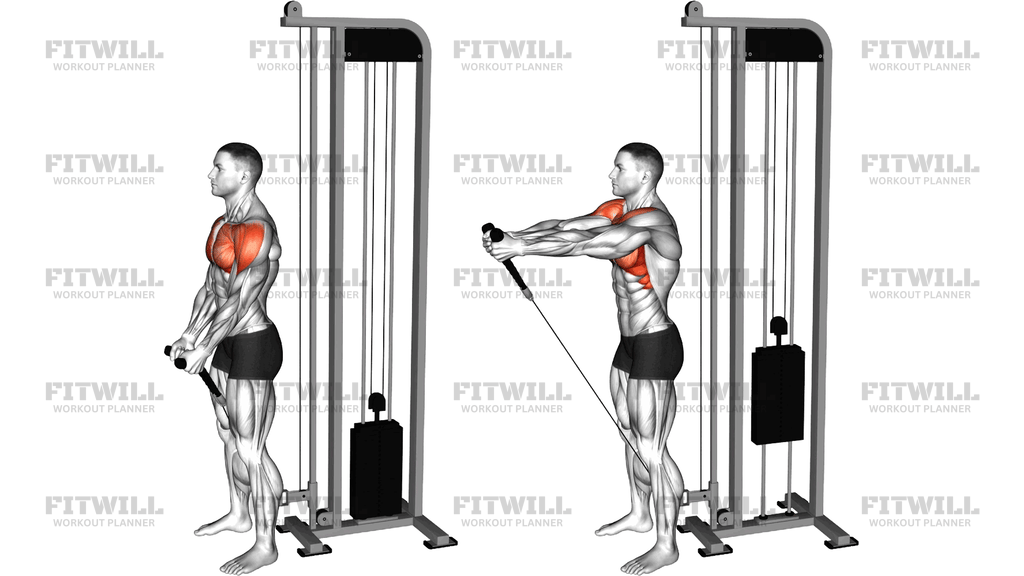
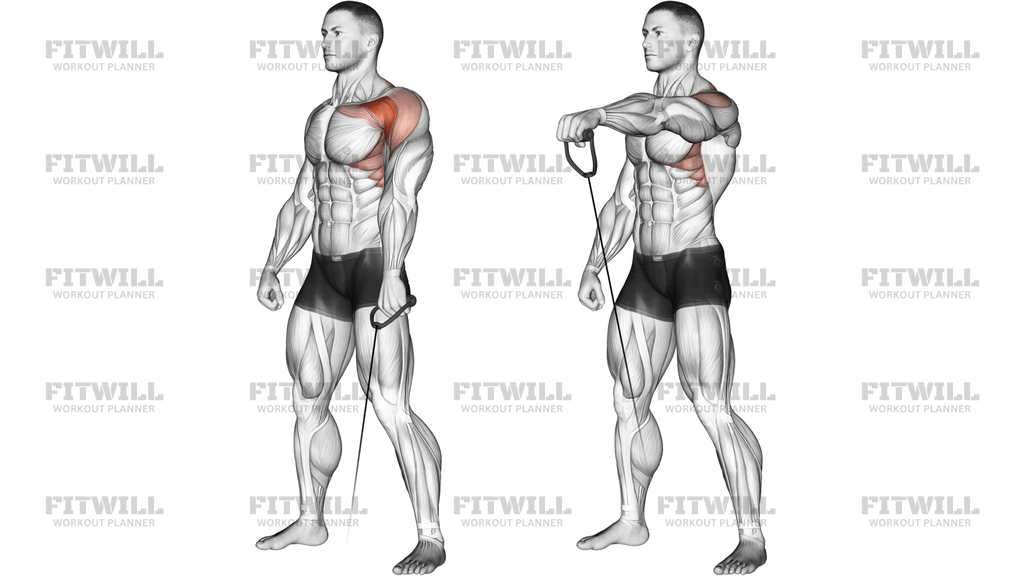
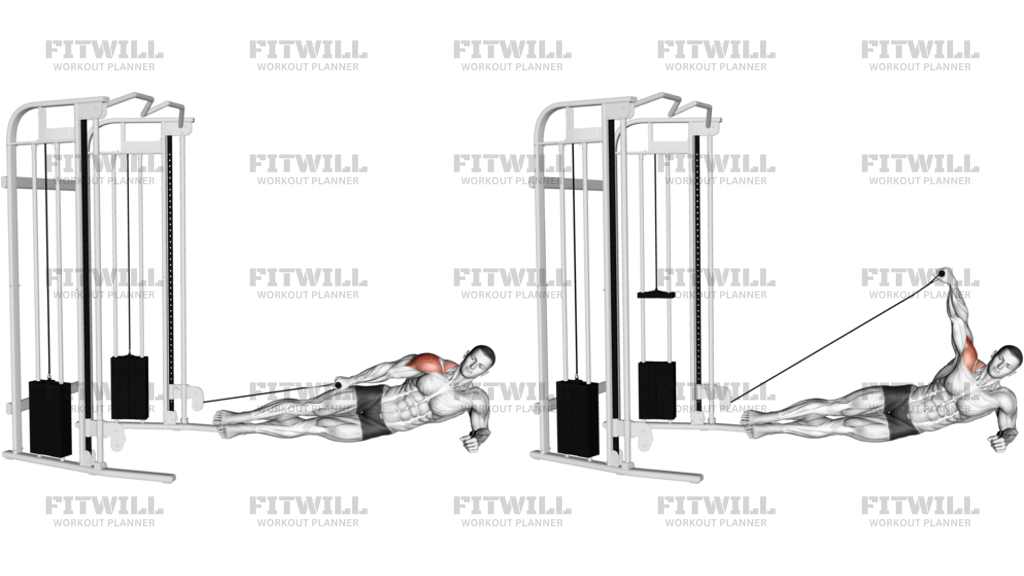
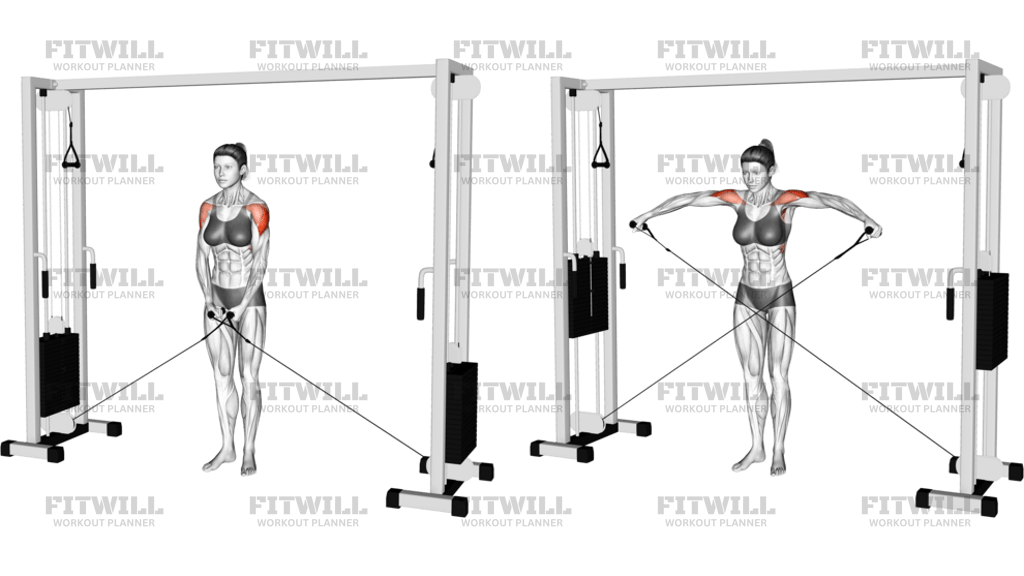
Cable Kneeling Shoulder Press
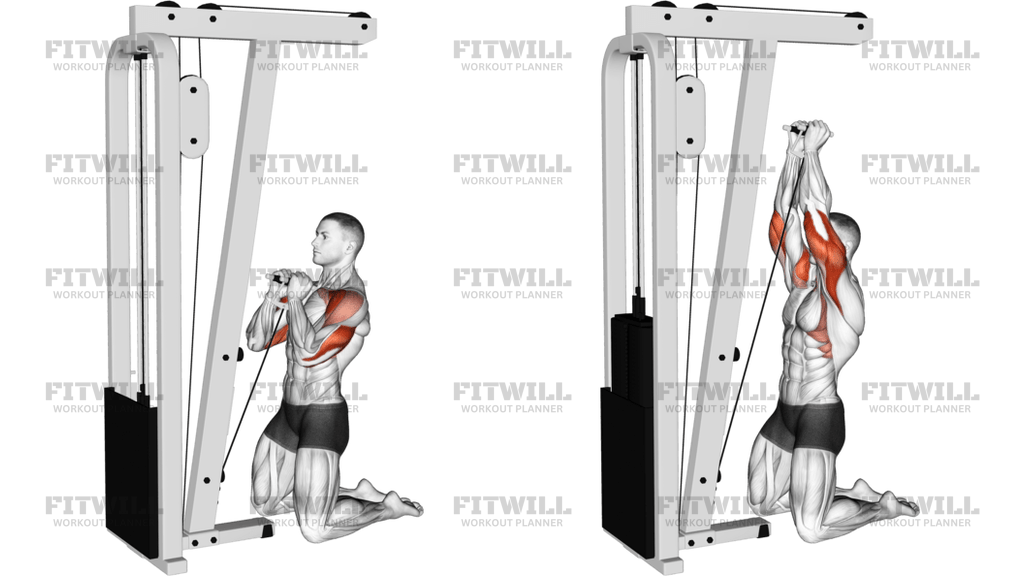
Cable Kneeling Shoulder Press is a cable-based overhead press done from both knees with a low pulley and a handle or rope attachment. The kneeling position removes leg drive and makes the shoulders do the work, which is useful when you want a strict pressing pattern and less cheating from the lower body. The movement trains the delts first, with the triceps and upper back helping to stabilize the press.
The setup matters more here than on many standing presses because the torso has fewer ways to save a bad rep. Kneeling on both knees shortens the base of support, so the pelvis, ribs, and head position all need to stay organized. A tall torso, neutral neck, and lightly tucked ribs keep the cable path honest and help the load stay on the shoulders instead of turning into a back lean.
From the start position, the handle should sit around upper-chest or chin height with the elbows slightly in front of the body. Press the handle up and slightly back so it finishes over the crown of the head without the chest flaring or the lower back overextending. Lower the handle under control to the same front-rack position so each repetition begins from a consistent shoulder angle.
This exercise works well as a strict accessory press, a deltoid-focused strength builder, or a safer way to groove overhead mechanics when you want cable tension instead of free-weight balance demands. Because the machine guides the resistance, it is also useful for lifters who want to isolate the shoulders without standing momentum. Beginners can use it, but only with light load and a range that stays pain-free.
Keep the rep quality clean: the shoulders should move smoothly, the wrists should stay stacked over the elbows, and the finish should feel tall rather than cramped. If the rep turns into a backbend, the load is too heavy or the cable is set too far from the working line. If the shoulders pinch at lockout, reduce the range slightly and press in the strongest pain-free arc.
[ Workout Log & Planner ]
Put your next workout in Fitwill
Keep your plan and training log ready when you are.


Instructions
- Attach a handle or rope to a low pulley, then kneel on both knees facing the cable stack with the attachment at upper-chest height.
- Set your knees under your hips, squeeze your glutes lightly, and stack your ribs over your pelvis so you do not lean back.
- Hold the handle at shoulder level with your elbows slightly in front of your body and your wrists stacked over your forearms.
- Take a breath, brace your abdomen, and press the handle up and slightly back along the cable line.
- Finish with your arms overhead and your shoulders elevated only as far as you can control without arching your lower back.
- Pause briefly at the top while keeping your neck long and your ribs down.
- Lower the handle slowly to the same shoulder-height start position, resisting the pull of the cable on the way down.
- Reset your breathing and repeat for the planned number of repetitions.
Tips & Tricks
- Kneel on a pad if needed so you can stay tall without shifting your knees around between reps.
- Keep the cable in front of your face and chest; if it drifts behind you, the load is probably too heavy or the setup is too far forward.
- Press slightly back, not straight up in front of you, so the finish lands over the crown of the head instead of forcing the shoulders forward.
- Stop the set if you have to flare your ribs to finish the rep; that usually means the shoulders have lost the work.
- A rope attachment lets the hands rotate naturally, which is often easier on the wrists and front of the shoulder than a fixed handle.
- Exhale as the handle moves overhead and inhale as it comes back to shoulder height.
- Keep the elbows a little in front of the torso at the bottom so the shoulder does not collapse behind the body.
- Use a lighter stack if you feel the lower back taking over or if you have to rock your hips to move the weight.
- Do not chase a hard lockout if your shoulders are tight; a controlled, pain-free finish is better than forcing range.
- If one side dominates, lighten the load and make each rep smooth instead of trying to grind through the imbalance.
Frequently Asked Questions
What muscle does Cable Kneeling Shoulder Press target most?
The delts are the main movers, especially the front and middle fibers, with the triceps helping to finish the press.
Why kneel instead of standing for this press?
Kneeling removes leg drive and makes it easier to keep the ribs, pelvis, and shoulders stacked while you press.
Should the handle move straight up or slightly back?
It should travel up and slightly back so the finish sits over the head instead of drifting in front of the shoulders.
Can I use a rope attachment for the cable?
Yes. A rope usually feels more natural because the hands can rotate as the press finishes overhead.
What should I do if I feel my lower back arching?
Reduce the load, tighten your glutes and abs, and stop the press before your ribs flare.
Is this a good shoulder exercise for beginners?
Yes, if the load is light and the range is controlled. It can be easier to learn than a free-weight overhead press.
What if my shoulders pinch at the top?
Shorten the range slightly and keep the elbows a little in front of the torso so you stay in a pain-free pressing path.
How heavy should the stack be?
Heavy enough to challenge the delts, but light enough that you can lower the handle slowly without leaning back or shrugging.