Cable Standing Front Raise With Rotation
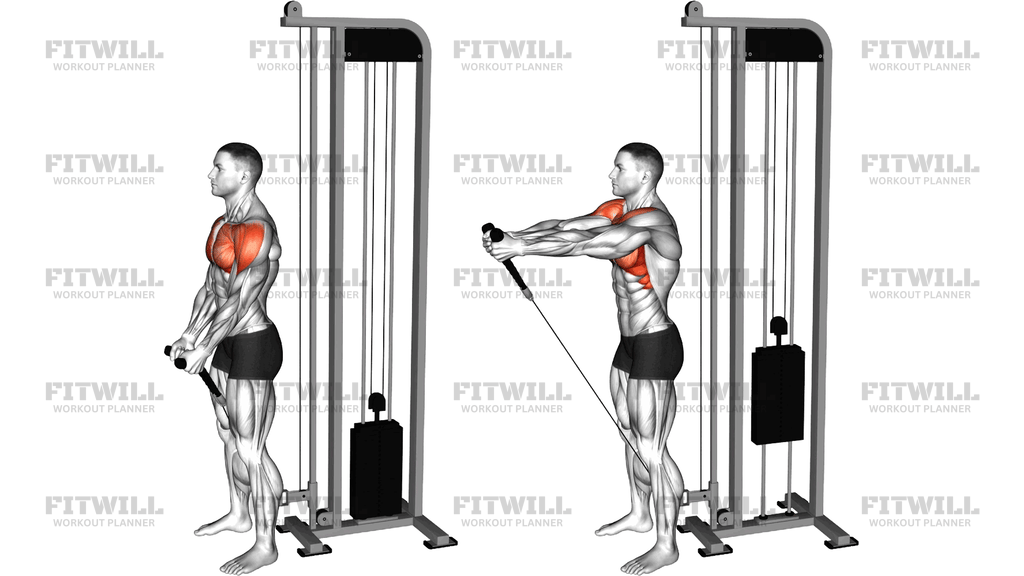
Cable Standing Front Raise With Rotation is a shoulder isolation exercise that uses a low cable and a bar or handle attachment to keep tension on the front of the shoulders from the first inch of the lift. The movement starts with the bar in front of the thighs and finishes when the arms reach roughly shoulder height, with the shoulder joint and forearm position changing together instead of letting momentum do the work.
This variation is especially useful when you want the front delts to work through a smooth, guided path while the cable keeps resistance steady through the whole raise. The traps, upper back, and triceps help stabilize the lift, but the exercise should still feel centered on the front of the shoulders and the line of the arms. Compared with a loose dumbbell front raise, the cable version makes the start position more demanding and rewards slower, cleaner reps.
The setup matters because Cable Standing Front Raise With Rotation can turn sloppy fast if the body leans back or the cable drifts away from the thighs. Face away from the low pulley, stand tall with feet about hip- to shoulder-width apart, and hold the attachment with a light bend in the elbows. Keep the cable path close to the body so the resistance stays predictable and the shoulders can move without the lower back taking over.
During the raise, lift the bar in a controlled arc to shoulder height while allowing the shoulders and forearms to rotate naturally as the attachment comes up. Keep the ribs stacked over the pelvis, avoid shrugging into the ears, and stop the lift when the front delts are fully loaded rather than when the torso starts to sway. The return should be just as deliberate as the lift, with the cable lowering the arms under control instead of snapping them back down.
Cable Standing Front Raise With Rotation fits well in shoulder-focused sessions, upper-body accessory work, or warmups before pressing when you want to reinforce controlled front-delt tension. It is a good choice for beginners using light resistance, but only if the cable path stays strict and the range stays pain-free. If the weight forces you to swing, arch your lower back, or lose the rotation pattern, the load is too heavy for this exercise.
[ Workout Log & Planner ]
Put your next workout in Fitwill
Keep your plan and training log ready when you are.


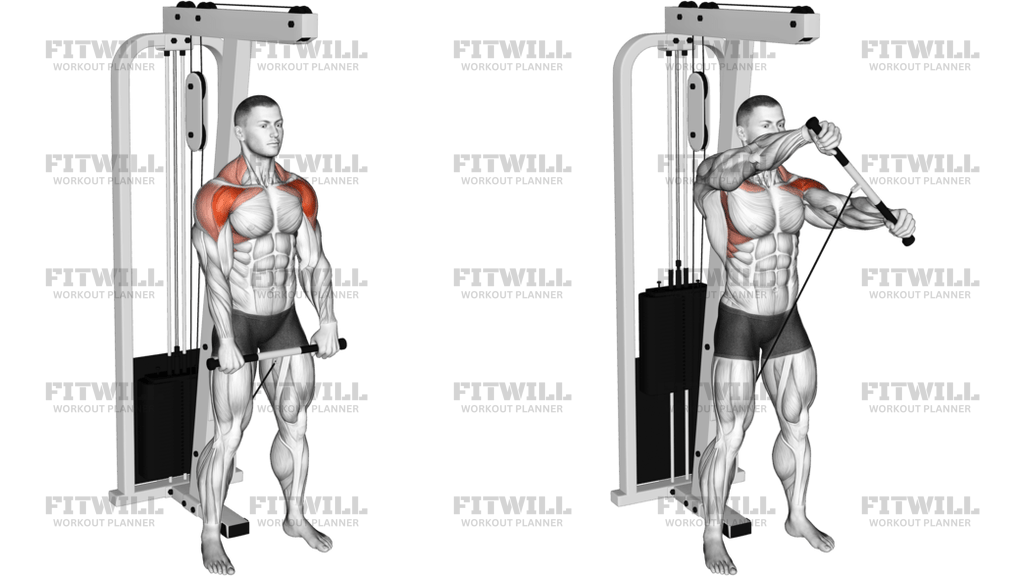
Instructions
- Clip a straight bar or short handle to a low pulley and face away from the stack so the cable runs behind you and up between your legs to the attachment.
- Stand tall with your feet about hip- to shoulder-width apart and the bar resting in front of your thighs.
- Hold the attachment with both hands, keep a small bend in your elbows, and let your shoulders stay down instead of creeping up toward your ears.
- Set your ribs over your pelvis, brace lightly, and keep your chest tall without leaning back.
- Raise the bar forward in a smooth arc until your hands reach about shoulder height.
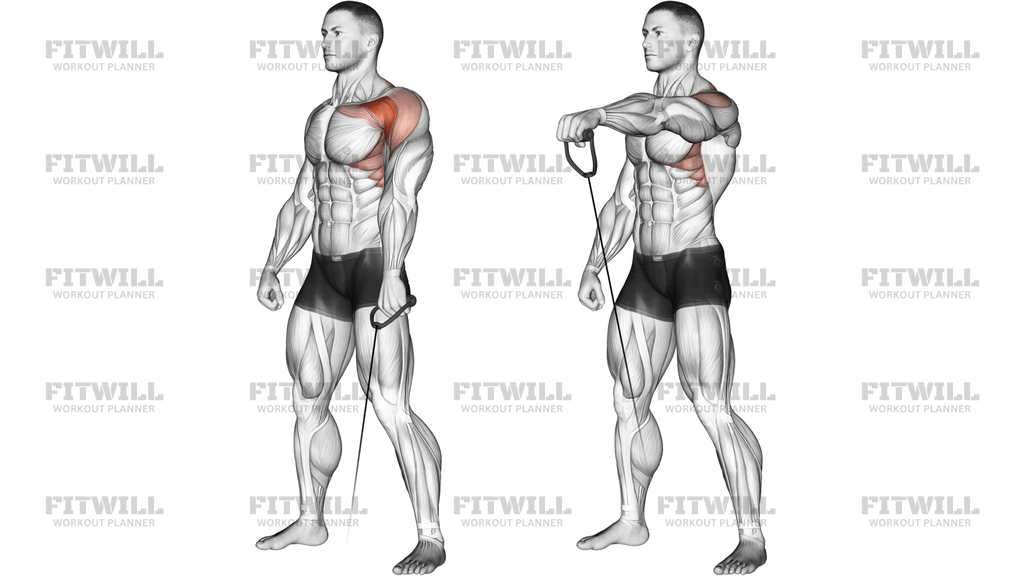
- Allow the forearms and shoulders to rotate naturally as the bar rises, finishing with the hands slightly turned out if the attachment allows it.
- Pause briefly at the top without letting the cable pull your torso forward.
- Lower the bar along the same path until it returns to the front of your thighs with control, then reset before the next rep.
Tips & Tricks
- Start with the pulley low enough that the cable is already tight when the bar is resting against your thighs.
- Keep the bar close to your body on the way up; if it drifts forward, the front delts lose tension and the rep turns into a swing.
- Stop the raise at shoulder height or just below if your upper traps start taking over.
- A slight elbow bend should stay constant through the rep; straightening the arms changes the exercise and usually shifts stress to the elbows.
- Let the rotation come from the shoulders and forearms, not from twisting the torso.
- If your lower back arches as the bar rises, step a little farther from the stack and reduce the load.
- Use a lighter weight than you would for a regular front raise because the cable keeps tension on the first part of the lift.
- Lower the bar for at least as long as you lift it so the front delts stay under control instead of getting yanked back down.
Frequently Asked Questions
What does Cable Standing Front Raise With Rotation train most?
It primarily targets the front of the shoulders, with the upper traps, upper back, and triceps helping to stabilize the lift.
Why use a cable instead of dumbbells for Cable Standing Front Raise With Rotation?
The low cable keeps tension on the shoulders through the start of the raise, which makes the first half of the rep much less forgiving than a dumbbell version.
How should the handle move during Cable Standing Front Raise With Rotation?
Bring the bar up in a smooth arc and let the shoulders and forearms rotate naturally as you approach shoulder height, rather than twisting the torso.
How high should I lift the bar?
Shoulder height is usually enough. Going higher often shifts the work into the upper traps and encourages leaning back.
Can beginners do Cable Standing Front Raise With Rotation?
Yes, but only with a light load and a strict stance. If you cannot keep the cable path close to your thighs, the weight is too heavy.
What is the most common mistake on this exercise?
The biggest mistake is turning the rep into a body swing by arching the lower back or letting the cable pull the torso forward.
Should my elbows stay straight on Cable Standing Front Raise With Rotation?
No. Keep a soft bend and hold that angle through the whole rep so the shoulders do the work instead of the elbows locking out.
What if I feel Cable Standing Front Raise With Rotation mostly in my neck?
That usually means the shoulders are shrugging. Lower the load, keep the chest tall, and think about reaching the bar forward rather than lifting it up with the traps.