Resistance Band Standing Down Warming-Up
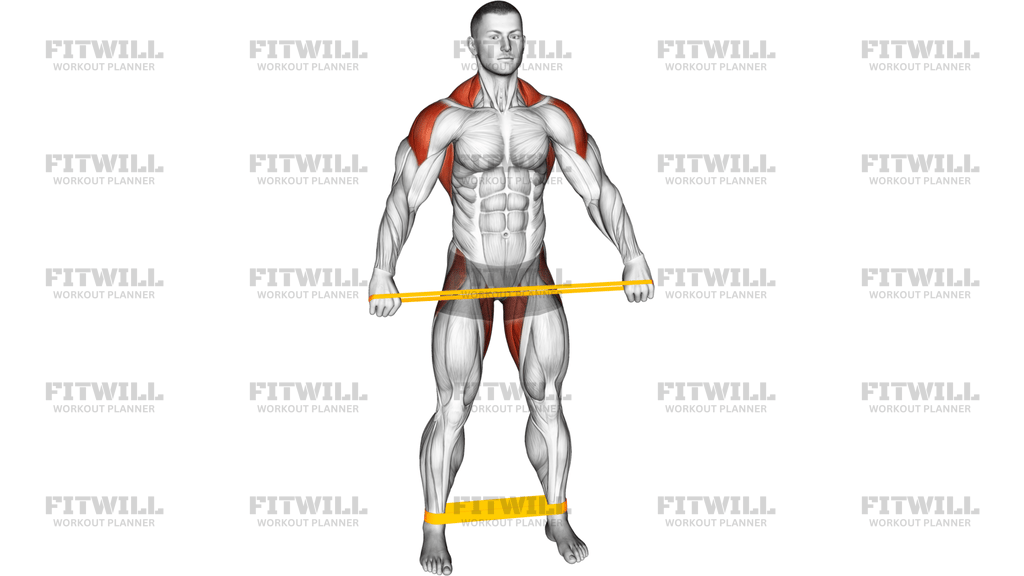
Resistance Band Standing Down Warming-Up is a standing activation drill that combines upper-body tension with lower-body stability. The image shows a tall stance with a light band held in front of the thighs and another band around the ankles, which makes the exercise more about posture, control, and coordinated tension than about heavy loading. It is best treated as a warm-up or prep movement for the shoulders, upper back, trunk, hips, and legs.
The setup matters because this drill only works well when the body stays stacked. You want the feet planted, the ankles and knees aligned, the ribs quiet, and the shoulders settled away from the ears before you start moving. That posture lets the band create useful activation without turning the rep into a shrug, lean, or low-back arch.
When the rep is done well, the hands stay in front of the body, the band remains lightly taut, and the shoulders keep a packed, down position as the arms press or draw the band through a short, controlled range. The return should be just as deliberate as the working phase so the warm-up keeps building awareness instead of speed. Breathing should stay calm and rhythmic rather than forced.
This is a practical drill before pressing, rowing, overhead work, carries, or any session where you want the shoulders and trunk switched on first. Because the resistance is light and the range is short, the goal is clean posture and consistent tension, not fatigue. If the band starts pulling you out of alignment, the band is too strong or the tempo is too fast.
Used correctly, Resistance Band Standing Down Warming-Up helps teach a stable standing position with the shoulders set down, the torso organized, and the lower body ready to support bigger lifts. It is suitable for beginners when the band is very light and the rep stays smooth, but it becomes less useful as soon as the movement turns into momentum or the neck and lower back start doing the work.
Fitwill
Log Workouts, Track Progress & Build Strength.
Achieve more with Fitwill: explore over 9600 exercises with images and videos, access built-in and custom workouts, perfect for both gym and home sessions, and see real results.
Start your journey. Download today!




Instructions
- Loop a light band around both ankles and stand tall with your feet about hip-width apart.
- Hold the band in both hands in front of your thighs with straight arms and just enough slack removed to feel light tension.
- Stack your ribs over your pelvis, soften your knees, and keep your weight spread evenly through both feet.
- Draw your shoulders down away from your ears and keep your neck long before you start the first rep.
- Press or draw the band down and slightly apart until your hands reach the sides of your thighs without leaning forward.
- Pause for a moment in the lowered position while keeping the shoulders packed and the torso still.
- Return the band to the start under control, letting the arms move back up without losing posture or letting the ankles collapse inward.
- Breathe out on the working phase and breathe in as you come back to the start.
- Repeat for smooth, even reps, then release the band carefully before stepping away.
Tips & Tricks
- Use a very light band so the drill feels like activation, not a strength test.
- Keep the hands in front of the thighs; if they drift forward, the low back usually starts helping too much.
- Think about setting the shoulder blades down into your back pockets instead of shrugging them upward.
- Keep the ankles quiet and the knees tracking over the middle toes so the lower-body band does not twist your stance.
- If the band is pulling your chest open or your ribs flare, shorten the range and soften the resistance.
- Move slowly enough that the shoulders stay below the ears on both the press and the return.
- The rep should feel crisp in the upper back, shoulders, and trunk, not like a full-body heave.
- Stop the set if you start leaning back, bouncing the band, or losing the stacked standing position.
Frequently Asked Questions
What does Resistance Band Standing Down Warming-Up work?
It mainly wakes up the shoulders, upper back, trunk, hips, and legs while you stay in a standing position.
Why is there a band around the ankles in this drill?
The ankle band helps reinforce lower-body alignment so the knees and feet stay stable while you work the upper body.
How should my hands move during the rep?
Keep the band in front of your thighs and press or draw it downward with straight arms, then return it under control.
Should my elbows bend on this exercise?
No, keep the arms long and let the shoulders and upper back do the work instead of turning it into a curl.
What is the biggest mistake with the standing band setup?
Shrugging the shoulders and arching the lower back are the most common problems, especially when the band is too heavy.
Can a beginner do this movement?
Yes, as long as the band is light and the goal is clean posture and smooth tension rather than fatigue.
When should I use this warm-up?
It fits well before pressing, rowing, overhead work, carries, or any session that needs the shoulders and trunk switched on first.
How do I make this exercise harder?
Use a slightly stronger band, slow the return, or add a brief pause without letting your stance or shoulder position change.