Dumbbell Russian Twist On Stability Ball
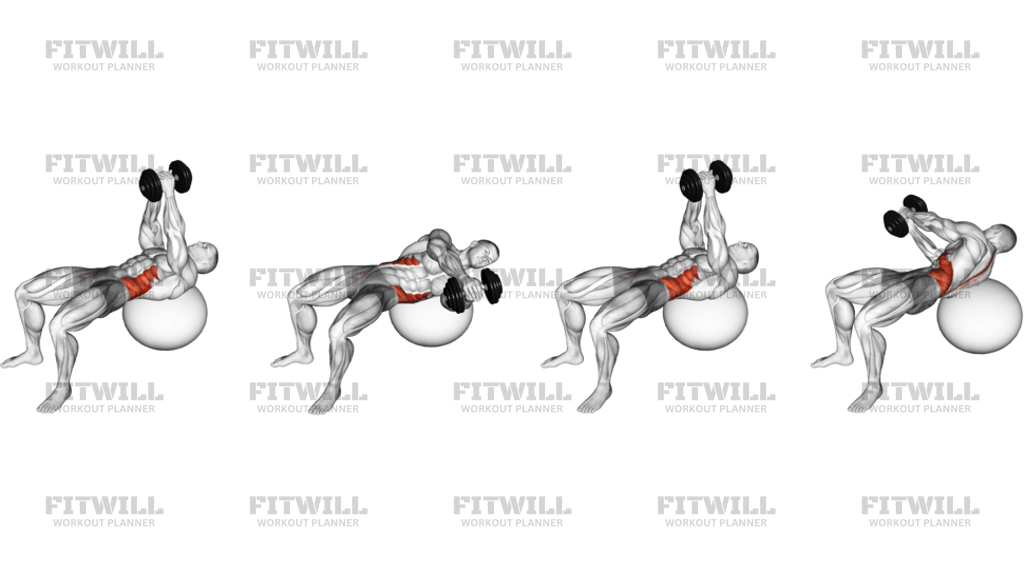
Dumbbell Russian Twist on a Stability Ball is a trunk-rotation exercise that asks the obliques and deep core muscles to control movement while the body also works to stay balanced on the ball. The stability ball changes the feel of the classic Russian twist by removing a fixed bench or floor contact, so the torso has to organize itself while the rib cage rotates from side to side.
The exercise is most useful when you want rotational core work with an added balance demand. A single dumbbell increases the challenge enough to make the set productive, but the real training value comes from clean torso rotation and steady pelvic position, not from swinging the weight around. When the setup is right, the rep feels smooth and deliberate; when the setup is off, the ball makes every mistake bigger.
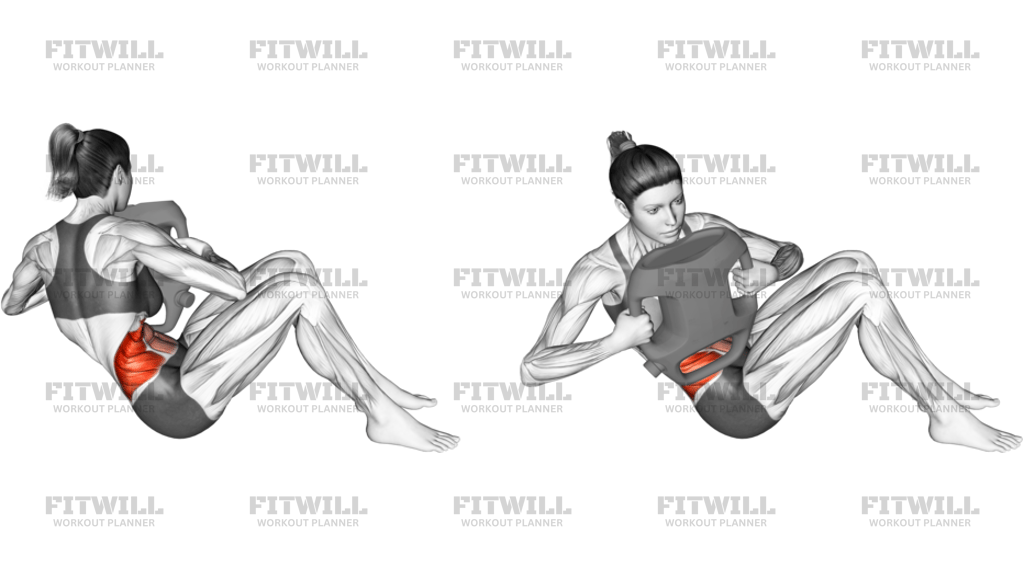
Start by sitting near the middle of the stability ball with both feet planted wide enough to keep you steady. Hold one dumbbell with both hands at chest height, lean back only as far as you can keep your ribs down, and keep your spine long instead of collapsing into a slump. From there, rotate the shoulders and rib cage together to one side, then the other, letting the dumbbell travel across the front of the body under control.
The best reps keep the hips mostly quiet while the torso does the turning. If the pelvis shifts or the lower back starts to sway, the load is too heavy or the lean-back angle is too aggressive. Shorter, cleaner turns usually train the movement better than chasing a huge range that pulls you off the ball.
Use this exercise as accessory core work, in a rotational conditioning circuit, or anywhere you want anti-extension and rotation control together. It is best performed with moderate tempo and a load you can move without jerking, bouncing, or losing contact with the ball. If the exercise becomes unstable, widen the feet, reduce the dumbbell load, or shorten the range before fatigue turns the set into a balance drill.
[ Workout Log & Planner ]
Put your next workout in Fitwill
Keep your plan and training log ready when you are.


Instructions
- Sit on the center of a stability ball with your feet planted wider than hip width and both knees bent. Hold one dumbbell with both hands at chest height.
- Lean back slightly until your torso is angled and your core is working, but keep your spine long and your ribs stacked over your pelvis.
- Brace before you start and keep pressure through both feet so the ball stays stable under you.
- Rotate your shoulders and rib cage together to one side, moving the dumbbell across your body toward the outside of that hip.
- Pause briefly at the end of the turn without letting your hips slide or your lower back arch.
- Rotate back through the center with control and continue to the other side at the same steady speed.
- Keep the dumbbell close to your chest line rather than throwing it outward with your arms.
- Exhale as you rotate and inhale as you pass back through center.
- Finish the set by sitting tall again before setting the dumbbell down.
- Stop the set if the ball starts drifting or you can no longer control the twist.
Tips & Tricks
- Plant your feet wide enough that the ball feels anchored before you start twisting.
- Keep the dumbbell light enough that your shoulders can rotate without yanking your torso.
- Turn the rib cage, not just the hands, so the work stays in the obliques instead of the arms.
- Do not let the hips swing side to side to fake a bigger range.
- A smaller twist with a stable pelvis is usually better than a large twist that pulls you off balance.
- Keep the chin relaxed and the gaze forward enough to avoid cranking the neck.
- If the lower back feels compressed, sit a little taller and reduce how far you lean back.
- Use a controlled tempo on both sides rather than rushing through the return to center.
- Choose a rep count that lets the final twist look as clean as the first one.
Frequently Asked Questions
What does Dumbbell Russian Twist on a Stability Ball train most?
It mainly trains the obliques and deep trunk muscles that control rotation while the ball challenges your balance.
Should my feet stay on the floor during the twist?
Yes, for this version the feet stay planted so the ball can support your body while the torso rotates.
How far should I lean back on the ball?
Lean back only enough to feel your core engage without collapsing your ribs or arching your lower back.
Why does the dumbbell feel harder to control on the ball?
The ball adds instability, so the weight exposes any loss of balance, rushed tempo, or swinging through the twist.
What is the most common mistake with this movement?
People usually twist with their arms or hips instead of rotating the rib cage, which reduces core tension.
Can I use one heavy dumbbell for this exercise?
Usually no; a moderate or light load works better because the stability ball makes heavy loading harder to control safely.
What if the ball keeps moving while I twist?
Widen your stance, reduce the load, and shorten the twist until the ball feels steady again.
Is this a good exercise for beginners?
Yes, if they start with a very light dumbbell and keep the twist small and controlled.