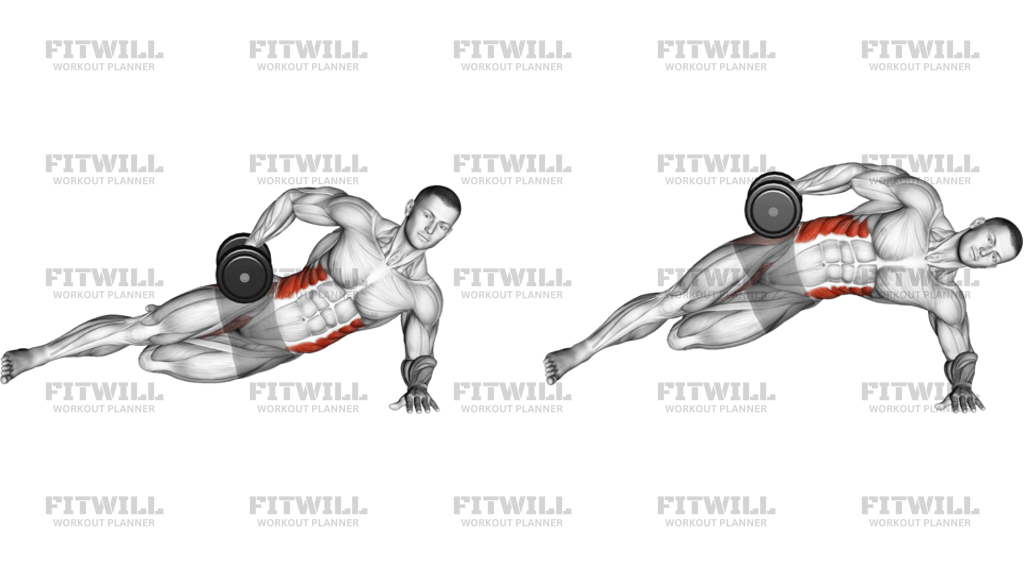
Dumbbell Lying Oblique V-Up
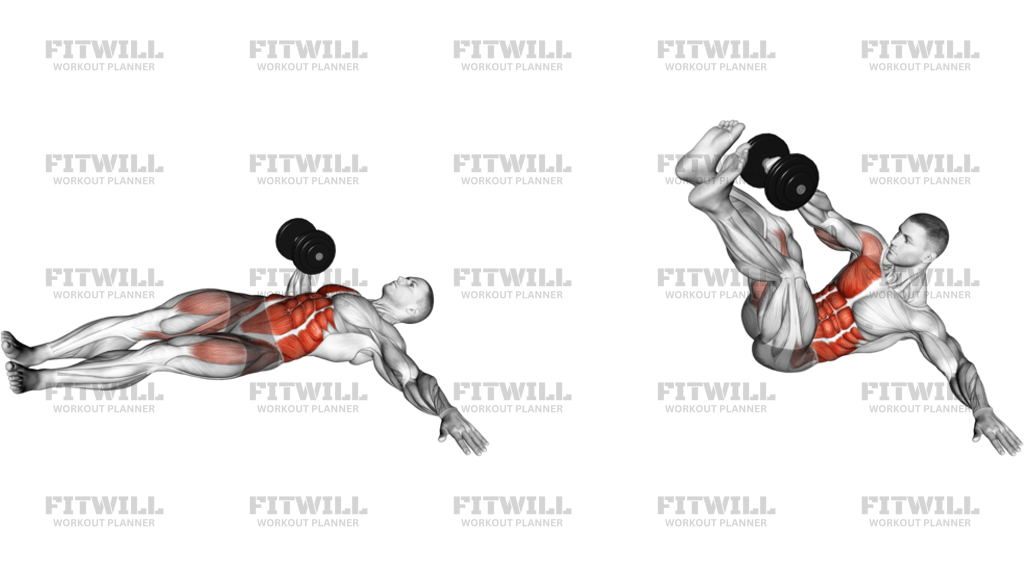
Dumbbell Lying Oblique V-Up is a floor-based core movement where you lie on your back, hold one dumbbell in a single hand, and fold the torso and legs toward each other to create a compact V shape. The exercise mainly targets the obliques while also demanding rectus abdominis, hip flexors, and the deeper stabilizers that keep the trunk from twisting off line. Because the load is offset to one side, the setup matters: the dumbbell should stay stacked over the shoulder, the free arm should have room to balance, and the ribs should stay controlled instead of flaring as you move.
This variation is useful when you want core work that feels more athletic than a basic crunch. The one-sided dumbbell adds an anti-rotation challenge, so the waist has to keep the rib cage and pelvis organized while the legs and torso close the distance. The rep should look smooth, not explosive. If you jerk the dumbbell toward your feet or kick the legs up to finish the rep, the hip flexors and momentum take over and the obliques stop doing the real work.
Start flat on the floor with one arm holding the dumbbell above the shoulder, the opposite arm extended out for balance, and the legs long and together. Exhale as you lift the shoulders, upper back, and legs at the same time, keeping the neck relaxed and the chin slightly tucked. At the top, the torso and thighs should meet in a tight but controlled crunch. Lower slowly until the shoulder blades and heels are close to the floor again, then reset without losing tension through the middle.
Use this movement in a core block, conditioning circuit, or accessory session when you want clean trunk flexion with a small stability demand. A light dumbbell is usually enough; the exercise becomes difficult quickly because the long lever of the legs and the offset load magnify every compensation. Stop the set if the low back arches, the dumbbell drifts across the chest, or the body starts to roll rather than fold. A good rep should feel precise from the first inch off the floor to the final controlled return.
[ Workout Log & Planner ]
Put your next workout in Fitwill
Keep your plan and training log ready when you are.


Instructions
- Lie on your back with one dumbbell stacked above one shoulder, the other arm reaching out to the side for balance, and your legs straight together.
- Set your rib cage down, press your lower back lightly into the floor, and look up rather than toward your knees.
- Brace before you move, then start the rep by lifting your shoulders and upper back off the floor.
- At the same time, raise your legs and fold the hips so your torso and thighs travel toward one another.
- Keep the dumbbell over the shoulder and avoid letting the weight swing across the midline.
- Squeeze the obliques at the top with control, keeping the free arm long and the neck relaxed.
- Lower slowly until your shoulders and heels are just above the floor, maintaining tension instead of dropping.
- Reset fully and repeat for the target reps, then switch sides if your program calls for alternating.
Tips & Tricks
- Use a light dumbbell first; the offset load makes even small jumps feel much harder.
- If your lower back arches on the way down, shorten the leg range or bend the knees slightly.
- Think about curling the ribs toward the pelvis, not throwing the feet at the ceiling.
- Keep the dumbbell directly above the shoulder so the shoulder does not drift forward under load.
- Exhale during the fold-up and inhale as you lower back out.
- A brief pause at the top is better than adding speed to fake a higher rep.
- Keep the free shoulder blade on the floor during the start and end positions so the twist does not become a roll.
- Stop when your neck starts pulling or your hips take over the lift.
Frequently Asked Questions
What muscle does Dumbbell Lying Oblique V-Up target most?
The obliques are the main target, with the rectus abdominis, hip flexors, and deep core muscles helping to control the lift and return.
Why hold a dumbbell in one hand instead of using both hands?
The single dumbbell adds an offset load that forces the waist to resist rotation while you fold up.
Is this more of a crunch or a leg raise?
It is a combined crunch and leg raise. The goal is to bring the torso and legs together under control rather than perform either part by itself.
Should my knees stay straight?
Straight legs make the movement harder. If your low back arches, soften the knees and keep the same controlled path.
How do I know if I am using too much weight?
If the dumbbell pulls your shoulder forward, your torso twists, or your legs start swinging, the weight is too heavy.
Can beginners do this exercise?
Yes, but begin with bodyweight or a very light dumbbell and a shorter range until you can keep the spine organized.
Where should I feel the rep?
Most of the effort should land in the side of the waist and front of the trunk, not in the neck or lower back.
What is the most common mistake?
Rushing the lift and using momentum. The rep should fold, pause briefly, and return with control.