Dumbbell Side Bend
Dumbbell Side Bend is a standing trunk-flexion exercise that loads the obliques one side at a time while asking the hips, ribs, and spine to stay organized. In this variation you hold one dumbbell at your side and keep the other hand behind your head, so the torso can lean only in the frontal plane without turning or drifting forward. The goal is not to chase a huge range of motion, but to keep a clean line from the feet through the pelvis and ribs while the side waist does the work.
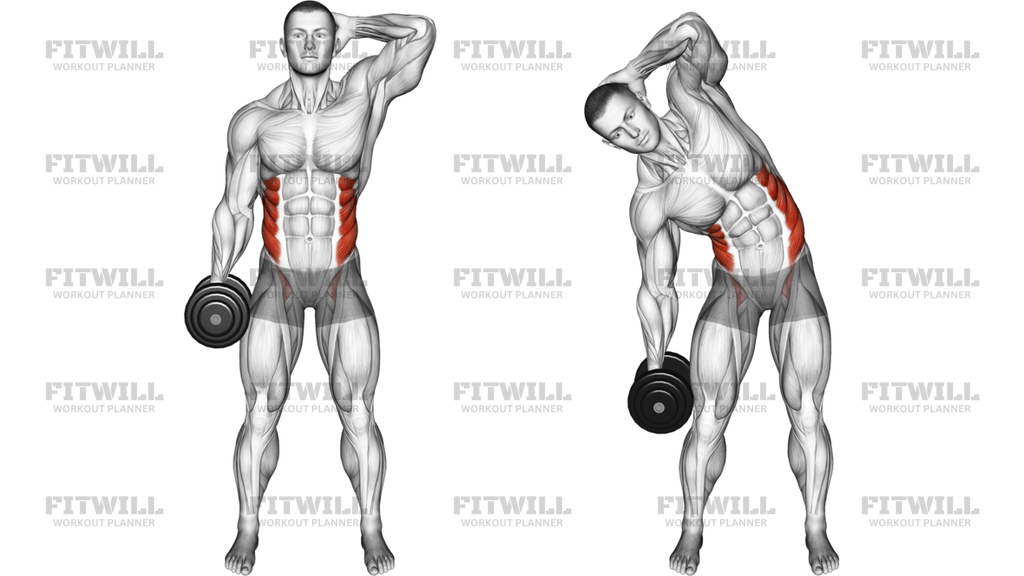
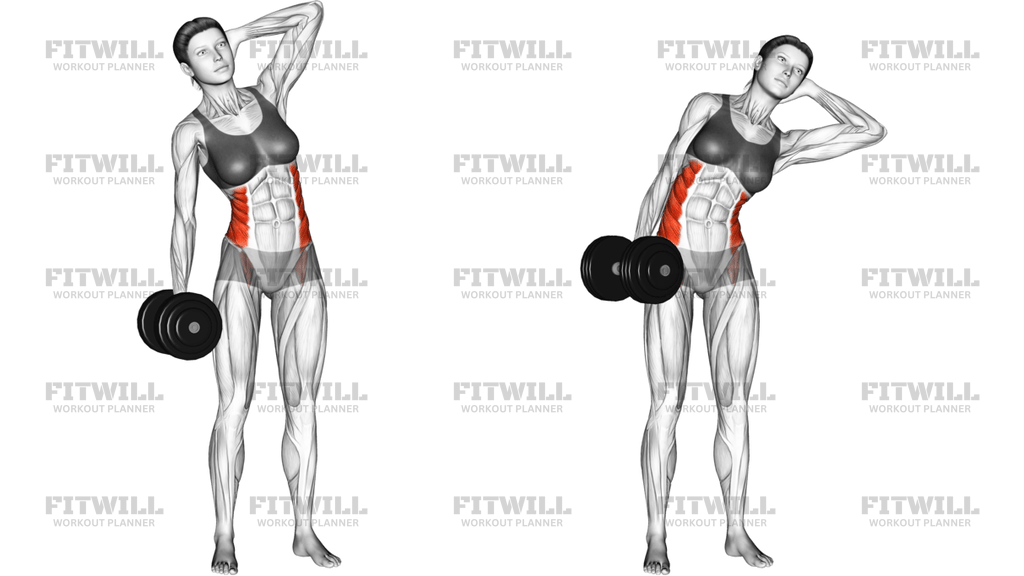
The image shows the working arm hanging straight down and the free hand supporting the head, which is a useful reminder to keep the shoulders level and the neck relaxed. That setup lets you feel the side of the waist lengthen on the way down and contract on the way back up. When the body stays stacked, the obliques can create the movement smoothly instead of the lower back and hip shifting the load around.
This exercise is usually used for accessory ab work, core training, or as a controlled finisher after bigger lifts. It can also help lifters learn how to resist lateral flexion under load, which carries over to carries, unilateral lifting, and sports that demand trunk stiffness. It is simple to learn, but the setup matters: feet should stay planted, the chest should face forward, and the dumbbell should travel close to the leg rather than swinging away from the body.
Because the movement is short and deliberate, the best reps feel smooth rather than explosive. Lower under control until the waist on the opposite side feels a clear stretch, then use the working-side obliques to bring the torso back to tall standing. Breathing should stay steady, with a controlled exhale as you return upright and an easy inhale near the top before the next repetition.
Use a load that challenges the side body without forcing you to lean, twist, or hike the shoulder. If the dumbbell starts pulling you off balance, the motion becomes a sway instead of a side bend. Done correctly, this exercise builds useful control through the waist, reinforces better trunk position, and gives you a focused way to train the obliques without needing complicated equipment.
[ Workout Log & Planner ]
Put your next workout in Fitwill
Keep your plan and training log ready when you are.


Instructions
- Stand tall with one dumbbell in one hand at your side and your feet about hip-width apart.
- Place your free hand behind your head or lightly across your chest, then keep your chest facing forward.
- Let the dumbbell hang straight down with the working shoulder relaxed and the elbow slightly soft.
- Brace your midsection and slowly bend your torso toward the dumbbell side without leaning forward or rotating.
- Lower until you feel a strong stretch along the opposite side of your waist and your hips stay stacked under your shoulders.
- Pause briefly at the bottom, keeping the dumbbell close to your leg and out of swing.
- Drive your torso back to upright by squeezing the obliques on the working side and exhaling as you rise.
- Reset at the top before the next rep and repeat for the planned number of repetitions.
- Switch sides and match the same tempo, range, and body position on the other side.
Tips & Tricks
- Keep the rib cage pointed forward; if your chest turns, the set stops being a true side bend.
- Let the dumbbell travel straight down beside the leg instead of drifting forward in an arc.
- A slight bend in the knees can help you stay balanced without turning the movement into a hip hinge.
- Stop the descent when your pelvis starts to slide sideways or your lower back takes over the motion.
- Think about shortening the working side of your waist to stand back up, not yanking the weight with the arm.
- Keep the shoulder of the loaded side away from your ear so the neck does not become the limiting factor.
- Use a controlled lowering phase; dropping fast removes tension from the obliques and invites momentum.
- If you feel the front of the hip grabbing, shorten the range and keep both feet rooted evenly into the floor.
- Choose a dumbbell that challenges your side body without forcing you to lean backward to counterbalance it.
Frequently Asked Questions
What muscles do dumbbell side bends work?
They primarily train the obliques, with the rectus abdominis, transverse abdominis, and spinal erectors helping stabilize the torso.
Should I bend toward the dumbbell or away from it?
Bend toward the side holding the dumbbell, keeping the chest square and the hips level as the opposite side of the waist lengthens.
Why is one hand behind the head in the image?
That arm position helps keep the torso upright and the shoulders open, but it should not be used to yank the neck or twist the ribs.
How far down should I lower on each rep?
Lower only until the side waist reaches a strong stretch and the pelvis stays stacked; deeper range is not better if it turns into a sway.
Is this a good exercise for beginners?
Yes, beginners can learn it well with a light dumbbell and a small range of motion as long as they keep the torso square and controlled.
What is the most common form mistake?
The biggest mistake is twisting or swinging the torso instead of bending cleanly in one plane.
Can I do side bends with both dumbbells at once?
A two-dumbbell version changes the loading and usually reduces the side-to-side control challenge, so most people use one dumbbell at a time for this movement.
How heavy should the dumbbell be?
Pick a weight that makes the obliques work hard while still letting you keep the shoulder relaxed and the body from drifting or bouncing.
When should I include dumbbell side bends in my workout?
They fit well as accessory core work after the main lifts or in a trunk-focused session where you want direct oblique loading.