Kettlebell Sumo Deadlift
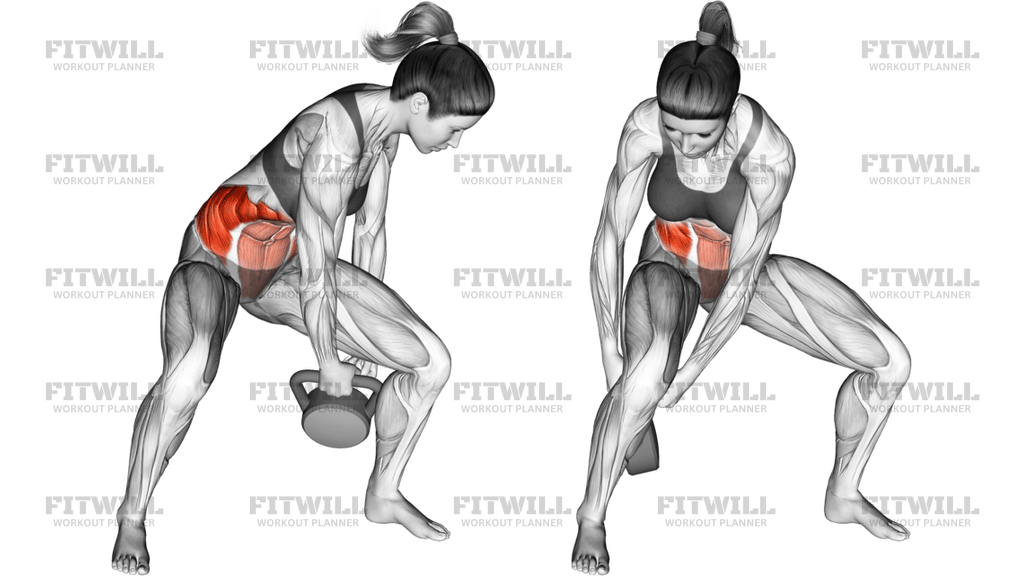
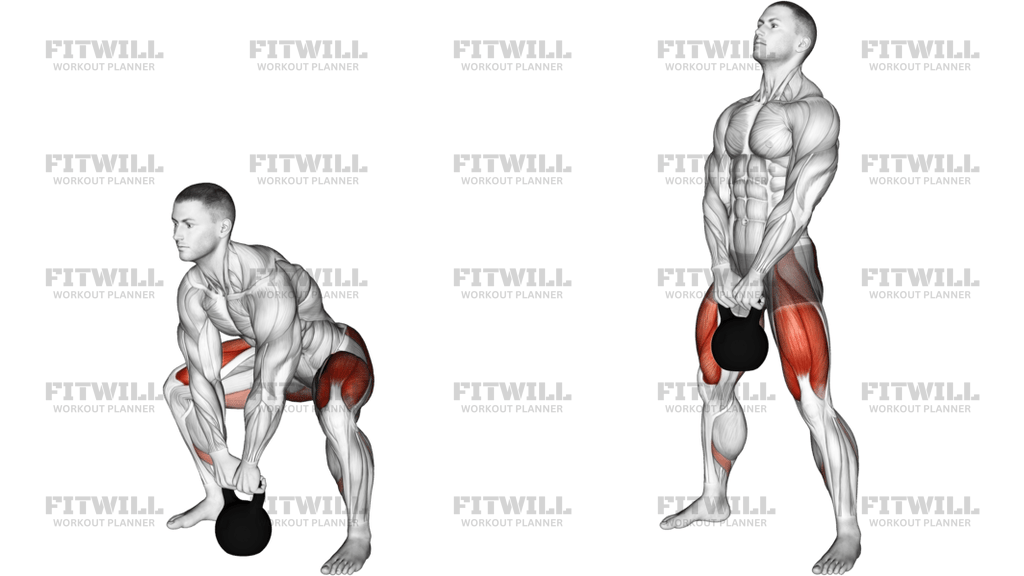
Kettlebell Sumo Deadlift is a lower-body hinge performed with a wide stance and the kettlebell centered on the floor between your feet. The image shows a two-hand grip, toes turned out, and the torso staying long as the hips drop between the knees. That setup matters because the wide stance shortens the reach to the kettlebell and helps the legs and hips share the work instead of turning the lift into a back-dominant pull.
This variation is usually chosen to train the hips, glutes, adductors, hamstrings, and core with a controlled deadlift pattern. Compared with a narrow-stance deadlift, the sumo stance asks you to keep the knees tracking out, the chest organized, and the kettlebell close to the body. When the start position is right, the rep feels powerful off the floor and stable at the top.
The lift begins by sitting the hips down into the stance, reaching both hands to the kettlebell handle, and loading the feet before the weight leaves the ground. From there, drive the floor apart with your feet, keep the kettlebell close, and stand by extending the knees and hips together. At the top, finish tall without leaning back or shrugging the shoulders. The lowering phase should be just as deliberate: push the hips back, guide the kettlebell to the floor, and reset your brace before the next rep.
Because the kettlebell starts low and centered, small setup errors show up quickly. If the stance is too narrow, the knees collapse inward, or the chest drops too far, the lift becomes harder to control and the lower back takes over. A clean rep should feel like a strong leg drive with steady trunk tension, not a yank from the arms.
Use Kettlebell Sumo Deadlift as a strength builder, a hinge-pattern accessory, or a practical teaching drill for learning how to brace and stand up from the floor. It works well for beginners when the load stays modest and the range stays pain-free, but it also scales well for heavier strength work when posture stays locked in. The goal is repeatable reps that look and feel the same from the first rep to the last.
[ Workout Log & Planner ]
Put your next workout in Fitwill
Keep your plan and training log ready when you are.


Instructions
- Stand with your feet wider than shoulder-width, turn your toes out, and place the kettlebell on the floor centered between your ankles.
- Hinge down and bend your knees until you can grip the kettlebell handle with both hands, keeping your shins fairly upright and your chest lifted.
- Set your shoulders down and back lightly, then brace your trunk before the bell leaves the floor.
- Drive through the whole foot and push the floor apart as you stand up with the kettlebell close to your body.
- Extend your hips and knees together until you are tall, but do not lean back at the top.
- Lower the kettlebell by sending your hips back first, then bending your knees once the bell passes them.
- Let the kettlebell settle back to the floor with control and reset your breath before the next rep.
- Repeat for the planned number of repetitions with the same stance and setup each time.
Tips & Tricks
- Keep the kettlebell centered under your body so you are not reaching forward and losing leverage.
- Turn the toes out enough that your knees can track in line with them during the drive off the floor.
- If the handle is hard to reach, lower your hips slightly instead of rounding your upper back.
- Think about pushing the floor apart rather than simply pulling the kettlebell upward with your arms.
- Keep the bell brushing close to your legs on the way up and down so it stays balanced between your feet.
- Finish tall with the glutes, but avoid hyperextending the lower back at lockout.
- Lower under control and touch down softly so every rep starts from the same position.
- Use a lighter kettlebell if your knees collapse inward or your chest drops before the bell leaves the floor.
Frequently Asked Questions
What muscles does the kettlebell sumo deadlift work?
It primarily trains the hips and glutes, with the adductors, hamstrings, and core helping stabilize the wide stance.
Is the kettlebell supposed to start between the feet?
Yes. In this variation the bell starts centered on the floor between your feet so you can keep the pull short and balanced.
How wide should my stance be?
Wide enough that your hands can reach the handle between your knees without forcing your chest to collapse or your heels to pop up.
Should my arms do the lifting?
No. The arms just connect you to the kettlebell; the legs and hips should drive the movement.
Can beginners use this exercise safely?
Yes, as long as they keep the load light enough to hold a neutral spine and controlled knee tracking.
What is the most common form mistake?
Letting the knees cave in or turning the rep into a back pull instead of a leg-driven floor press.
How low should I go on the way down?
Lower only until the kettlebell returns to the floor and your hips can reset cleanly for the next rep.
What should I feel at the top of the rep?
You should feel the glutes and hips finish the lift while the torso stays tall and the ribs stay stacked over the pelvis.