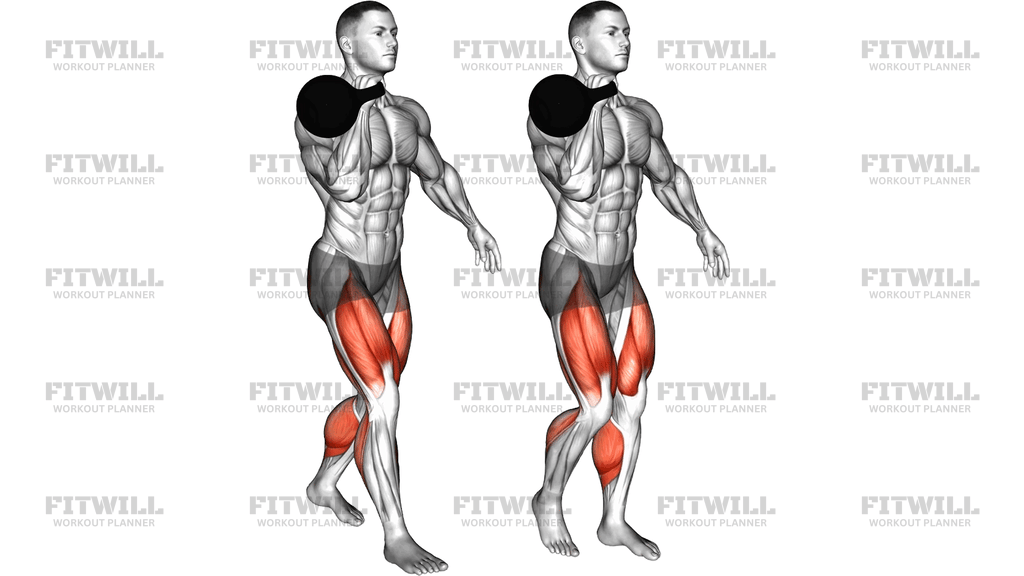
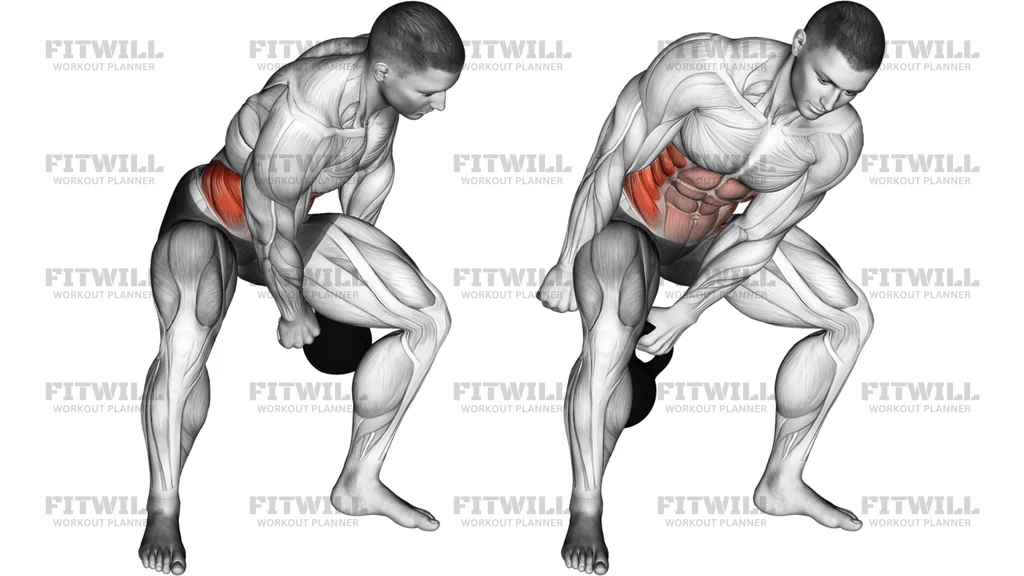
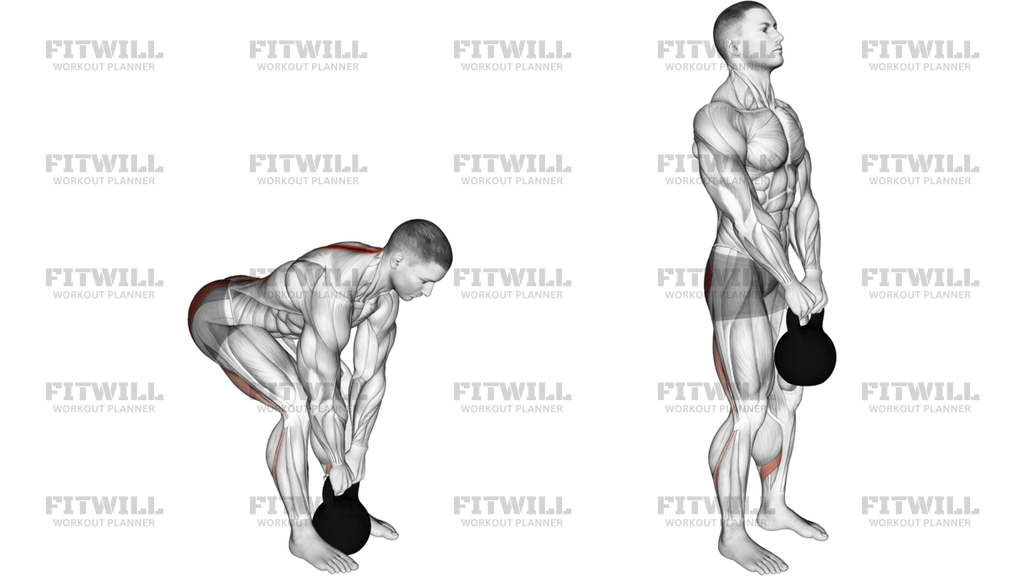
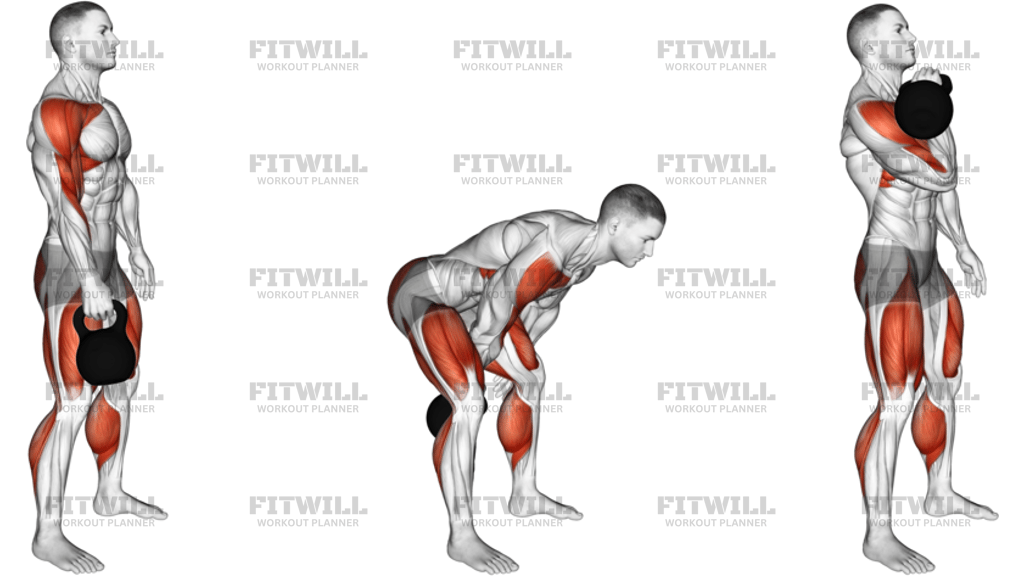
Kettlebell Side Lunge
Kettlebell Side Lunge is a lower-body strength exercise built around a wide lateral step, a hip shift, and a controlled descent into one bent leg while the other leg stays long. The kettlebell is held in a goblet position at the chest, which helps keep the torso upright and gives you a clear cue to stay braced as you move side to side.
This movement is especially useful when you want to train the thighs through a different path than a squat or split squat. The loaded side works hardest through the hip, knee, and ankle, while the opposite leg stays straighter and acts as a long inner-thigh stretch and position check. That makes the exercise valuable for quad strength, glute involvement, adductor loading, and lateral control.
The setup matters more here than in many straight-ahead leg exercises. A stance that is too narrow turns the rep into a shallow knee bend, while a stance that is too wide can make you fold forward or lose balance. Hold the kettlebell tight to the chest, keep the ribs stacked over the pelvis, and step out far enough that the bent leg can track cleanly over the foot.
On each rep, send the hips back toward the loaded leg and keep the opposite leg extended with the foot planted. The torso should stay proud rather than collapsing toward the floor, and the kettlebell should remain steady instead of drifting away from the chest. Press through the whole foot to stand back up, then bring your feet back to the starting stance with control before the next rep.
Use this exercise as accessory strength work, a lower-body warmup, or a lateral-plane variation when you want more adductor and hip control. It works well with moderate loads and deliberate tempo, especially when you are trying to improve side-to-side strength, single-leg stability, and the ability to keep the knees and hips organized under load. If depth or balance breaks down, shorten the range and keep the rep crisp.
[ Workout Log & Planner ]
Put your next workout in Fitwill
Keep your plan and training log ready when you are.


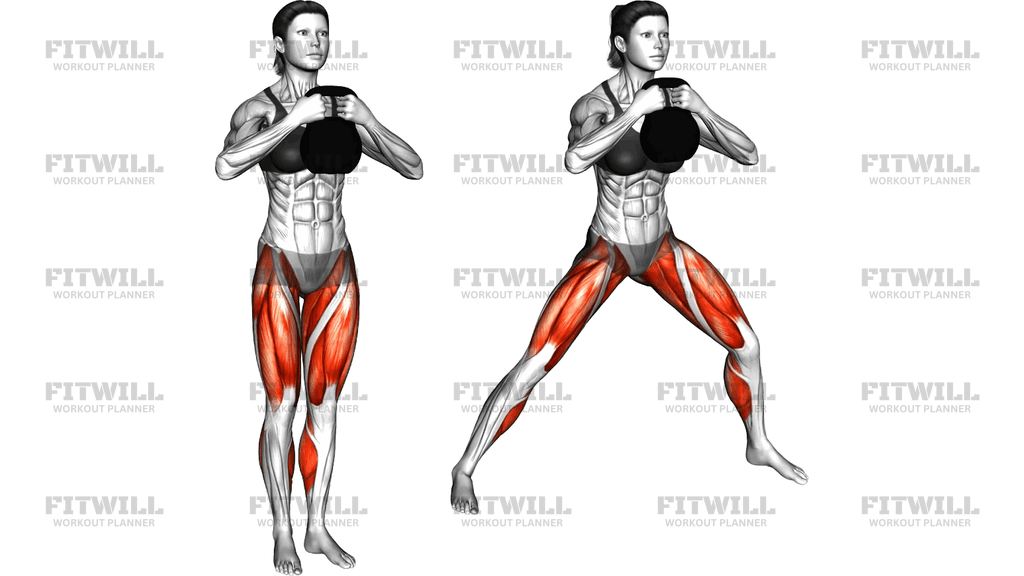
Instructions
- Stand tall with the kettlebell held in both hands at chest height in a goblet grip, elbows close to your ribs.
- Take a shoulder-width-to-wide stance with both feet flat and your toes slightly turned out.
- Brace your midsection and keep your chest lifted before you move.
- Step one foot out to the side and shift your hips toward that leg.
- Sit back into the bent leg while keeping the opposite leg straight and the planted foot grounded.
- Lower until the bent knee and hip reach a comfortable depth without losing the upright torso position.
- Press through the whole foot of the bent leg to stand back up.
- Bring your feet back to the starting stance with control and reset your brace before the next rep.
- Alternate sides on the next rep if your program calls for it, or complete all reps on one side before switching.
- Keep breathing steady: inhale as you step and lower, then exhale as you drive back to standing.
Tips & Tricks
- Keep the kettlebell tight to your chest so it does not pull your shoulders forward.
- The working foot should stay flat; if the heel lifts, shorten the range or widen your stance a little less.
- Let the hips travel back and across instead of dropping straight down like a squat.
- The non-working leg should stay long, with the foot planted and the inner thigh loaded as you sink into the lunge.
- Track the bent knee over the middle toes instead of letting it cave inward.
- Use a controlled tempo on the way down so you do not bounce out of the bottom.
- Choose a kettlebell that lets you stay tall; if the torso folds, the load is too heavy or the stance is too aggressive.
- If balance is limiting depth, pause briefly at the bottom and stand before stepping the feet back together.
- Keep the neck relaxed and gaze forward rather than looking down at the floor.
- Stop the set when you can no longer keep both feet grounded and the kettlebell stable at the chest.
Frequently Asked Questions
What does the kettlebell side lunge train most?
It primarily trains the thighs, especially the quadriceps and adductors, with the glutes and core helping you stay organized through the side-to-side shift.
How should I hold the kettlebell?
Hold it in a goblet position at the chest with both hands, elbows tucked in close so the bell stays centered and does not pull you forward.
How wide should my stance be?
Wide enough that you can sit into one side while the other leg stays long, but not so wide that you have to round your back or lose your balance.
What should the bent leg do during the descent?
The bent leg should track over the middle toes as the hip sits back, with the whole foot staying on the floor and the knee not collapsing inward.
Should the other leg bend too?
Only slightly. The opposite leg should stay mostly straight so you can load the inner thigh and keep the movement clearly lateral.
Can beginners use this exercise?
Yes, beginners can use a light kettlebell and a shorter range of motion until they can keep the torso upright and the feet flat.
What is the most common mistake?
Leaning the chest forward and letting the kettlebell drift away from the body are the most common ways people lose control of the rep.
How do I know if the load is too heavy?
If you cannot keep the goblet hold steady, the knee caves in, or you have to twist the torso to get out of the bottom, the kettlebell is too heavy.
Can I alternate sides every rep?
Yes, you can alternate sides if that matches your program, but keep each rep controlled and reset your stance before shifting to the other side.
Where does this fit in a workout?
It works well as lower-body accessory strength work, a lateral movement drill, or a warmup before heavier leg training.