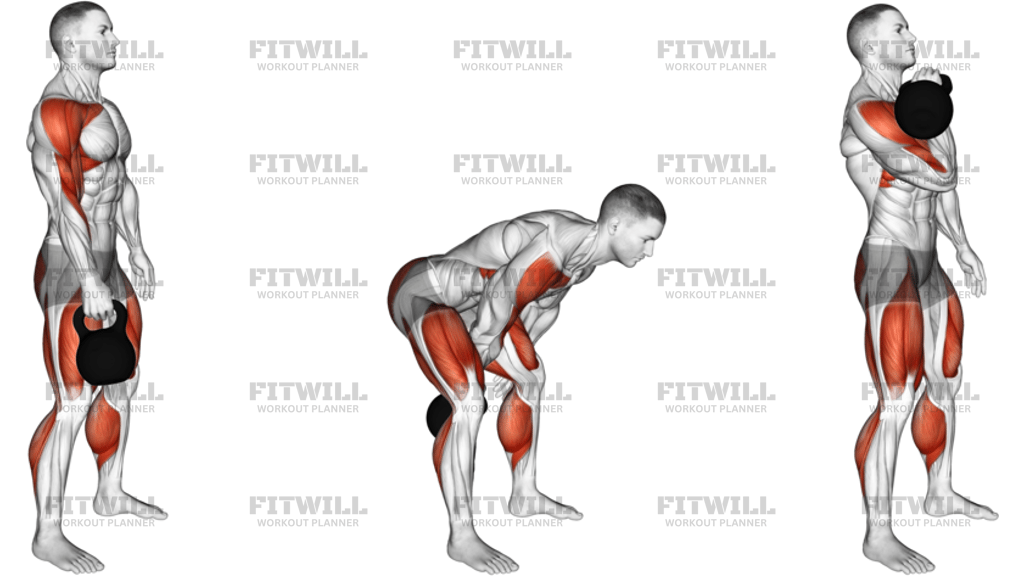
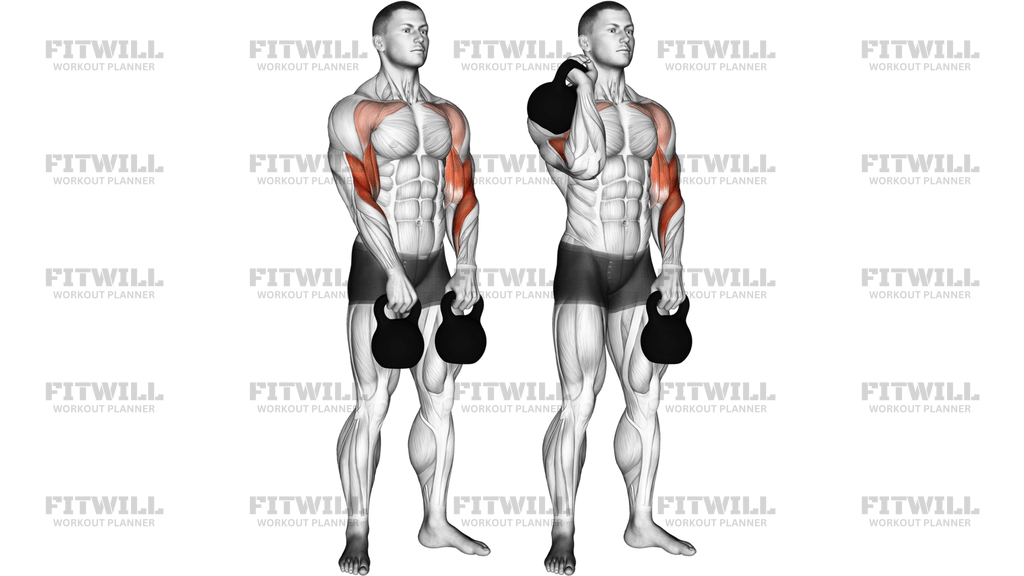
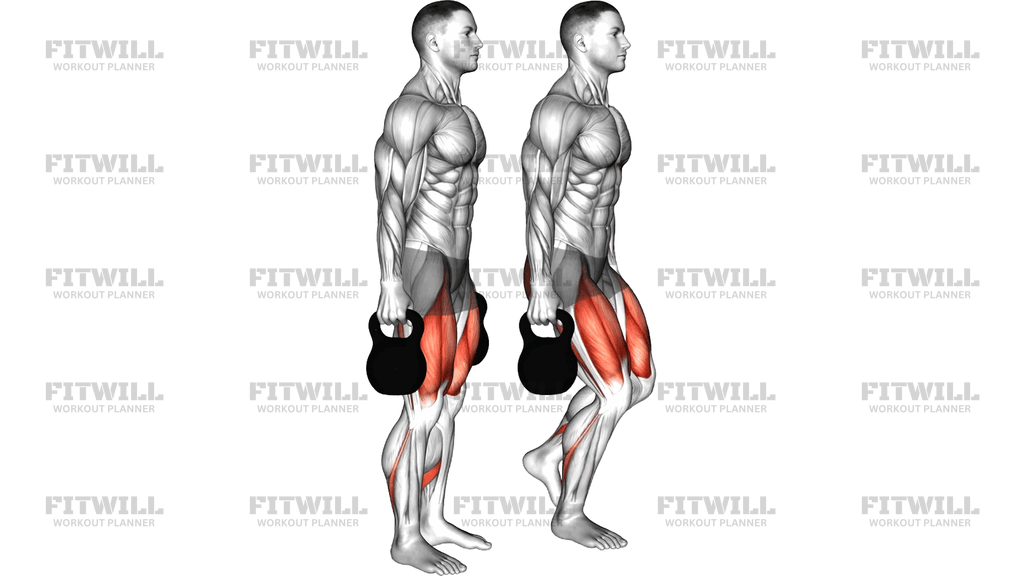
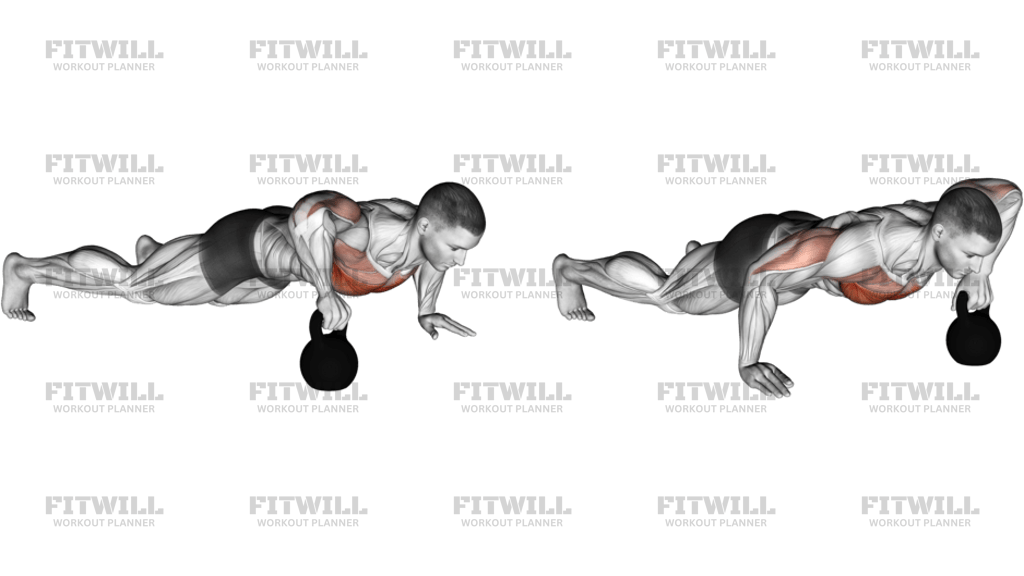
Kettlebell Standing Slingshots
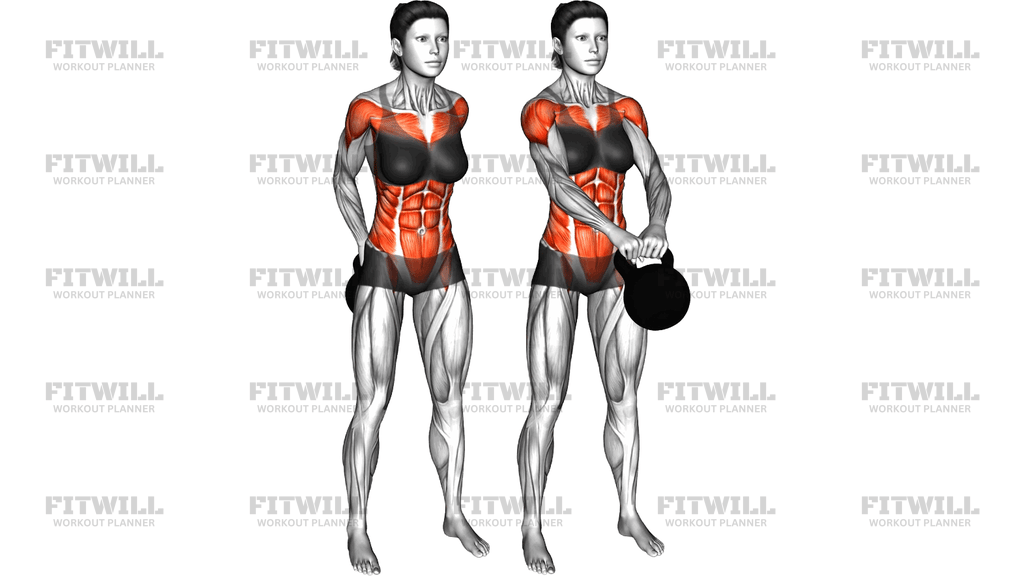
Kettlebell Standing Slingshots is a standing hand-to-hand kettlebell drill where the bell travels in a smooth loop around the waistline and behind the back. It is less about chasing heavy resistance and more about building control: the shoulders stay organized, the torso stays tall, and the hands exchange the kettlebell cleanly as it passes from one side of the body to the other.
The exercise is useful when you want coordinated upper-body work without the harsh loading of a swing or press. It challenges grip endurance, shoulder stability, upper-back posture, and anti-rotation control while the bell keeps moving. That makes it a good warm-up, active recovery drill, or light conditioning movement before heavier kettlebell work.
The setup matters because the path of the bell is tight to the body. Stand with a stable base, soft knees, and a braced midsection so the waist can stay the center of the circle. If the kettlebell drifts away from your hips, the movement turns into a reach-and-twist pattern instead of a controlled transfer. Keeping the bell close also makes the handoff cleaner and easier on the lower back.
Each repetition should feel smooth and rhythmic. The bell passes across the front of the hips, around the back, and into the other hand without a big pause or a throw. Keep the chest tall, the shoulders relaxed, and the neck long while you breathe steadily through the cycle. If the transfer gets sloppy, shorten the range, slow the pace, or reduce the load until the orbit stays crisp.
In programming, Kettlebell Standing Slingshots fits best as technique work, a low-fatigue finisher, or a transition drill between harder sets. It rewards precision more than speed, so the goal is clean repeats rather than a frantic count. Use a light bell you can guide smoothly, and stop the set when the torso starts to sway or the handoff loses control.
[ Workout Log & Planner ]
Put your next workout in Fitwill
Keep your plan and training log ready when you are.


Instructions
- Stand upright with your feet about shoulder-width apart and hold the kettlebell in one hand just in front of one hip.
- Keep your knees soft, chest tall, shoulders relaxed, and ribs stacked over your pelvis before the bell starts moving.
- Brace your midsection and guide the kettlebell across the front of your waist toward the opposite side instead of swinging it low.
- Let the bell travel tightly around your back at belt-line height while you keep the torso mostly square to the front.
- Receive the kettlebell with the other hand near the opposite hip, then continue the circle without letting the bell drift away from your body.
- Use a small foot pivot or weight shift only if needed to keep the pass smooth and avoid twisting through the lower back.
- Keep your shoulders down and your neck long as the bell moves behind you and reappears at the front.
- Exhale through the transfer and inhale on the way around, keeping the breathing steady rather than holding your breath.
- Continue for the planned reps or time, then slow the bell down and stop it beside your thigh with control.
Tips & Tricks
- Keep the kettlebell close to your waist; a wide orbit makes the drill jerky and harder on the low back.
- The handoff should happen near the hip line, not with a big reach behind the body.
- Use a bell that feels easy to redirect. This movement should feel smooth, not like you are fighting the load.
- If the bell clips your shorts or thighs, raise the path slightly and keep the circle at belt height.
- Stay tall through the chest and avoid leaning toward the bell as it moves behind you.
- A small pivot of the feet is fine, but a full torso twist usually means the kettlebell is too heavy or moving too fast.
- Keep your grip firm enough to control the handle, but avoid squeezing so hard that your forearms tense up and slow the transfer.
- Match your breathing to the rhythm of the pass so the set stays smooth from side to side.
- Reverse direction after a set to balance coordination on both sides of the body.
- Stop the set as soon as the shoulders start shrugging or the handoff turns sloppy.
Frequently Asked Questions
What does Kettlebell Standing Slingshots train?
It trains shoulder stability, grip endurance, upper-back posture, core control, and coordinated hand-to-hand transfer around the waist.
Is this the same as a kettlebell swing?
No. The bell travels in a controlled circle around the body instead of hinging between the legs and driving from the hips.
How heavy should the kettlebell be for slingshots?
Use a light kettlebell that you can guide smoothly around your waist without leaning, twisting, or losing the handoff.
Can beginners do this exercise?
Yes. It is usually beginner-friendly if the bell is light and the pace stays slow enough to keep the transfer clean.
Where should the kettlebell pass behind me?
It should travel close to the belt line behind your back, not drop toward the knees or flare far away from the torso.
Why do my shoulders feel tense during slingshots?
Tension usually means the bell is too heavy, the path is too wide, or you are shrugging instead of letting the shoulders stay relaxed.
Should my feet move during the exercise?
A small pivot is fine if it keeps the circle smooth, but your base should stay mostly planted and stable.
When is the best time to use this movement?
It works well as a warm-up, active recovery drill, or light finisher when you want controlled kettlebell work without high fatigue.