Dumbbell One-Arm Triceps Extension On Stability Ball
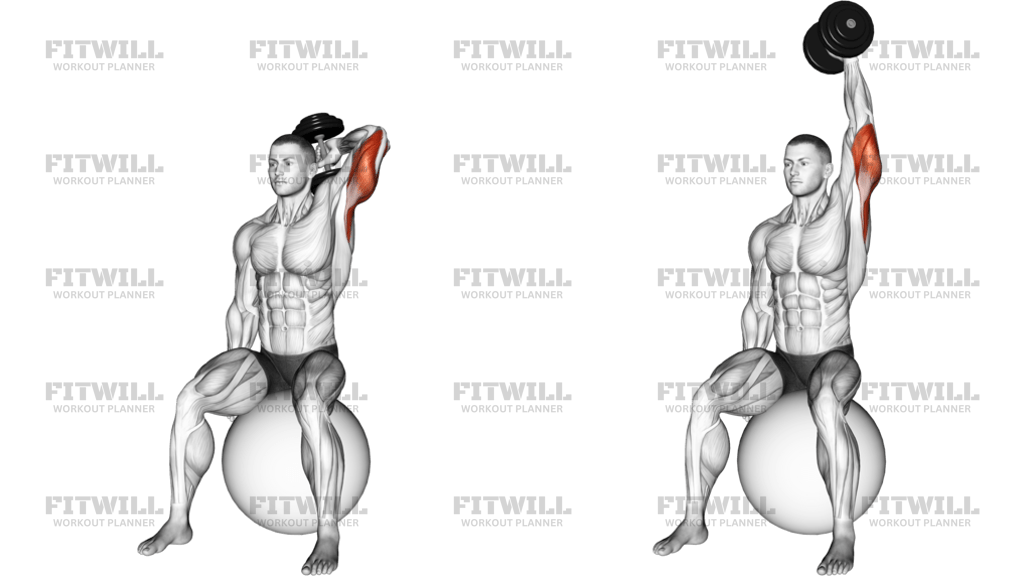
Dumbbell One-Arm Triceps Extension on a Stability Ball is a single-side overhead triceps movement performed while seated on an unstable surface. One arm works the dumbbell through elbow extension, while the torso, hips, and feet stay organized on the ball so the rep does not turn into a backbend or a swing.
The exercise is most useful when you want direct triceps work without losing the requirement to stay tall and balanced. Because you are seated on a stability ball, the setup asks for extra control from the trunk and upper back. The free hand can help lightly with balance, but the working arm should still do the majority of the lifting. That makes the position valuable for learning clean elbow tracking and controlled lockout.
The main coaching point is to keep the upper arm nearly fixed beside the head while the forearm moves. Let the dumbbell travel behind the head as the elbow bends, then extend the elbow to bring the weight back overhead. If the ribs flare or the lower back arches hard, the triceps lose tension and the ball becomes a compensation tool instead of a support. A steady foot base, a neutral neck, and a quiet torso make the movement much more productive.
Use a light to moderate load that lets you pause briefly in the stretched position and finish each rep without drifting sideways on the ball. This is a strong accessory choice for arm sessions, upper-body finishers, or core-friendly pressing alternatives when you want one arm to work at a time. Beginners can use it if they can sit securely on the ball and control the dumbbell path without wobbling.
The safest and most effective reps are smooth, not explosive. Lower the dumbbell under control, keep the elbow pointed mostly forward, and finish with the arm straight but not violently snapped into lockout. If shoulder comfort is limited, shorten the range slightly and keep the upper arm a little farther from the ear. The goal is a repeatable triceps extension with stable posture, not a bigger range earned by losing position.
Fitwill
Log Workouts, Track Progress & Build Strength.
Achieve more with Fitwill: explore over 9600 exercises with images and videos, access built-in and custom workouts, perfect for both gym and home sessions, and see real results.
Start your journey. Download today!




Instructions
- Sit tall on a stability ball with both feet planted wider than hip-width and your weight centered over the ball.
- Hold one dumbbell overhead in the working hand, palm facing in or forward, with the elbow close to your head.
- Use the free hand to lightly steady yourself on the opposite thigh or the ball if needed.
- Brace your midsection and keep your ribs stacked over your pelvis before you start the rep.
- Bend the working elbow to lower the dumbbell behind your head until you feel the triceps lengthen.
- Keep the upper arm mostly still and avoid letting the elbow drift wide as the weight lowers.
- Exhale as you extend the elbow and press the dumbbell back to the overhead start position.
- Finish each rep with the arm straight, the wrist stacked over the elbow, and the torso still.
- Lower the dumbbell under control for the next repetition and keep breathing steady throughout the set.
Tips & Tricks
- If the ball rolls under you, widen your stance before you add weight.
- Keep the working elbow pointed mostly upward so the triceps, not the shoulder, drive the rep.
- Do not arch your lower back to get the dumbbell higher; that usually means the load is too heavy.
- A neutral or slightly turned-in wrist is usually easier to control than a bent wrist at the top.
- Pause for a beat in the stretched position behind the head to keep tension on the triceps.
- Use a shorter range if your shoulder pinches when the upper arm gets too close to your ear.
- The free hand should stabilize, not push you sideways off the ball.
- Slow lowering gives you more triceps work than chasing a fast lockout.
- Stop the set when the elbow starts flaring out or the torso begins to twist.
Frequently Asked Questions
What muscles does the one-arm triceps extension work most?
It primarily targets the triceps on the working arm, with the shoulders, core, and hips helping you stay balanced on the stability ball.
Why use a stability ball instead of a bench?
The ball adds a balance demand, so you have to keep your torso stacked and your feet active while you isolate the triceps.
How should my elbow move during the rep?
The elbow should bend and straighten while staying close to the head. If it drifts wide, the shoulder usually takes over.
What should I do if the ball feels unstable?
Widen your foot position, lower the weight, and sit more centered on the ball before you continue.
Can beginners do this exercise safely?
Yes, if they start light and can sit securely on the ball without leaning or twisting to finish the rep.
How low should the dumbbell go behind my head?
Lower it only as far as you can keep your ribs down and your upper arm mostly still. A smaller range is better than turning it into a backbend.
What is the most common form mistake?
Most people flare the ribs and swing the dumbbell up instead of extending the elbow with control.
How do I choose the right load?
Pick a weight that lets you lower the dumbbell slowly, pause briefly in the stretch, and finish every rep without wobbling on the ball.
Is this a good accessory exercise for arm training?
Yes. It works well as a triceps accessory after bigger pressing work or in a focused arm session.