Bird Dog Push-Up
Bird Dog Push-Up combines a push-up with a contralateral bird-dog reach, so each rep asks for pressing strength and anti-rotation control at the same time. It is a bodyweight floor exercise that challenges the chest, triceps, front shoulders, and core while also demanding clean hip and shoulder alignment. The bird-dog reach makes the repetition less about raw push-up volume and more about how well you can keep the torso organized when one arm and the opposite leg leave the floor.
The movement is especially useful when you want pressing work that also trains stability through the ribs, pelvis, and scapulae. Compared with a standard push-up, the reach adds a balance and coordination demand that exposes twisting, sagging, and shoulder shrugging quickly. That makes the exercise valuable for warm-ups, accessory blocks, core-focused sessions, and conditioning circuits where you want the upper body to work hard without losing control of the trunk.
Set up in a high plank with the hands under the shoulders, the feet set wide enough to keep the pelvis steady, and the neck long. Lower the chest between the hands with the elbows angled slightly back, then press to a strong plank before lifting one arm forward and the opposite leg back. The reach should feel long and deliberate, not flung upward. Keep the ribs down, squeeze the glutes, and avoid rotating the hips as the lifted arm and leg extend.
The best reps are smooth and repeatable. If the extension makes the push-up unstable, shorten the range, widen the stance, or use an easier version such as a hands-elevated push-up or a knee-supported regression. The goal is not to chase the biggest reach or the deepest drop; it is to keep pressure through the hands, tension through the trunk, and a straight line from shoulders to heels or knees throughout the set. When that stays consistent, the exercise becomes a strong blend of pressing strength, shoulder stability, and core control.
Fitwill
Log Workouts, Track Progress & Build Strength.
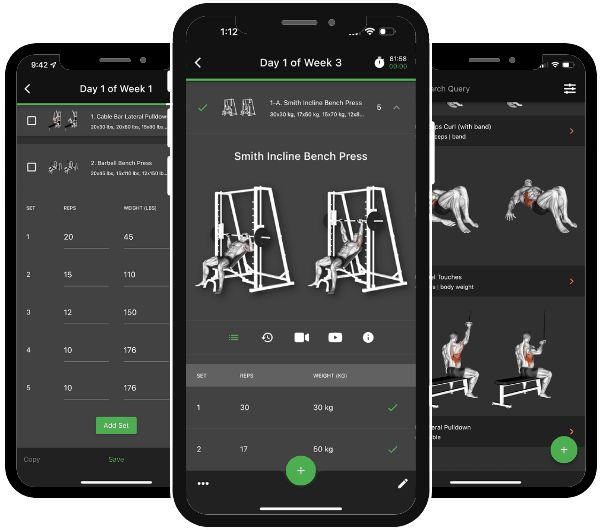
Achieve more with Fitwill: explore over 5000 exercises with images and videos, access built-in and custom workouts, perfect for both gym and home sessions, and see real results.
Start your journey. Download today!


Instructions
- Set up in a high plank with your hands under your shoulders, your feet slightly wider than hip-width, and your body in one straight line from head to heels.
- Brace your midsection, press the floor away, and keep your neck long so your head stays in line with your spine.
- Lower your chest toward the floor with your elbows tracking about 30 to 45 degrees from your sides.
- Pause briefly near the bottom without letting your hips sag or flare upward.
- Press back to a firm plank until your elbows are straight and your shoulder blades feel stable.
- From the top, shift your weight slightly onto one side and reach the opposite arm forward while extending the opposite leg straight back.
- Keep both hip bones pointed toward the floor, squeeze the glute on the lifted-leg side, and avoid twisting through your lower back.
- Return the hand and foot to the floor under control, reset the plank, and repeat on the other side.
- Breathe in on the lower, exhale on the press and reach, and finish each rep in a controlled plank before starting the next one.
Tips & Tricks
- Set your feet wider if your hips keep rotating when the opposite arm and leg leave the floor.
- Reach long rather than high on the bird-dog portion; lifting too far usually arches the low back.
- Keep the elbows from flaring out hard on the descent so the chest and shoulders can stay loaded evenly.
- Think about pressing the floor away before you reach, because a soft plank makes the extension sloppy.
- Squeeze the glute on the lifted-leg side to help keep the pelvis square.
- If the reach breaks your push-up form, do the push-up first, reset, then add the bird-dog at the top.
- Use a slower lowering phase to make each rep feel deliberate instead of bouncy.
- Keep pressure through the fingers and palms so the shoulders do not collapse forward at the top.
- Stop the set as soon as you start twisting, losing the plank line, or shrugging toward the ears.
Frequently Asked Questions
What muscles does Bird Dog Push-Up work?
It primarily trains the chest, triceps, and front shoulders, with the core, glutes, and shoulder stabilizers working hard to keep the body from rotating.
Can beginners perform this exercise?
Yes. Beginners usually do better with a wider foot stance, a hands-elevated version, or a knee-supported regression before adding the contralateral reach.
Should I lift the opposite arm and leg during the push-up or after it?
The cleanest version is to finish the push-up first, then add the arm-and-leg reach from the top plank position.
What is the biggest form mistake in Bird Dog Push-Up?
The most common problem is twisting the hips or arching the lower back when the opposite arm and leg extend.
Why are my feet often shown wider than a normal push-up stance?
A slightly wider stance gives you more balance and makes it easier to keep the pelvis level when one arm and the opposite leg leave the floor.
What should I feel if the rep is done correctly?
You should feel the chest and triceps working on the push-up, then the core and glutes working to hold the body still during the bird-dog reach.
How can I make this exercise easier?
Elevate your hands on a bench, use your knees for the push-up portion, or shorten the arm-and-leg reach until you can keep your torso steady.
Can I use Bird Dog Push-Up in a conditioning circuit?
Yes, but only if you can keep the reps clean. Once the hips start twisting or the plank sags, the set has gone too far.