Single-Arm Push-Up On Medicine Ball
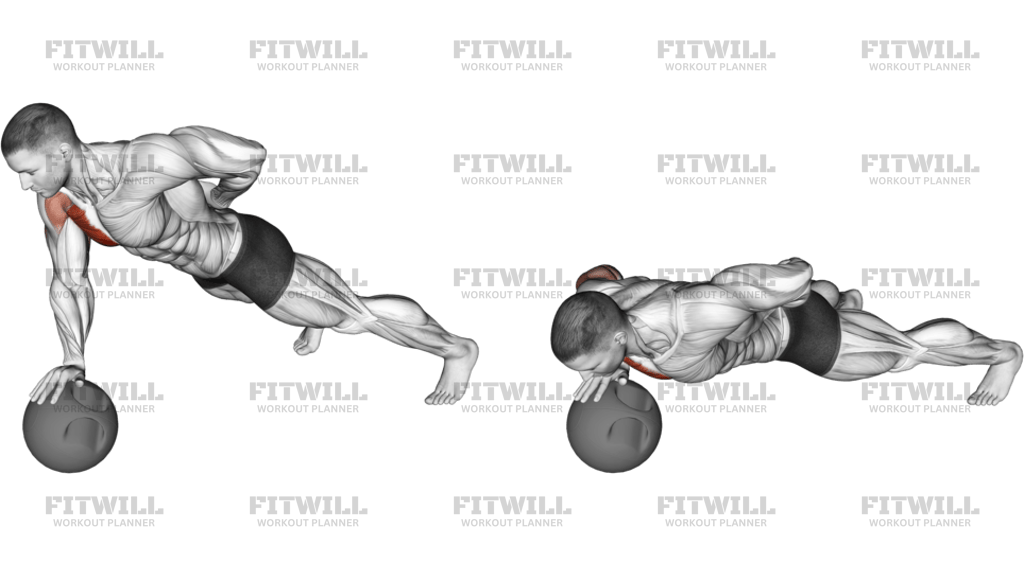
Single-Arm Push-Up On Medicine Ball is an advanced bodyweight pressing variation that combines a unilateral push-up with an unstable hand position. One palm stays on top of the medicine ball while the other arm stays off the floor, so every rep asks the chest, triceps, front shoulder, and trunk to produce force while resisting rotation. The unstable base is the point of the exercise, not a bonus challenge. If the ball is drifting, the feet are too narrow, or the torso is twisting, the rep has already lost the quality this movement is meant to train.
The setup matters more here than in a standard push-up. Place the working hand high on the ball with the wrist stacked and the fingers spread for grip. Step both feet back into a long plank and widen the stance until the hips can stay level. The free hand should stay tucked behind the back or pinned lightly to the same-side hip so it does not help balance. From the start, the body should look like one straight line from head to heels, with the ribs down and the neck long.
On the lowering phase, bend the working elbow and bring the chest toward the ball under control. Keep the elbow angled slightly back instead of flaring straight out, and let the shoulder blade move naturally without collapsing into the front of the joint. Because the support point is unstable, the rep should feel smooth and deliberate rather than deep for the sake of depth. Lower only as far as you can keep the shoulders square, the hips facing the floor, and the ball directly under the hand.
At the bottom, reverse the motion by pressing the ball away and returning to a tall plank. Exhale through the press and reset your brace before each new repetition. The goal is a clean, repeatable path with minimal sway, not a fast or explosive push that throws the ball around. When the torso starts rotating or the support hand starts sliding, the set is done.
This exercise fits best as a strength or control-focused accessory after a warm-up, or as a progression for athletes who already own stable push-up mechanics and want more unilateral demand. It is not the first push-up variation most people should learn, but it is a useful step once standard one-arm or offset push-up work is solid. Keep the reps crisp, keep the ball steady, and treat every repetition as a test of pressing strength plus anti-rotation control.
[ Workout Log & Planner ]
Put your next workout in Fitwill
Keep your plan and training log ready when you are.


Instructions
- Place one hand on top of a stable medicine ball and set the other hand behind your lower back or on the same-side hip.
- Walk your feet back into a long plank and widen your stance until your hips can stay level.
- Stack the shoulder over the ball, lock in a straight line from head to heels, and brace your ribs down.
- Keep the free arm tucked away so it does not help with balance or pressing.
- Lower your chest toward the ball by bending the working elbow and keeping it angled slightly back.
- Stay square through the hips and shoulders as you descend, letting the ball move only as much as needed for control.
- Pause at the deepest position you can own without the shoulder collapsing or the ball sliding.
- Press the ball away until the arm is straight again and the plank is tall and steady.
- Reset your brace and repeat for the planned reps before switching sides.
Tips & Tricks
- Use a heavy, stable medicine ball; a soft or easily rolling ball makes the exercise harder to control than it should be.
- Widen your feet before you shorten your range. A broader base is the fastest way to keep the torso from twisting.
- Keep the wrist stacked over the top of the ball so pressure stays centered instead of pushing the ball sideways.
- Let the elbow travel about 30 to 45 degrees from the torso instead of flaring straight out to the side.
- If the free shoulder drops toward the floor, shorten the descent before adding more reps.
- Keep the glutes tight so the pelvis does not spin open as you press.
- Exhale as you push away from the ball, then re-brace before the next lowering phase.
- Stop the set as soon as the ball starts drifting or you need to twist to finish the rep.
Frequently Asked Questions
What makes a single-arm push-up on a medicine ball different from a regular one-arm push-up?
The ball adds an unstable support point, so the working side has to produce force while also resisting rotation and small balance shifts.
Which muscles work hardest in this exercise?
The chest and triceps drive the press, while the front shoulder, serratus, obliques, and deep core keep the body square over the ball.
How should I position my feet?
Use a wider stance than a normal push-up. If your hips twist or rock, move the feet farther apart before trying to go deeper.
Where should the free hand go?
Tuck it behind your lower back or rest it lightly on the hip so it stays out of the way and does not help with the rep.
How low should I lower on the ball?
Lower only as far as you can keep the shoulder stable and the torso square. If the ball slips or the shoulder collapses, shorten the range.
Is this a beginner-friendly push-up variation?
Not usually. Most people should own stable floor push-ups and easier one-arm progressions before adding the medicine ball.
What is the most common mistake with the medicine ball?
Rotating the body toward the support hand is the big one. Keep the chest, hips, and belt line facing the floor as much as possible.
How can I make this exercise harder without losing form?
Use a narrower foot stance only if the torso stays square, slow the lowering phase, or add a brief pause near the bottom.