Cable One-Arm Reverse Fly
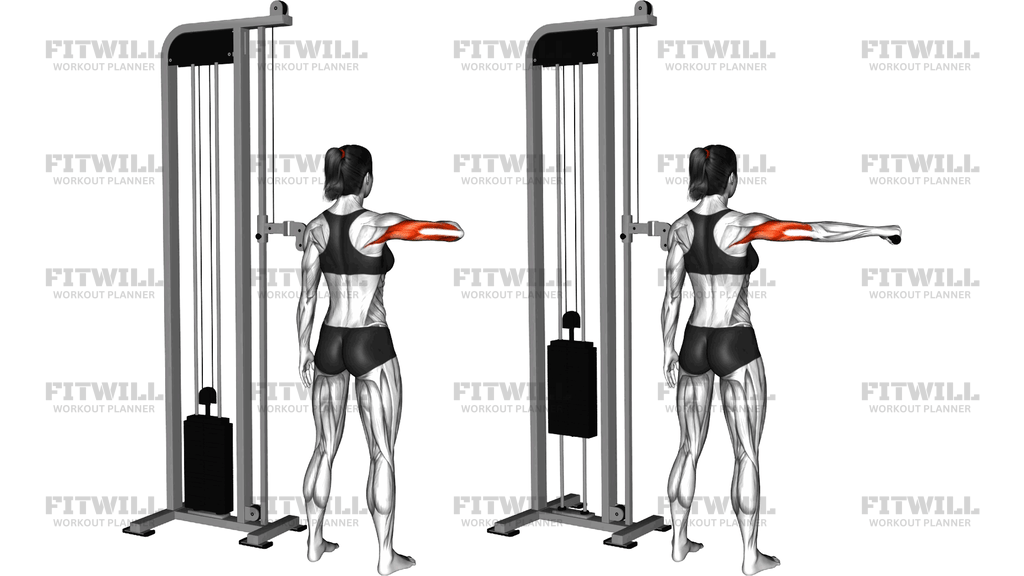
Cable One-Arm Reverse Fly is a single-arm rear-delt and upper-back exercise performed with a low cable and handle attachment. The setup matters because the cable line, body angle, and bracing hand all shape the path of the rep. When you hinge forward and keep the working arm slightly bent, the cable can load the back of the shoulder smoothly instead of turning the movement into a shrug or a twist.
This exercise is useful when you want more control than a dumbbell fly can offer, especially if one side is weaker or harder to feel. The cable keeps tension on the arm through most of the range, which makes it a good choice for rear delts, rhomboids, mid traps, and the small stabilizers around the shoulder blade. It also fits well in pulling sessions, shoulder-accessory work, or lighter upper-body days where clean repetitions matter more than heavy loading.
The best setup is a bent-over stance beside the stack with the free hand holding the upright for support. Keep your feet planted, chest angled toward the floor, and ribs quiet so the torso does not unwind as the arm moves. Start with the handle slightly across the body and low near the opposite leg, then sweep it out and back in an arc until the upper arm lines up with the shoulder instead of drifting behind the body.
During the rep, think about leading with the elbow rather than yanking with the hand. A small bend in the arm should stay almost fixed while the shoulder moves through horizontal abduction, and the shoulder blade should glide without a hard shrug. The return should be slow enough that the cable does not pull you upright, because that is usually the point where the rep turns into momentum instead of shoulder work.
Use Cable One-Arm Reverse Fly as a precision movement, not a max-strength lift. It is especially helpful when your rear delts need direct work or when you want to clean up shoulder balance after pressing or heavier rowing. Choose a load that lets you stay hinged, keep the neck long, and repeat the same path on every rep without rotating the torso or losing tension in the working shoulder.
[ Workout Log & Planner ]
Put your next workout in Fitwill
Keep your plan and training log ready when you are.


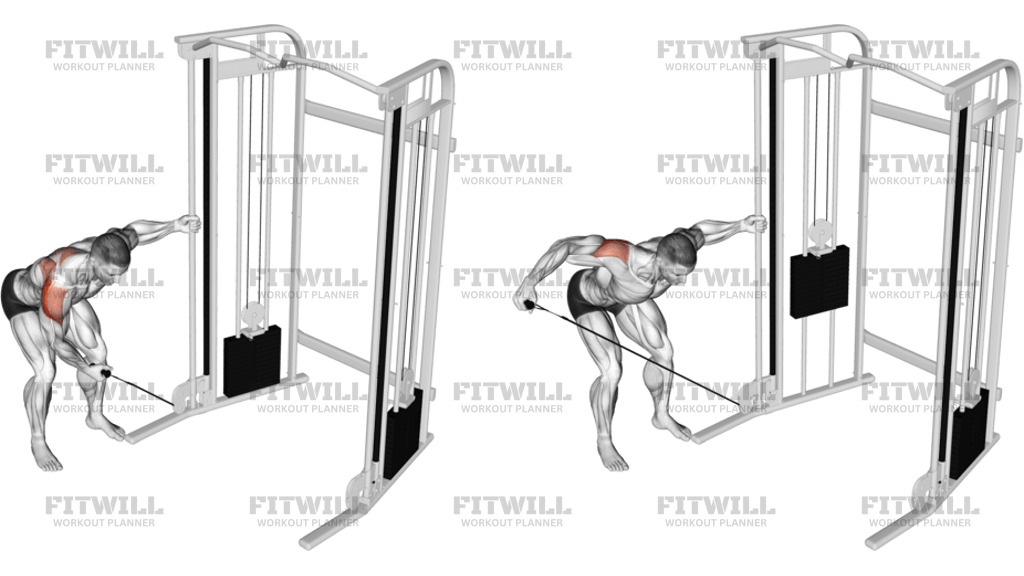
Instructions
- Set the cable handle on a low pulley and stand sideways to the stack with your working arm farthest from the machine.
- Hinge forward at the hips, keep a soft bend in the knees, and brace one hand against the upright for balance.
- Hold the handle in the working hand with a slight bend in the elbow and let that arm start low and slightly across your body.
- Set your ribs down and keep your torso still before the first rep so the cable loads the shoulder instead of your lower back.
- Sweep the handle out and back in a wide arc, leading with the elbow until the upper arm reaches roughly shoulder height.
- Keep the shoulder from shrugging as you open the arm and avoid rotating your chest toward the stack.
- Pause briefly at the top when the rear delt and upper back are fully shortened, then keep the wrist and elbow line steady.
- Lower the handle slowly back along the same arc until the arm returns low and across the body under control.
- Breathe out as you lift the handle and inhale on the return while keeping the torso fixed.
- Finish the set by lowering the cable under control and stepping away from the stack without letting the weight jerk the arm forward.
Tips & Tricks
- Brace the free hand hard against the upright so the working shoulder can move without the torso drifting.
- Keep the elbow slightly bent and nearly fixed; turning the movement into a triceps extension changes the target completely.
- Stop the upward path around shoulder height or a little below if your upper trap takes over or the shoulder starts to shrug.
- Use a lighter load than you would for a row, because this is a rear-delt isolation pattern and not a strength pull.
- Let the handle travel in a smooth arc across the front leg on the way down instead of dropping straight toward the floor.
- Keep the chest angled toward the ground; if you stand too tall, the cable line loses the feel of a reverse fly.
- If the stack jerks you forward on the return, slow the eccentric and shorten the range until the cable stays under control.
- Think about spreading the shoulder blade and then finishing with the rear delt, not just squeezing the arm back hard.
- A neutral wrist helps the handle stay in line with the forearm and keeps the shoulder work cleaner.
- If one side feels much weaker, start with it and match the stronger side to the same range and tempo.
Frequently Asked Questions
What does Cable One-Arm Reverse Fly train the most?
It mainly trains the rear delts and the muscles around the shoulder blade, with the upper back and core helping you stay steady.
Why is the free hand braced on the machine?
The support hand helps lock in the bent-over position so you can keep the torso quiet and move the working arm cleanly.
How far should I lift the handle on Cable One-Arm Reverse Fly?
Lift until the upper arm is about in line with the shoulder, or stop slightly earlier if you start shrugging or twisting.
Should my elbow stay bent during Cable One-Arm Reverse Fly?
Yes. Keep a small, fixed bend in the elbow so the shoulder does the work instead of turning the rep into a straight-arm swing.
Is Cable One-Arm Reverse Fly good for beginners?
Yes, as long as the load is light and the hinge stays stable. Beginners usually benefit from the cable because it is easier to control than a free-weight reverse fly.
What is the most common mistake on this movement?
Most people use too much weight and rotate the torso to cheat the handle back. Keep the chest angled down and let the arm move without turning the body.
Can I replace this with a dumbbell reverse fly?
Yes, but the cable keeps constant tension through the arc. A dumbbell version is a fine substitution if you do not have a low pulley.
Should I feel Cable One-Arm Reverse Fly in my neck or traps?
You should mostly feel the back of the shoulder and upper back. If your neck takes over, lower the load and stop shrugging at the top.