Kettlebell Sumo Deadlift With High Pull
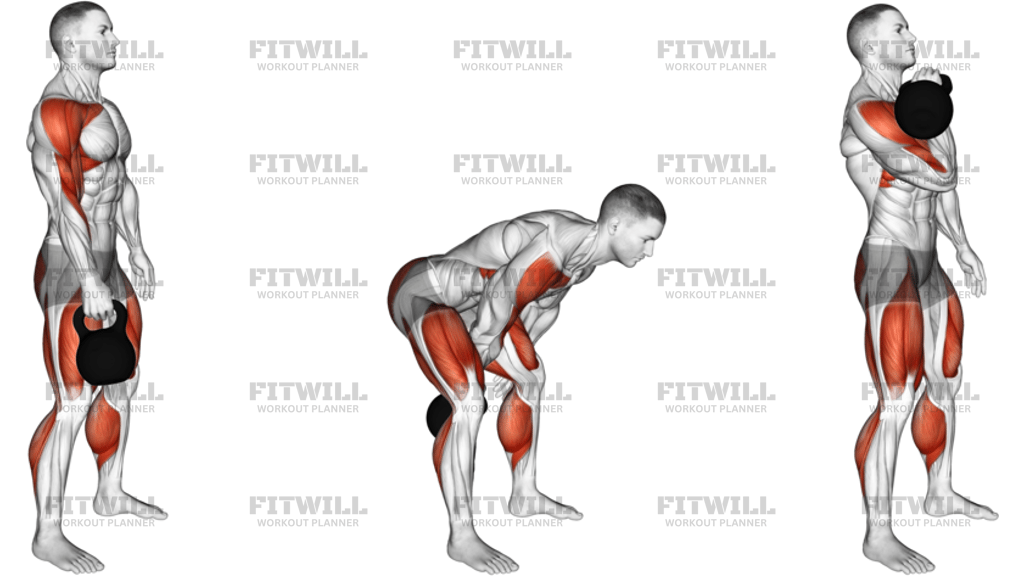
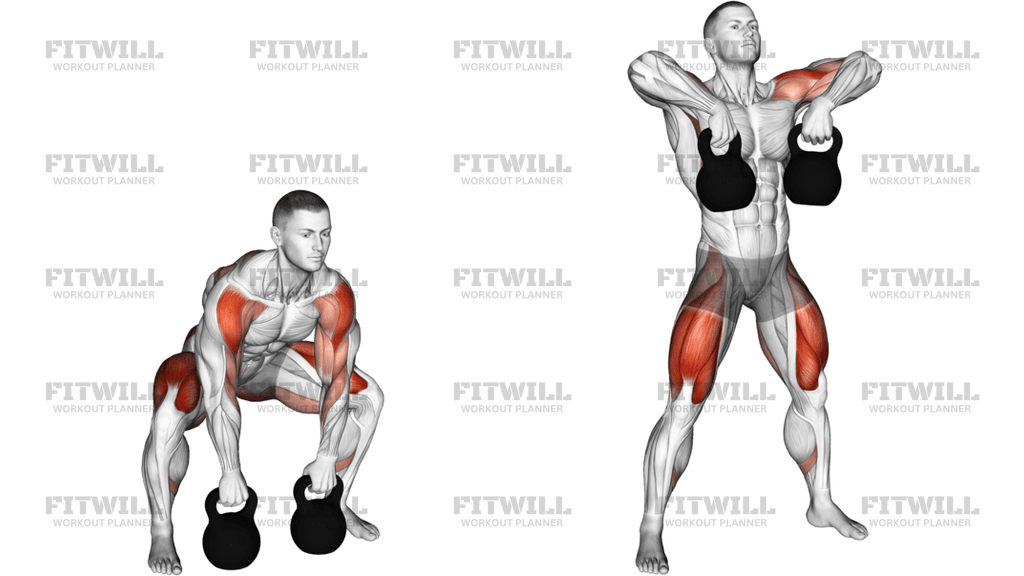
Kettlebell Sumo Deadlift With High Pull combines a wide-stance kettlebell deadlift with an upright pull that finishes near the upper chest. It is a powerful hinge-based exercise that trains the hips, glutes, hamstrings, upper back, shoulders, and grip while still asking the core to keep the torso organized from the floor to the top of the rep.
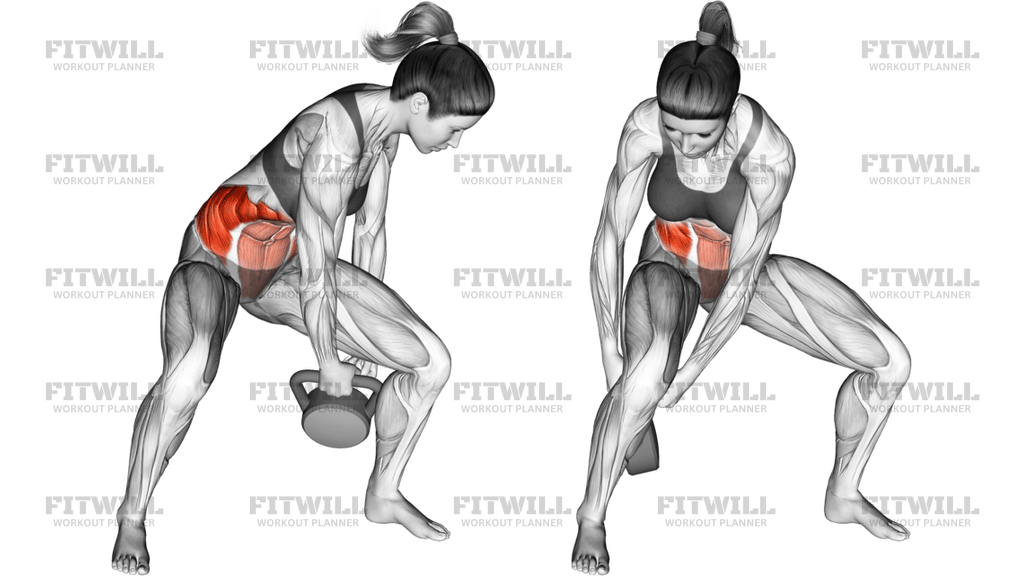
The wide stance changes the line of work. Instead of standing narrow, you sit your hips down between your knees, keep the chest tall, and let the bells hang inside the legs before you drive up. That position makes the setup important: if the feet are too close together or the torso collapses forward, the pull turns into a back-dominant heave instead of a clean leg-and-hip drive.
The deadlift portion should feel like a strong push through the floor. Once you stand tall, the high pull adds an explosive elbow lift with the bells close to the body, finishing around the lower chest or collarbone area. The movement is effective for developing power and coordination, but it works best when the bells travel in a controlled straight path instead of swinging away from the torso.
This exercise is often used in strength circuits, conditioning blocks, and athletic warmups because it links lower-body force with upper-body pulling in one pattern. It can also be a useful accessory when you want more posterior-chain work without loading a barbell. Beginners can use it with a light kettlebell and a shorter pull, but the setup and timing need to stay crisp so the shoulders do not take over the lift.
Safety comes from keeping the neck long, the wrists stacked, and the elbows higher than the hands only after the hips have fully extended. If the high pull makes your shoulders shrug early or your lower back arch, reduce the load and keep the finish lower. A well-done set should feel powerful, athletic, and repeatable, with every rep starting from the same wide stance and ending under control.
[ Workout Log & Planner ]
Put your next workout in Fitwill
Keep your plan and training log ready when you are.


Instructions
- Stand with your feet wider than shoulder width, toes turned slightly out, and place the kettlebells on the floor between your ankles.
- Hinge your hips back, bend your knees, and grip each kettlebell handle with your arms straight and your shoulders just in front of the bells.
- Set your chest up, flatten your back, and brace your midsection before you pull the weights off the floor.
- Drive through the floor to stand up, keeping the kettlebells close to your shins and thighs as you rise.
- Finish the deadlift by squeezing your glutes and standing tall without leaning back at the top.
- As the bells pass your hips, pull your elbows up and out to bring the kettlebells toward your lower chest and collarbone.
- Keep the bells close to your body and let your elbows lead the high pull instead of letting the weights swing forward.
- Lower the kettlebells back down with control, hinge at the hips again, and reset the wide stance before the next rep.
- Inhale on the way down, exhale as you drive up and pull, and stop the set if the bells drift away from your torso or your back starts to round.
Tips & Tricks
- If the bells hit your thighs on the way up, start with them a few inches in front of you and keep them tracking close instead of swinging outward.
- Keep your elbows higher than the hands only after the hips finish extending; an early upright row turns the rep into a shoulder tug.
- A shorter pull is often better than a higher pull: the bells only need to reach the lower chest or collarbone, not eye level.
- Turn the toes out enough to let the knees track over them, but avoid such a wide stance that you cannot keep the torso tall.
- Keep your wrists neutral at the top. If the handles fold your wrists back, the load is too heavy or the pull is too high.
- The exercise should feel explosive off the floor and controlled on the return. If the lowering phase gets sloppy, reduce the load before increasing reps.
- Do not shrug before the legs and hips finish driving the bells upward; finish the stand first, then lead with the elbows.
- Use a lighter kettlebell if your lower back starts doing the work, especially when you lose the hinge and turn the rep into a squat-and-yank.
Frequently Asked Questions
What muscles does Kettlebell Sumo Deadlift With High Pull work?
It mainly trains the glutes, hamstrings, upper back, shoulders, and grip, with the core working hard to keep the torso stable through the hinge and pull.
Is Kettlebell Sumo Deadlift With High Pull beginner friendly?
Yes, as long as you keep the kettlebell light and learn the two parts separately: stand up from the sumo deadlift first, then add a controlled high pull.
How wide should my stance be for Kettlebell Sumo Deadlift With High Pull?
Use a stance wider than shoulder width with your toes slightly turned out so the kettlebells can hang between your legs and your knees can track comfortably.
Where should the kettlebells finish at the top of the pull?
They should travel close to your body and finish around the lower chest or collarbone area, not above the face.
Should I feel this more in my legs or shoulders?
You should feel the drive mostly in your hips and legs on the way up, then the shoulders and upper back assist during the high pull. If your shoulders take over too early, lighten the load.
What is the biggest mistake in Kettlebell Sumo Deadlift With High Pull?
The most common mistake is yanking the bells forward with the arms before the hips have finished extending. Keep the bells close and let the lower-body drive start the rep.
Can I use one kettlebell instead of two?
You can, but the double-kettlebell version better matches the wide-stance setup shown here. A single kettlebell changes the balance demand and the way the pull feels.
Is this a strength exercise or a conditioning exercise?
It can serve both purposes. Heavier, low-rep sets fit strength and power work, while lighter controlled sets fit conditioning or circuit training.
Do I need to shrug hard at the top?
No. The finish should be a powerful elbow drive with the shoulders staying controlled, not a big shrug that pulls the bells away from your torso.