Kettlebell Suitcase Deadlift
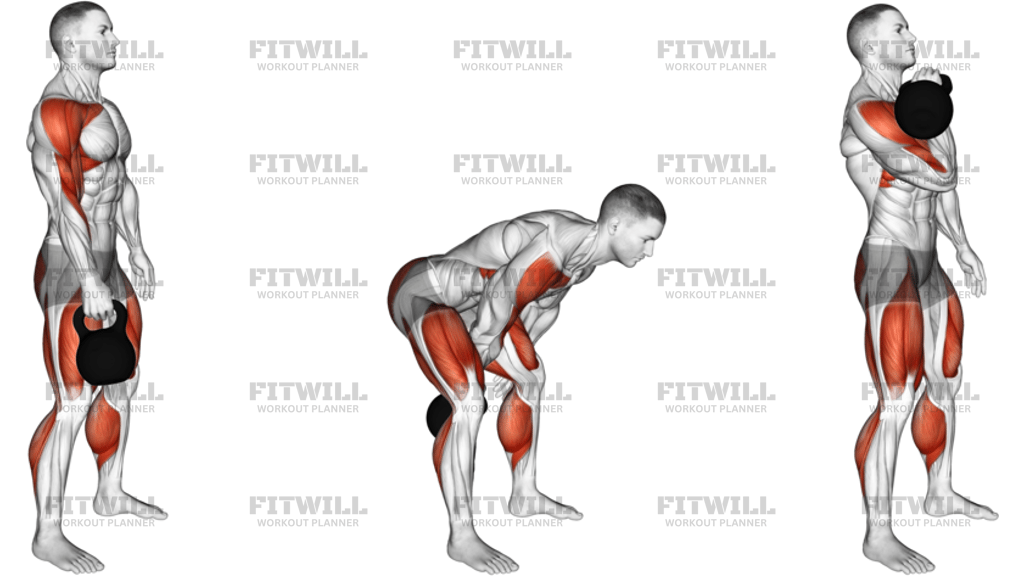
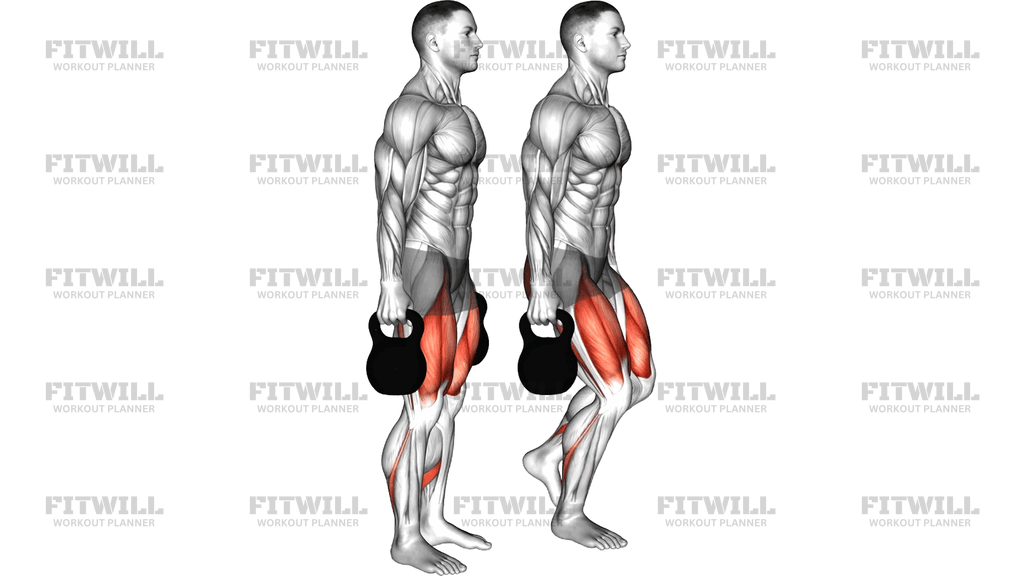
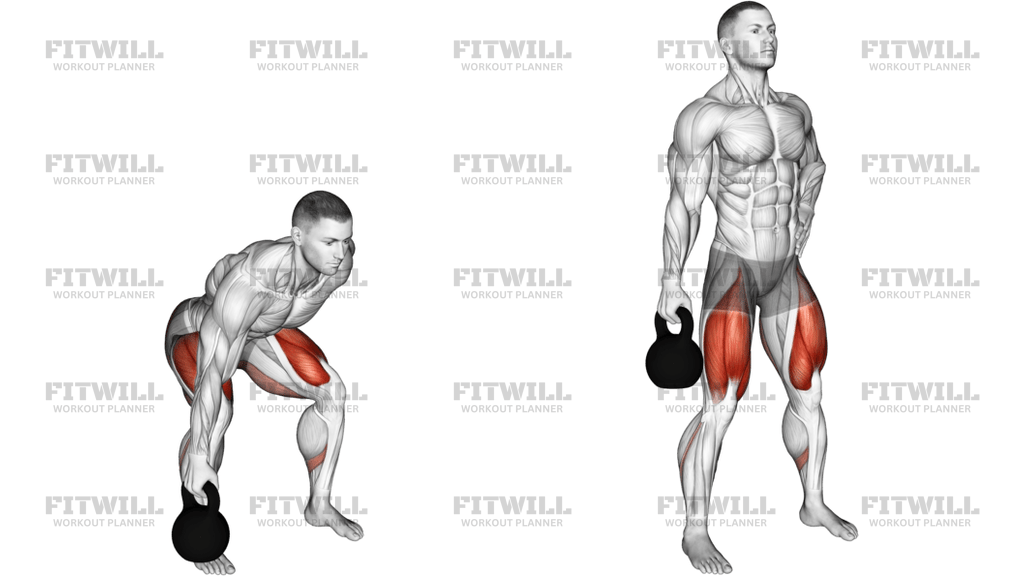
Kettlebell Suitcase Deadlift is a single-arm deadlift performed with one kettlebell hanging beside one leg, like carrying a heavy suitcase from the floor. The image shows a hinged start with the bell on the outside of the foot and a tall finish with the torso stacked over the hips. That side-loaded position makes the exercise useful for building hip extension strength while also challenging the trunk, grip, and shoulder to keep the torso from shifting toward or away from the weight.
This movement is not just a lower-body lift. The working leg and hip extend the body out of the bottom, while the opposite side of the trunk has to resist side-bending and rotation. That makes the suitcase deadlift a practical choice for glutes, hamstrings, quadriceps, lats, obliques, and grip endurance. It is especially helpful when you want deadlift mechanics without the spinal loading and bar setup of a conventional barbell pull.
The setup matters because the bell starts close to the floor and slightly outside the foot, so the hinge has to be clean before the pull begins. A good rep starts with a stable stance, a flat back, and shoulders kept level. From there, the hips drive back, the torso stays long, and the kettlebell tracks straight up the leg instead of swinging forward. At the top, the body finishes tall without leaning back or hiking one shoulder higher than the other.
Use controlled breathing and tension so each repetition looks the same. Inhale and brace before the pull, stand by pushing the floor away, then lower the kettlebell back to the floor with the same hinge pattern. Because the load sits on one side, sloppy reps show up fast as twisting, collapsing into the hip, or rushing the descent. Keep the movement strict and deliberate, especially when the weight gets heavy.
This exercise works well in lower-body strength sessions, warm-ups that teach hinging, and accessory work for athletes who need better bracing and unilateral control. Beginners can learn it quickly with a light kettlebell, but only if they keep the bell close, the ribs down, and the hips square. The goal is a strong, repeatable deadlift that teaches the body to resist asymmetrical load without losing posture.
[ Workout Log & Planner ]
Put your next workout in Fitwill
Keep your plan and training log ready when you are.


Instructions
- Place one kettlebell on the floor just outside one foot, then stand with your feet about hip-width apart and your toes pointed slightly out.
- Hinge your hips back, bend your knees enough to reach the handle, and keep your chest long with your shoulders level.
- Grip the kettlebell with the working hand while the other arm hangs naturally at your side.
- Brace your midsection before the bell leaves the floor so your torso does not rotate toward the load.
- Drive through the whole foot and stand up by extending the hips and knees together.
- Keep the kettlebell close to your leg as it rises, without swinging it forward.
- Finish tall with the ribs stacked over the pelvis, glutes tight, and both shoulders even.
- Lower the kettlebell by pushing the hips back first, then bend the knees until the bell returns to the floor under control.
- Reset your brace before each repetition and repeat for the planned number of reps, then switch sides.
Tips & Tricks
- Keep the handle directly beside the planted foot so the load stays close and does not drag you forward.
- Think about pushing the floor away instead of yanking the bell off the ground with the arm.
- Do not let the free shoulder drop toward the bell; keep both shoulders square to the floor.
- A slight knee bend is enough to clear the floor, but the hips should do most of the work.
- If your lower back feels it more than your hips, shorten the range and make the hinge cleaner.
- Grip hard enough that the bell does not drift or wobble as you stand.
- Lower the weight with the same control you use on the way up; the eccentric is part of the exercise.
- Use a load that lets you keep the torso quiet instead of leaning away from the kettlebell.
- Exhale as you pass the hardest part of the lift, then re-brace before the next repetition.
Frequently Asked Questions
What does the kettlebell suitcase deadlift train?
It trains hip extension and full-body bracing, with strong work from the glutes, hamstrings, quads, grip, and obliques.
Why is the weight held on one side?
The side-loaded kettlebell makes your trunk work harder to resist leaning and rotation while you stand up.
Should the kettlebell stay close to my leg?
Yes. Keeping the bell close reduces strain on the lower back and makes the pull feel more like a true deadlift.
What is the biggest mistake in this exercise?
Common errors are twisting toward the kettlebell, rounding the back, or standing up by pulling with the arm instead of driving through the hips.
Can I do this instead of a barbell deadlift?
It is a good unilateral deadlift variation, but it does not replace a heavy barbell deadlift if your goal is maximal bilateral strength.
Where should I feel the work most?
You should mainly feel the glutes and hamstrings working to stand up, plus the trunk and grip stabilizing the load.
Is this exercise beginner-friendly?
Yes, if you start with a light kettlebell and learn to hinge without twisting or rushing the descent.
What stance works best?
A hip-width stance is usually best because it gives enough room for the kettlebell while still letting you hinge cleanly.