Dumbbell Rear Lunge Front Raise
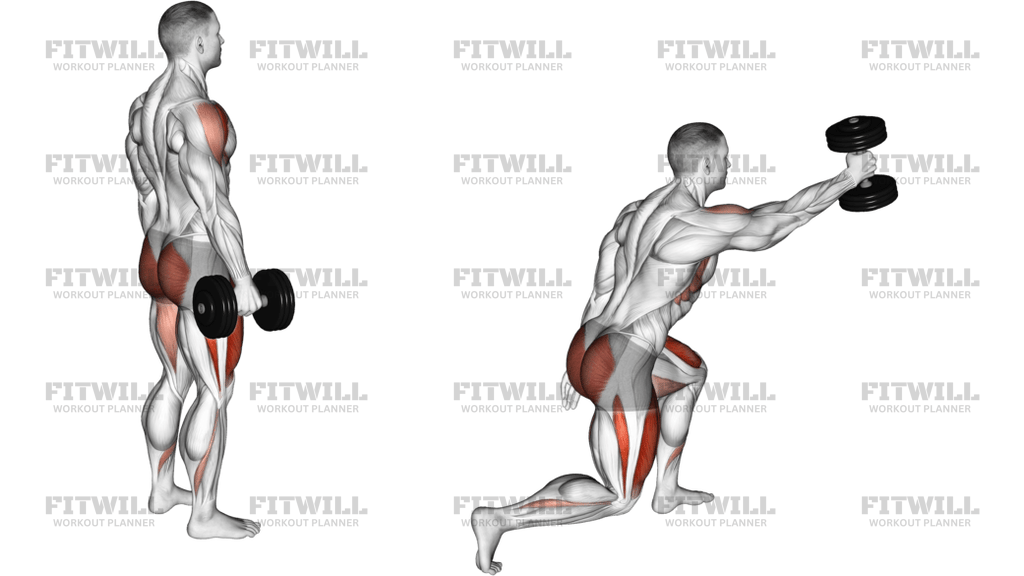
Dumbbell Rear Lunge Front Raise combines a reverse lunge with a straight-arm front raise, turning a basic lower-body pattern into a coordinated full-body drill. It trains the shoulders, glutes, quads, and core at the same time, so each rep asks you to stay balanced while moving the dumbbells smoothly through a controlled arc. Because the lower body and upper body are working together, the exercise is useful for coordination, posture, and total-body tension rather than just brute load.
The movement is best understood as a lunge first and a raise second, but the two actions happen together. As you step back and lower into the lunge, the dumbbells travel forward to shoulder height with soft elbows and steady wrists. That timing matters because it keeps the torso tall and prevents you from using a hip swing or a backward lean to cheat the front raise.
Dumbbell Rear Lunge Front Raise is a good choice when you want shoulder work with a built-in balance challenge. It fits well in accessory blocks, metabolic circuits, or warmups for athletes and recreational lifters who want to improve control under light to moderate fatigue. The load should stay modest, because the shoulder lever arm gets harder quickly once the lunge and raise are combined.
Set up with the dumbbells hanging by your sides, feet about hip-width apart, and your ribs stacked over your pelvis. Step one leg back into a long reverse lunge so the front foot stays planted and the back knee can lower close to the floor without crashing down. From there, raise the dumbbells to shoulder height without shrugging or leaning back, then lower them as you drive through the front foot to stand.
The exercise rewards clean rhythm more than heavy weight. If the shoulders start to hike up, the torso tips forward, or the back knee loses control, the set is too heavy or the step is too large. Keep the motion smooth, alternate sides deliberately, and stop the set if the front raise turns into a swing. Done well, Dumbbell Rear Lunge Front Raise is a compact way to train lower-body stability and shoulder control in the same repetition.
[ Workout Log & Planner ]
Put your next workout in Fitwill
Keep your plan and training log ready when you are.


Instructions
- Stand tall holding a dumbbell in each hand at your sides, palms facing your thighs, with your feet about hip-width apart.
- Set your ribs over your pelvis, soften your knees, and keep your shoulders down and back before you start the first rep.
- Step one leg straight back into a long reverse lunge while keeping the front foot flat and the torso upright.
- As you descend, raise both dumbbells straight forward until they reach shoulder height with a slight bend in the elbows.
- Keep the dumbbells level with each other and avoid swinging them past shoulder height or letting your chest flare up.
- Lower the dumbbells under control as you press through the front heel and stand back up to the start.
- Return the back foot beside the front foot if you are resetting between sides, then repeat on the other leg.
- Breathe in as you lower into the lunge and breathe out as you stand and lower the dumbbells back to your sides.
Tips & Tricks
- Use lighter dumbbells than you would for a normal front raise; the reverse lunge makes the shoulders fatigue faster.
- Keep the weights in front of your thighs before each raise so you do not have to swing them from behind your body.
- Stop the raise at shoulder height; going higher usually turns the rep into a trap-dominant shrug.
- Take a long enough step back to balance, but do not stretch so far that your torso has to tip forward.
- Keep the front knee tracking over the second or third toe instead of caving inward as you descend.
- Let the back knee hover just above the floor instead of dropping hard and bouncing out of the bottom.
- If your low back arches during the raise, shorten the arm path and keep your ribs stacked.
- Alternate sides deliberately or finish one side first if you need more balance and cleaner timing.
Frequently Asked Questions
What muscles does Dumbbell Rear Lunge Front Raise work?
It mainly trains the shoulders, glutes, quads, and core, with the upper back helping keep the dumbbells steady.
Is Dumbbell Rear Lunge Front Raise suitable for beginners?
Yes, if you use light dumbbells and keep the step back and the arm raise slow enough to stay balanced.
How high should the dumbbells come up in Dumbbell Rear Lunge Front Raise?
Raise them to shoulder height and stop there. Higher reps usually turn the movement into a shrug and take tension off the shoulders.
Should I alternate legs every rep?
You can alternate legs for a conditioning style set, or do all reps on one side before switching if you want more balance and control.
What is the biggest mistake in Dumbbell Rear Lunge Front Raise?
The most common error is leaning back and swinging the dumbbells up instead of lowering into the lunge and lifting them with control.
Can I use heavy weights for Dumbbell Rear Lunge Front Raise?
Usually no. The combined lunge and front raise make the exercise much less stable, so moderate or light dumbbells work better.
Where should I feel Dumbbell Rear Lunge Front Raise the most?
You should feel the front shoulder work hardest during the raise and the front leg and glute controlling the lunge.
What can I do if I lose balance during Dumbbell Rear Lunge Front Raise?
Shorten the step back, lighten the dumbbells, or practice the reverse lunge and front raise separately before combining them.