Dumbbell Bent-Over Row Against Wall
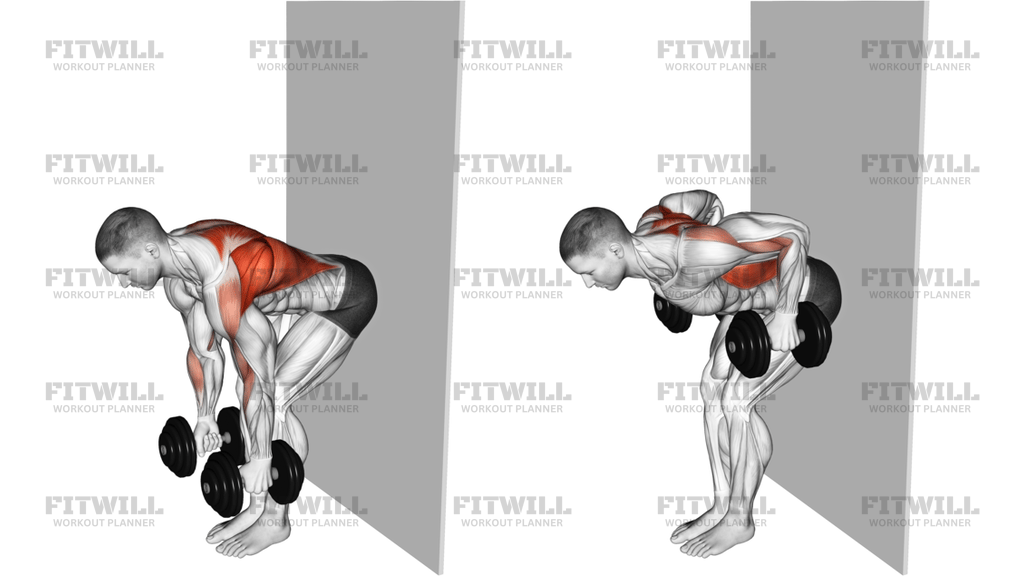
Dumbbell Bent-Over Row Against Wall is a strict rowing variation built around a fixed hip hinge and a clean pull path. The wall is not there to support the lift; it is there to give you a position check so the torso stays honest while the dumbbells move. That makes this version useful when you want back work without turning the rep into a standing sway, a shrug, or a half-row.
The movement trains the lats, mid-back, rear delts, and elbow flexors while the trunk and spinal erectors hold the hinged posture. Because the torso stays pitched forward, the row demands more control than an upright dumbbell row and usually exposes compensation quickly. If the hips drift, the chest rises, or the shoulders shrug toward the ears, the wall makes those faults easier to notice and correct.
Set up with a stable stance, soft knees, and a neutral spine before the first pull. Hinge until your torso is nearly parallel to the floor, then let the dumbbells hang under the shoulders with the palms facing in. Keep the neck long and the ribs stacked so the back does not round as fatigue builds. A good rep starts from stillness, not from a bounce off the bottom.
Each repetition should travel in a straight, controlled line toward the lower ribs or hip pockets. Lead with the elbows, keep them close to the torso, and finish with the shoulder blades moving back and down rather than flaring or shrugging. The return should be just as deliberate as the pull so the dumbbells do not swing or collide with the wall. If the torso angle changes to finish the rep, the load is too heavy or the set is too long.
Use this exercise as strict accessory work for back development, posture, and upper-body pulling strength. It fits well in hypertrophy blocks, assistance work after bigger rows or pull-ups, and technique-focused sessions where clean tension matters more than load. Beginners can use it with light dumbbells, but the hinge and brace need to stay consistent from the first rep to the last. When the setup is right, the wall helps keep the row compact, controlled, and repeatable.
[ Workout Log & Planner ]
Put your next workout in Fitwill
Keep your plan and training log ready when you are.


Instructions
- Stand with your back a few inches from the wall, feet about hip-width apart, and knees softly bent while holding a dumbbell in each hand.
- Hinge at the hips until your torso is close to parallel with the floor, keeping your spine neutral and your glutes reaching back toward the wall.
- Let the dumbbells hang straight down under your shoulders with your palms facing in and your shoulders set away from your ears.
- Brace your trunk before you pull so your torso stays fixed and the wall remains a reference point, not a brace you lean into.
- Drive both elbows back and up toward your lower ribs or hip pockets, keeping the dumbbells close to your sides.
- Squeeze your shoulder blades back and down at the top without shrugging, twisting, or letting your chest rise.
- Lower the dumbbells slowly until your arms are straight again and your shoulder blades reach forward under control.
- Reset your hinge and breathing at the bottom before the next rep, keeping the same torso angle for the whole set.
Tips & Tricks
- Keep your hips close to the wall so you can notice if you start standing up to finish the row.
- Pull the dumbbells toward the lower ribs or hip line, not up toward the chest.
- Let the elbows skim past the torso instead of flaring wide, which shifts the work away from the lats.
- Use a load that lets you pause briefly at the top without jerking your torso forward.
- Lower the weights on purpose; if they drop quickly, the wall cue stops being useful.
- Keep the dumbbells clear of the wall so the set does not turn into a noisy bounce-and-row.
- If your lower back starts taking over, shorten the set and lighten the load before form breaks down.
- Exhale as the elbows drive back and inhale as the arms return to full length.
Frequently Asked Questions
What muscles does Dumbbell Bent-Over Row Against Wall work?
It mainly trains the lats and upper back, with the rear delts, biceps, and spinal erectors helping to hold the hinge.
Why use a wall for this row?
The wall gives you a reference point that makes it easier to keep the torso fixed and avoid turning the rep into a standing cheat row.
Where should the dumbbells travel?
Row them toward your lower ribs or hip pockets, keeping them close to your body instead of flaring away from it.
Should my torso move during the set?
It should stay almost fixed. A little natural motion is fine, but the hinge angle should not turn into an upright pull.
Can beginners do this exercise?
Yes, if they use light dumbbells and focus on the hinge, brace, and controlled lowering before adding load.
What is the biggest form mistake here?
Usually it is standing up, shrugging, or swinging the dumbbells to finish the row instead of keeping the torso still.
Does the wall mean I should lean on it?
No. Use the wall as a position check, not as support. The set should still be driven by your hinge and back muscles.
How can I progress this row over time?
Progress by adding small amounts of load, adding a brief pause at the top, or keeping the same weight with cleaner torso control.