Dumbbell Reverse-Grip Incline Bench One-Arm Row
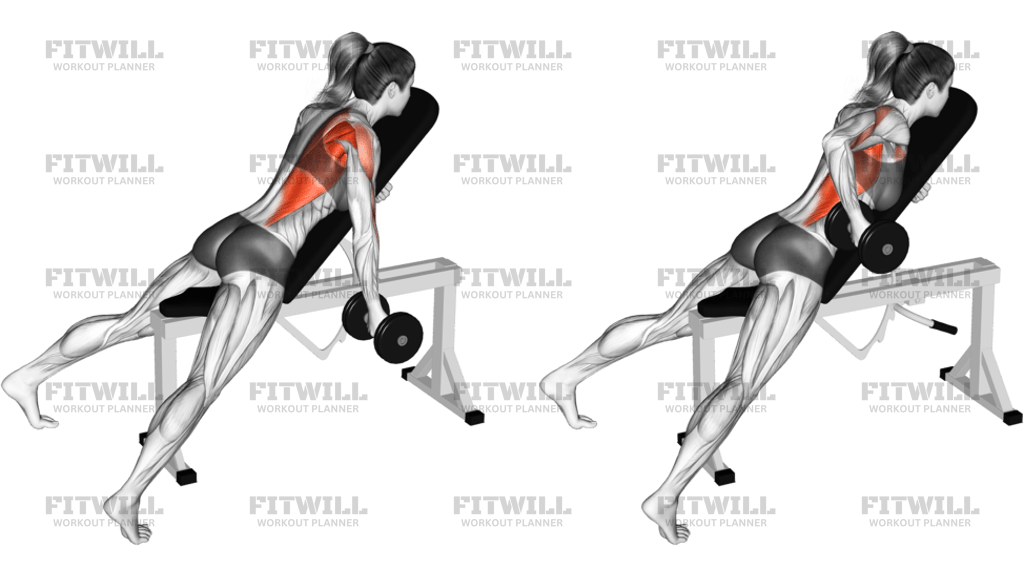
Dumbbell Reverse-Grip Incline Bench One-Arm Row is a chest-supported pulling exercise that pairs an incline bench with a supinated, single-arm dumbbell row. It is useful when you want to train the lats, mid-back, rear delts, and biceps without needing to hold a bent-over position. The bench support reduces cheating from the hips and lower back, so each rep is easier to control and easier to feel.
The reverse grip changes the line of pull and usually makes it easier to drive the elbow toward the hip while keeping the upper arm close to the torso. That makes Dumbbell Reverse-Grip Incline Bench One-Arm Row a strong choice for lifters who want strict back work, better side-to-side balance, or a row variation that feels different from a standard overhand dumbbell row. The one-arm format also makes it easier to match range, pause, and tempo on each side.
Set the bench at a low to moderate incline so your chest and upper ribs are supported but your shoulder can still move freely. Lie face down with your feet split behind you for balance, then let the working arm hang straight under the shoulder before you start the pull. Keeping the torso anchored matters here: if the ribcage lifts off the pad or the hips start twisting, the dumbbell becomes harder to control and the back loses tension.
Each repetition should start from a long reach at the bottom, then travel smoothly toward the lower ribs or back pocket. Finish with the elbow close to the body and the shoulder blade pulled back and down, not shrugged toward the ear. A short squeeze at the top makes the row more effective than trying to yank the dumbbell higher with the wrist or shoulder.
This exercise fits well as an accessory row on back day, a unilateral balance drill, or a controlled pulling movement after heavier presses. It is also a practical choice when you want back training without loading the spine hard. Use a weight that lets you keep the chest pressed into the bench, the neck long, and the lowering phase slow enough that the next rep starts from a clean, repeatable position.
[ Workout Log & Planner ]
Put your next workout in Fitwill
Keep your plan and training log ready when you are.


Instructions
- Set an incline bench to a low or moderate angle and place a dumbbell where you can reach it easily from the front side of the bench.
- Lie face down on the bench with your chest and upper ribs supported, feet split behind you for balance, and the working arm hanging straight under your shoulder.
- Take a reverse grip on the dumbbell with your palm facing up, then let the shoulder reach slightly forward so the arm starts long without shrugging.
- Brace your abs and glutes so your torso stays glued to the pad and your hips do not rotate when the dumbbell leaves the bottom.
- Pull the elbow back toward your lower ribs or back pocket, keeping it close to your side instead of flaring it wide.
- Finish the row with the shoulder blade pulled back and down, and keep your wrist stacked over your forearm instead of curling the dumbbell upward.
- Pause briefly at the top to feel the back working, but do not twist the chest open or lift the ribcage off the bench.
- Lower the dumbbell slowly until the arm is long again and the shoulder stays packed, then reset for the next rep or place the weight down safely after the set.
Tips & Tricks
- A low or moderate incline usually works best; if the bench is too steep, the row turns into a higher pull that shifts work away from the lats.
- Keep your chest heavy on the pad so the dumbbell moves the torso as little as possible.
- Think about driving the elbow toward your hip, not pulling the hand toward your shoulder.
- Hold the reverse grip firmly, but keep the wrist neutral so the forearm stays lined up with the dumbbell.
- Use a lighter load than you would for a free-standing row; the chest support removes momentum, so strict form matters more.
- Match the top pause and lowering speed on both sides so the weaker side does not rush through shorter reps.
- If the front of the shoulder feels pinchy, shorten the bottom range slightly and keep the elbow closer to your body.
- Do not let the neck crane forward; keep your head in line with your spine so the upper back can work without tension.
Frequently Asked Questions
What muscles does Dumbbell Reverse-Grip Incline Bench One-Arm Row train?
It mainly works the lats and mid-back, with help from the rear delts and biceps. The incline bench also makes the stabilizers work less than a bent-over row.
Is Dumbbell Reverse-Grip Incline Bench One-Arm Row beginner-friendly?
Yes, it is usually easier for beginners than a free-standing row because the bench supports the chest. Start light and focus on a smooth pull to the lower ribs.
Why use a reverse grip on this row?
The supinated grip helps many lifters keep the elbow tucked and pull toward the hip more naturally. It also adds more biceps involvement than an overhand row.
Should my torso move during Dumbbell Reverse-Grip Incline Bench One-Arm Row?
No, the chest should stay supported on the bench and the hips should stay square. If you are rotating to lift the dumbbell, the load is too heavy.
What bench angle works best for this exercise?
A low to moderate incline is usually the sweet spot. Too steep and the row becomes more of an upper-back pull; too flat and the shoulder position can feel cramped.
What is the biggest mistake in Dumbbell Reverse-Grip Incline Bench One-Arm Row?
Shrugging the shoulder and twisting the torso to finish the rep are the most common problems. Keep the shoulder down and pull with the elbow instead.
Can I do this instead of a standard dumbbell row?
Yes, it is a solid alternative when you want more chest support and less lower-back fatigue. The reverse grip also gives the movement a slightly different feel.
How should I lower the dumbbell on this row?
Lower it slowly until the arm is long and the shoulder is still packed, then start the next rep from that controlled stretch. Dropping fast usually makes the next pull messy.