Push-Up To Knee Tap
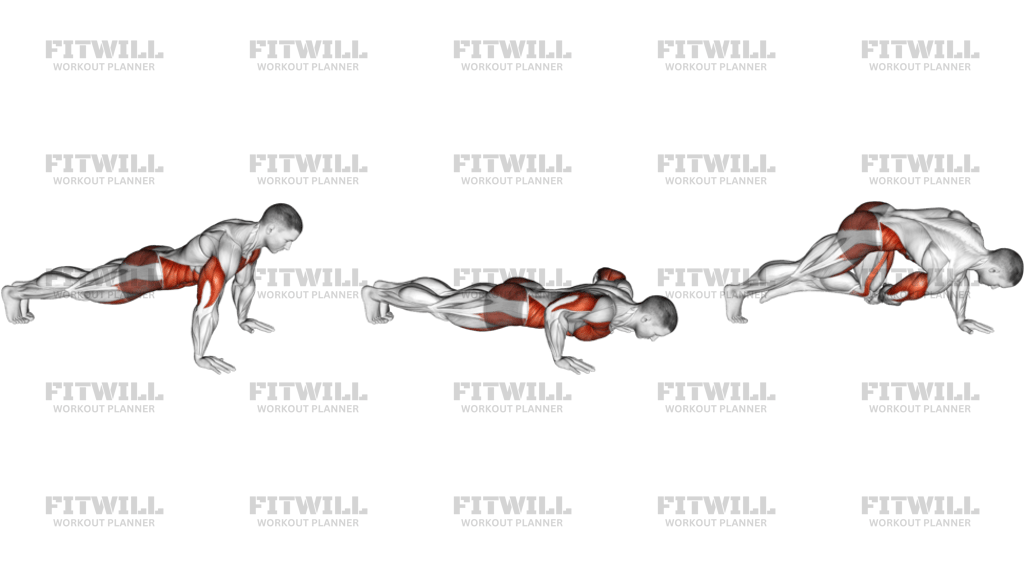
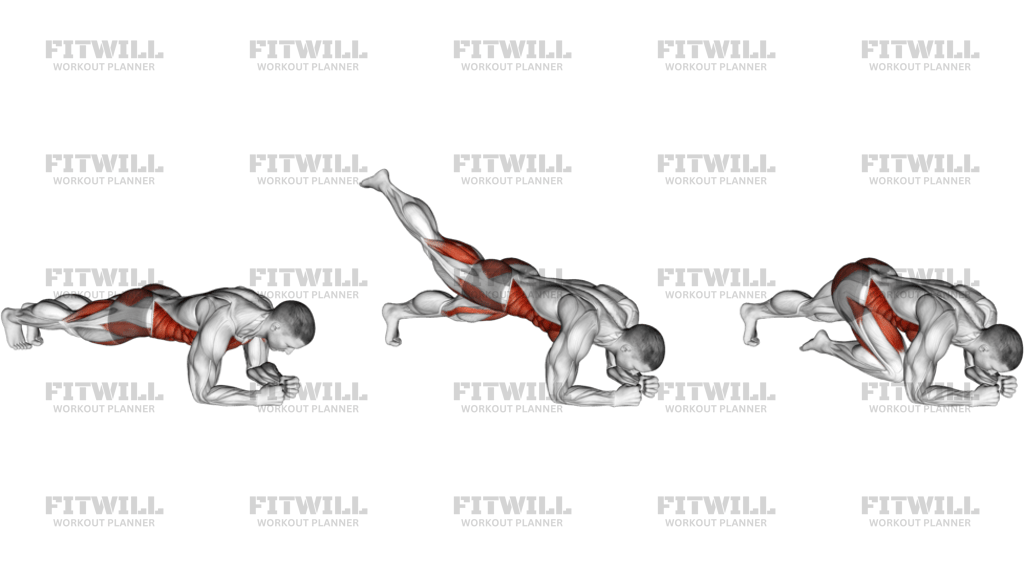
Push-Up to Knee Tap combines a strict push-up with a single-knee drive from the top of the plank. The exercise is designed to keep the torso organized while the arms press and one leg leaves the floor, so it challenges the chest, triceps, shoulders, and deep core at the same time.
The setup matters because the push-up portion only works well when the hands, shoulders, ribs, and pelvis are stacked before the rep starts. A slightly wider foot stance gives you more balance for the knee tap, but the goal is still to keep the hips as level as possible rather than letting the body twist to help the knee move.
Each rep should follow a clean pattern: lower under control, press to a strong plank, then bring one knee forward toward the same-side elbow or under the torso for the tap. Keep the movement smooth and deliberate so the knee drive comes from the hip and abs instead of a swing through the low back.
This version of the push-up is useful when you want upper-body pressing work with a strong anti-rotation and hip-flexor demand. It fits well in conditioning circuits, warm-up progressions, or accessory blocks where you want to combine pressing strength with trunk control.
If the shoulders shrug, the lower back sags, or the hips spin open every time the knee moves, shorten the range, elevate the hands, or slow the tempo. The best reps look compact and controlled, with the chest and knee both moving only as far as position allows.
Fitwill
Log Workouts, Track Progress & Build Strength.
Achieve more with Fitwill: explore over 9600 exercises with images and videos, access built-in and custom workouts, perfect for both gym and home sessions, and see real results.
Start your journey. Download today!




Instructions
- Start in a high plank with your hands under your shoulders, fingers spread, legs straight, and feet slightly wider than your hips.
- Press the floor away, set your ribs down, and squeeze your glutes so your head, shoulders, hips, and heels stay in one line.
- Lower your chest toward the floor with your elbows tracking back about 30 to 45 degrees from your sides.
- Pause briefly near the bottom, or lightly touch down if your version allows it, while keeping your neck neutral.
- Exhale and press back to the top until your elbows are straight and the plank feels solid.
- From the top, drive one knee forward toward the same-side elbow or under your torso for the tap while the other leg stays braced.
- Return that foot to the floor and reset your plank without letting your hips sway.
- Alternate sides on each rep and stop the set when the press or knee tap starts to lose alignment.
Tips & Tricks
- Set your feet wider than a standard push-up if the knee tap pulls you off balance.
- Keep your shoulders quiet; shrugging usually means the chest and core are losing tension.
- Move the knee on a smooth diagonal instead of yanking it forward with momentum.
- If you cannot keep your hips square, bring the knee a little less far or elevate your hands on a bench.
- Think about pushing the floor away after the tap to re-establish a strong plank before the next rep.
- Use a slower lowering phase so the push-up and the knee drive both stay controlled.
- Keep your elbows from flaring straight out; that usually makes the pressing phase harder on the shoulders.
- Stop the set if the low back starts to arch or the knee tap causes twisting through the torso.
Frequently Asked Questions
What muscles does Push-Up to Knee Tap work?
It mainly trains the chest, triceps, and shoulders while the abs, obliques, hip flexors, and glutes keep the body from rotating.
Where should the knee tap go?
Most people bring the knee toward the same-side elbow or just inside it. The important part is a controlled tap, not a big swing.
Can beginners do Push-Up to Knee Tap?
Yes, but many beginners should start with the hands elevated on a bench or step and keep the knee drive small.
Why do my hips twist when I bring the knee in?
Your feet may be too narrow or the knee may be traveling too aggressively. Widen the base and shorten the tap.
Should I lower all the way like a normal push-up?
Only as far as you can keep a solid plank. Full range is fine if your chest, ribs, and hips stay organized.
What is the best breathing pattern?
Inhale on the way down, then exhale as you press up and drive the knee forward.
How can I make this exercise harder?
Slow the lowering phase, pause in plank before each knee tap, or keep your feet a little narrower while still controlling the hips.
Can I replace a regular push-up with this movement?
Yes, but it is usually a tougher coordination drill than a standard push-up, so it is best when you want pressing plus trunk control.