Shrug On Parallel Bars
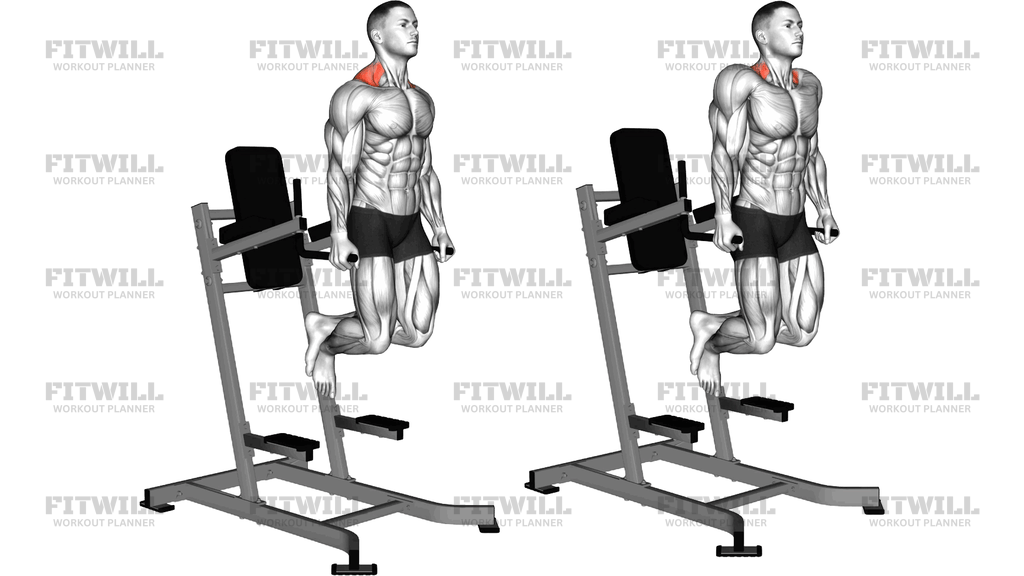
Shrug on Parallel Bars is a straight-arm support shrug performed on dip bars or parallel bars. The body stays suspended between the handles while the shoulder girdle moves up and down through a short, controlled range. That makes it a useful bodyweight drill for building upper-trap strength, shoulder-girdle control, and the ability to keep the torso organized while the arms stay locked.
The setup matters more than the range. A stable support position on the bars lets you isolate scapular elevation and depression without turning the exercise into a dip, a swing, or a bent-arm press. When the hands are fixed and the elbows stay straight, the target work comes from the shoulder blades moving over the rib cage while the neck and torso stay quiet.
At the top of each rep, drive the shoulders upward as if you are trying to shorten the space between your shoulders and ears, then return slowly to the lower support position under control. The movement should look small, but it should feel deliberate. Keep the chest from pitching forward, keep the head neutral, and avoid letting the knees or feet create momentum. If you need assistance, lightly touch the floor with the toes rather than changing the shape of the rep.
This exercise fits well as accessory work for athletes and lifters who need stronger scapular control for dips, handstand work, pull-ups, calisthenics, or general shoulder health. It is also a practical option when you want a bodyweight trap drill without a barbell or dumbbells. The safest version is the one you can repeat cleanly: straight elbows, quiet trunk, and a controlled shoulder shrug that starts and ends in the same balanced support.
If the bars or shoulders feel unstable, reduce the load by using a box or toe assistance and shorten the set before technique degrades. You should feel the work around the upper traps and the support muscles around the shoulder blades, not in the elbows or wrists. A clean set is smooth, vertical, and controlled from the first shrug to the last.
[ Workout Log & Planner ]
Put your next workout in Fitwill
Keep your plan and training log ready when you are.


Instructions
- Grip the parallel bars with your hands shoulder-width apart and hold a straight-arm support with your elbows fully extended.
- Set your shoulders in a controlled lower position, keep your torso tall, and avoid sinking into a bent-arm dip.
- Brace your midsection and keep your legs still so the bars carry your body weight without swing.
- Shrug your shoulders upward toward your ears while keeping the elbows locked and the chest quiet.
- Pause briefly at the top when the shoulder blades are lifted and the neck is still long.
- Lower your shoulders back to the starting support under control without changing your arm angle.
- Use a light toe touch on the floor or a small box if you need assistance to keep the rep strict.
- Repeat for the planned number of reps with the same vertical path and tempo.
Tips & Tricks
- Keep the elbows locked the whole time; any bend turns the movement into a dip and shifts the work away from the shrug.
- Think about lifting the shoulder girdle, not the hands, so the bars stay fixed and the motion comes from the scapulae.
- Use a short pause at the top to remove bouncing and to make the upper-trap contraction obvious.
- Lower slowly enough to feel the shoulders return to the support position instead of dropping into the bottom.
- Keep your neck long and avoid jutting the chin forward when the shoulders rise.
- If your feet touch the floor, keep the touch light so the legs only assist balance and not the movement itself.
- Stay in a vertical line between the bars; a forward lean usually means you are drifting into a press or dip pattern.
- Stop the set when the shoulders stop moving smoothly or the wrists start to take over.
Frequently Asked Questions
What does Shrug on Parallel Bars train most?
It mainly trains the upper traps and the shoulder girdle muscles that control scapular elevation and support.
Is this just a dip with a different name?
No. In a shrug the elbows stay straight and the shoulders move up and down; a dip bends the elbows and lowers the body between the bars.
How should I position my hands on the parallel bars?
Use a shoulder-width grip with a neutral wrist position so you can stay stacked over the bars and move straight up and down.
How high should the shrug go on the bars?
Lift the shoulders as high as you can without bending the elbows or losing the tall support position.
Can I do this exercise if my feet do not fully leave the floor?
Yes. Light toe contact is a good way to assist the support position while you learn the vertical shrug.
Where should I feel the exercise working?
You should feel it around the upper traps and shoulder-blade support muscles, not as a hard bend in the elbows or wrists.
Is this useful for calisthenics and dip strength?
Yes. Strong scapular control on parallel bars carries over to dips, support holds, handstand work, and other straight-arm positions.
What is the biggest form mistake to avoid?
Do not turn it into a swing or a bent-arm press. Keep the torso quiet and let only the shoulders travel.