Cable Half Kneeling External Rotation
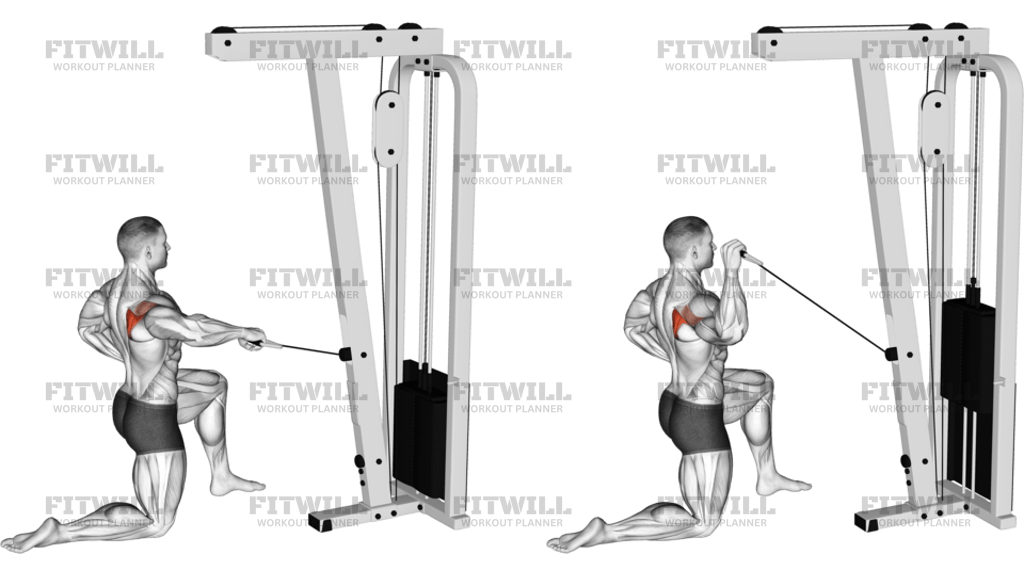
Cable Half Kneeling External Rotation is a shoulder-control exercise that uses a cable machine to keep steady tension on the arm while it rotates outward. It is especially useful when you want to train the smaller muscles that help stabilize the shoulder, with the delts, upper back, and arm muscles assisting to keep the arm and torso quiet. Because the resistance stays constant, the exercise works well as a warm-up, accessory drill, or lighter strength movement before heavier pressing or overhead work.
The half-kneeling position is part of the value of the exercise. It gives you a stable base, makes it easier to keep the ribs stacked over the pelvis, and reduces the chance that you will twist through the torso to cheat the rotation. Set the pulley around shoulder height, kneel beside the stack, and hold the handle with the working elbow bent to about 90 degrees and tucked close to the ribs. The front foot should stay planted so the cable pulls across the arm instead of dragging the whole body out of position.
Each repetition should feel like a smooth rotation of the forearm rather than a body movement. Start with the forearm angled in front of the torso, then rotate the hand upward and outward until the forearm approaches vertical or until the shoulder begins to shift. Keep the upper arm pinned to your side, keep the wrist stacked over the forearm, and lower back under control so the stack does not yank you into the next rep. Exhale during the rotation and inhale as you return.
Cable Half Kneeling External Rotation is a good choice for anyone who presses, throws, swims, or spends time overhead and wants more shoulder control without loading the joint heavily. It also works well for lifters who need a lower-intensity accessory on recovery days or in a prehab block. The movement should stay strict and quiet: if the torso leans, the elbow leaves the ribs, or the hand turns into a row, the rep has drifted away from the intended shoulder rotation and should be scaled back.
[ Workout Log & Planner ]
Put your next workout in Fitwill
Keep your plan and training log ready when you are.


Instructions
- Set the cable pulley at about shoulder height and clip on a single handle attachment.
- Kneel beside the cable stack with the working side farthest from the machine, the inside knee down, and the outside foot flat in front of you.
- Hold the handle in the working hand with the elbow bent to about 90 degrees and tucked against your ribs.
- Square your shoulders and hips to the front, stack your ribs over your pelvis, and keep the chest tall.
- Brace lightly so the torso stays still before you begin the rotation.
- Rotate the hand upward and outward while keeping the upper arm glued to your side.
- Stop when the forearm approaches vertical or just before the shoulder starts to drift forward.
- Lower the handle slowly back to the start without letting the cable yank your arm inward.
- Reset your shoulder, keep the elbow pinned, and repeat for the planned reps before switching sides.
Tips & Tricks
- Use a very light stack if the cable pulls your torso open; this is a control drill, not a max-strength lift.
- Keep the working elbow parked against the ribs; if it floats away, the shoulder starts cheating the rotation.
- A small towel under the elbow can help you feel the hinge point and stop the upper arm from drifting.
- Rotate the forearm, not the wrist; a bent wrist usually means you are trying to turn the hand instead of the shoulder.
- Pause briefly near the top so the rear side of the shoulder does the work instead of momentum.
- Lower the handle slowly for two to three seconds to keep tension on the rotators through the return.
- Keep the kneeling hip and the front knee steady; rocking back and forth turns the set into a torso movement.
- Stop short of any pinching in the front of the shoulder and shrink the range before you change the load.
Frequently Asked Questions
What muscles does Cable Half Kneeling External Rotation work?
The movement mainly trains the small shoulder rotators, with the rear side of the delts, upper back, and triceps helping stabilize the arm.
Why do I kneel for Cable Half Kneeling External Rotation instead of standing?
The half-kneeling stance makes it easier to keep the ribs stacked and stops you from using hip sway or torso twist to finish the rep.
How do I keep my elbow from drifting during Cable Half Kneeling External Rotation?
Pin the elbow to your side, keep the upper arm still, and use a lighter stack. A small towel between the elbow and ribs can help lock in the position.
How far should I rotate the handle on Cable Half Kneeling External Rotation?
Only rotate until the forearm approaches vertical or until the shoulder starts to shift forward. The range should stay smooth and pain-free.
Is Cable Half Kneeling External Rotation beginner-friendly?
Yes, as long as the load is very light and the reps are slow. It is often easier to learn than a standing version because the kneeling position reduces body sway.
What is the biggest form mistake in Cable Half Kneeling External Rotation?
The most common mistake is turning it into a whole-body pull by twisting the torso or letting the elbow drift away from the ribs.
Can I replace Cable Half Kneeling External Rotation with a band?
Yes, a light band can work as a substitute if you keep the same elbow position and slow rotation. The cable usually feels smoother because the tension stays more even.
When should I use Cable Half Kneeling External Rotation in a workout?
It fits well early in the session as a shoulder prep drill or later as light accessory work after pressing or upper-body training.