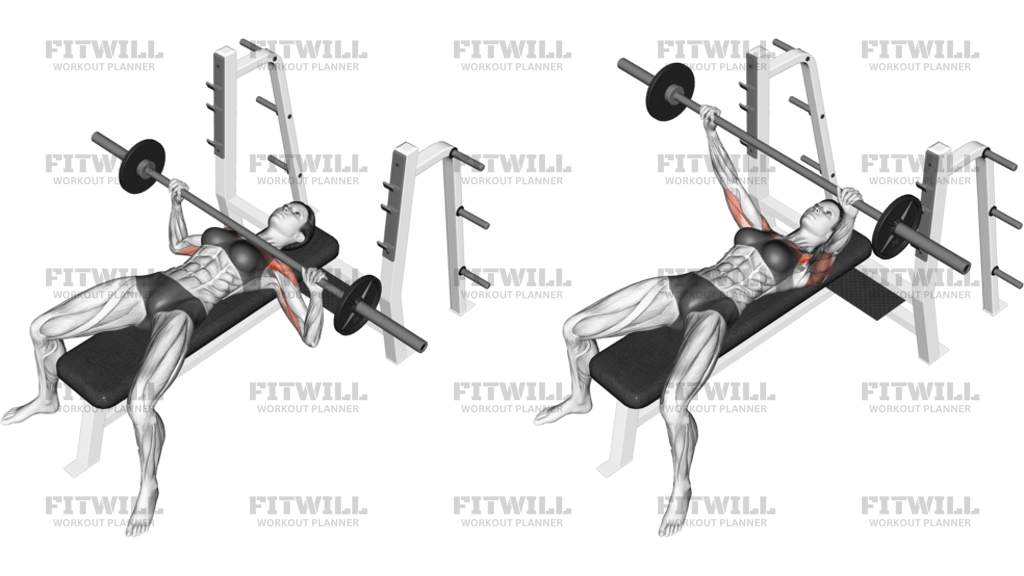
Barbell Bench Press Against Chains
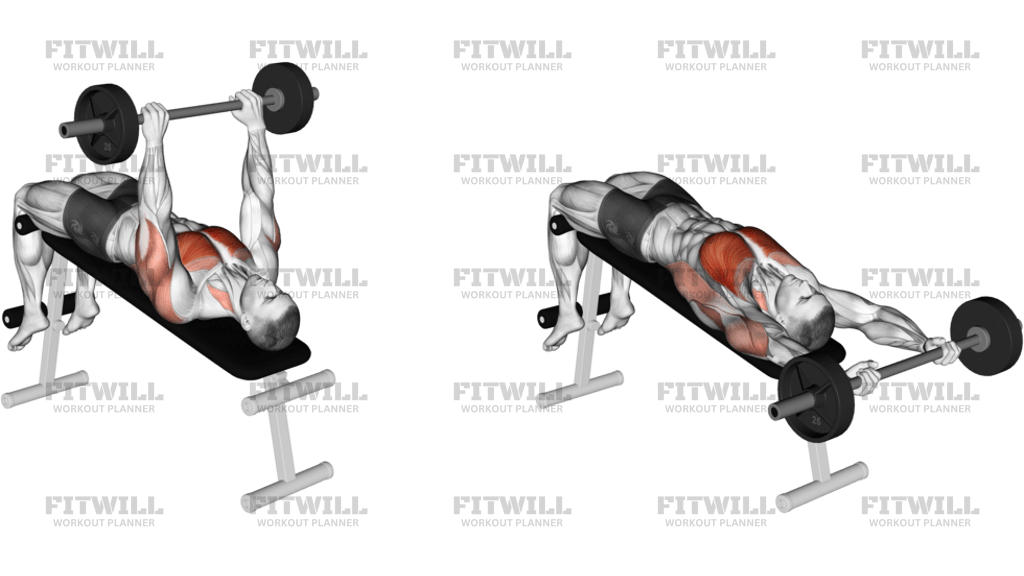
Barbell Bench Press Against Chains is a bench press variation that adds accommodating resistance to the standard barbell press. The bar is heaviest when the chains are lifted near lockout and lighter when more of the chain rests on the floor, so each rep asks you to stay tight through the bottom and accelerate hard as you press to the top. That changing load is the point of the exercise: it teaches you to keep force on the bar all the way through the press instead of relaxing once the bar leaves your chest.
The main movers are the chest, triceps, and front shoulders, with the upper back, lats, forearms, and trunk working to keep the setup solid. Because the chains change the resistance curve, your bench position matters more than usual. If your shoulder blades are not pinned, your feet are not set, or the bar path drifts, the chain load becomes harder to control and the lift feels unstable very quickly.
Set the bench so the chains hang evenly from both sleeves and enough chain can rest on the floor at the bottom of the rep. At the start, you should feel a clean barbell bench press, not a swinging load. As you press upward, more links clear the floor and the resistance rises. That makes this variation useful for strength work, lockout training, and teaching an aggressive press without losing control at chest level.
Use it after you have a stable regular bench press pattern and only load it as heavy as you can press with the same touch point, bar path, and scapular position every rep. A small setup error with chain length or bench placement changes the feel a lot, so check the symmetry before you unrack. Stop the set if the chains start swinging, your upper back loses contact, or the bar path turns into a bounce off the chest instead of a controlled press.
[ Workout Log & Planner ]
Put your next workout in Fitwill
Keep your plan and training log ready when you are.


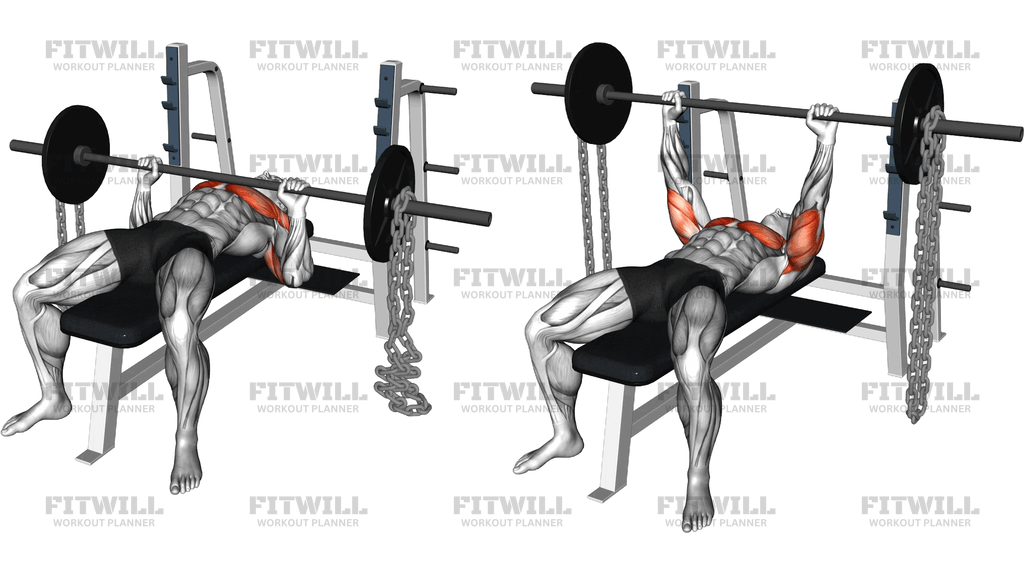
Instructions
- Set the bench centered between the uprights so the chains hang evenly from both sleeves and the bar can be racked and unracked without scraping the J-hooks.
- Lie back with your eyes under the bar, feet flat, and shoulder blades pulled back and down onto the bench. Keep your chest up and your glutes in contact with the pad.
- Take a slightly wider-than-shoulder grip, wrap your thumbs, and stack your wrists over your elbows before you unrack the bar.
- Unrack the bar to straight arms and let the chains settle so the bottom links rest on the floor or near the floor at the start of each rep.
- Lower the bar under control to your mid-to-lower chest while keeping your forearms mostly vertical and your elbows at a moderate angle to your torso.
- Briefly touch the bar to your chest without bouncing, then press it back up with a strong leg drive and a slight back-toward-the-rack bar path.
- Continue pressing until the elbows lock out and the chains are fully elevated, keeping the bar steady as the resistance increases.
- Rerack the bar with control after the final rep and keep your shoulders tight until the hooks take the load.
Tips & Tricks
- Adjust chain length so the bottom of the rep still feels like a real bench press. If too much chain stays off the floor, the top can become overloaded before the chest is ready.
- Keep your shoulder blades pinned to the bench from unrack to rerack. If they slide, the bar path usually changes and the chains start to sway.
- Think of pressing the bar away while the chain load climbs, not just touching and standing up. The intent should be fast and controlled through the middle of the rep.
- Use a touch point that matches your build, usually around the lower chest or sternum. A chest touch that is too high or too low can make the chain path feel awkward.
- Do not let the elbows flare hard at the bottom. A moderate tuck keeps the shoulders happier and helps the bar track more consistently.
- Keep your feet planted and your legs engaged, but do not bounce your hips or lift your butt to chase the top portion.
- Use collars and make sure both chains hang the same way before the set. Uneven chain length creates a lopsided press and can twist the bar.
- If the last few reps turn into a grind before the chains are mostly off the floor, reduce the base bar load. This variation should reward speed and tightness, not a slow press.
Frequently Asked Questions
What does the chain setup change in this bench press?
The chains make the lift lighter near the chest and heavier near lockout, so you have to accelerate through the whole press.
Which muscles do I feel most in Barbell Bench Press Against Chains?
The chest, triceps, and front shoulders do most of the work, while the upper back and core keep the bench setup stable.
Where should the bar touch on my chest?
Most lifters should touch around the lower chest or sternum area, depending on arm length and arch.
How much chain should be on the floor at the bottom?
Enough that the bottom position is clearly lighter than the top, but not so much that the chains go slack and whip around.
Is this exercise better for strength or muscle growth?
It is most often used for pressing strength, lockout work, and power-focused bench training, but it can also support hypertrophy work.
Can a beginner use chains for bench press?
Yes, but only after a normal barbell bench press is solid and the chain setup is very light and even on both sides.
Why use chains instead of more plates?
Chains let you overload the top without making the bottom position excessively heavy, so you can train acceleration and lockout more specifically.
What is the biggest mistake with this movement?
The biggest mistake is letting the chains swing or losing upper-back tightness, which turns the press into an unstable grind.