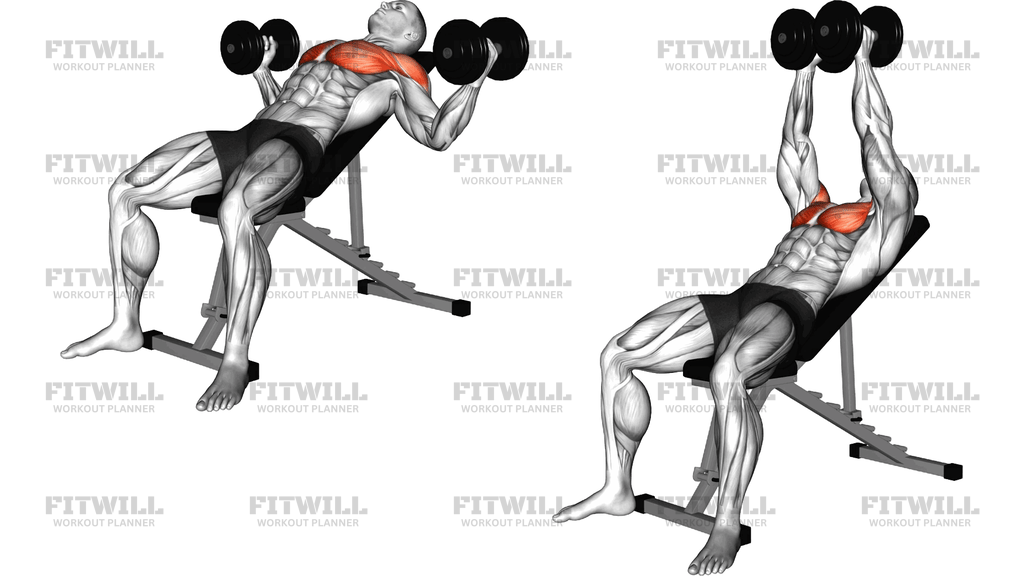
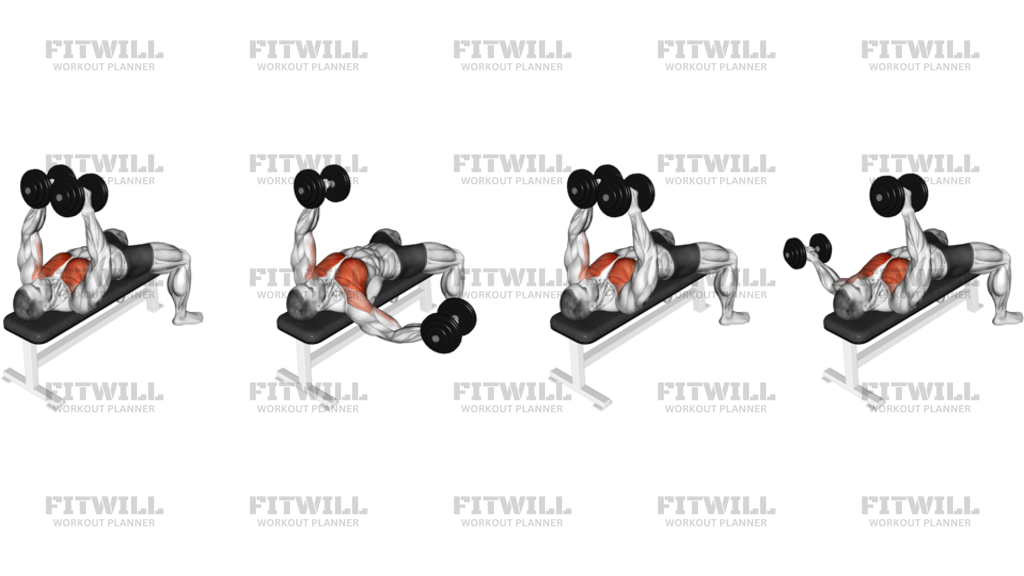
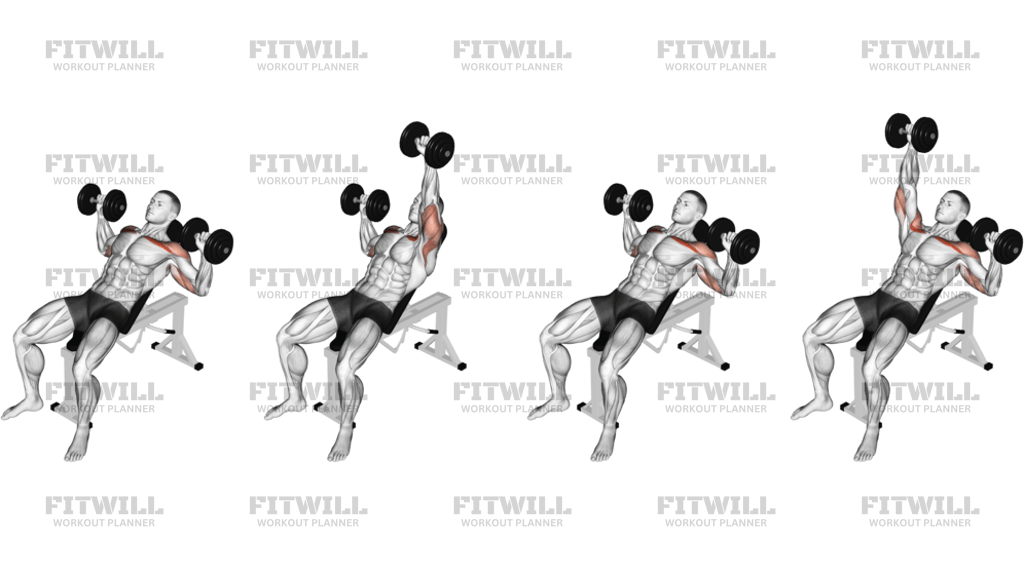
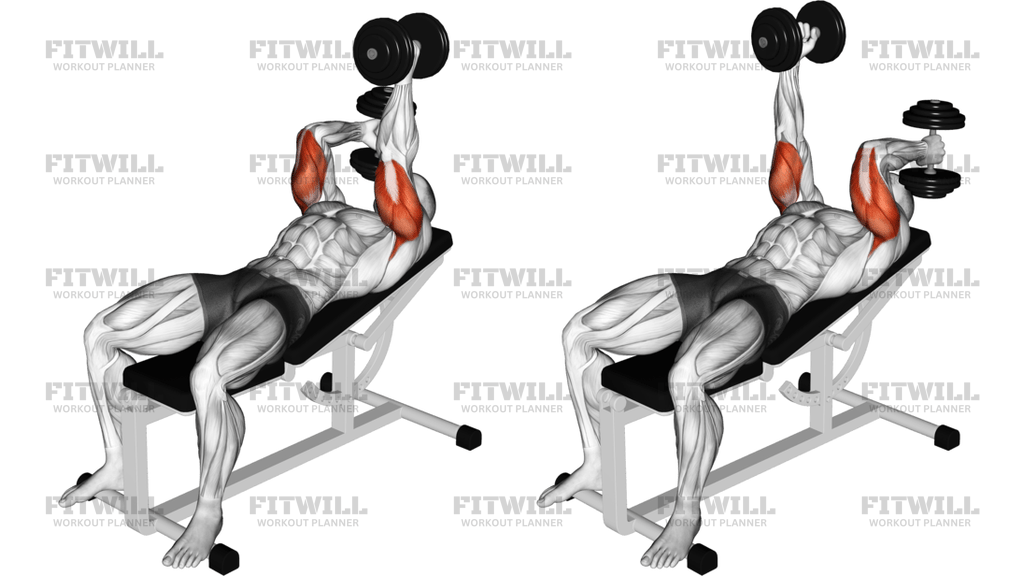
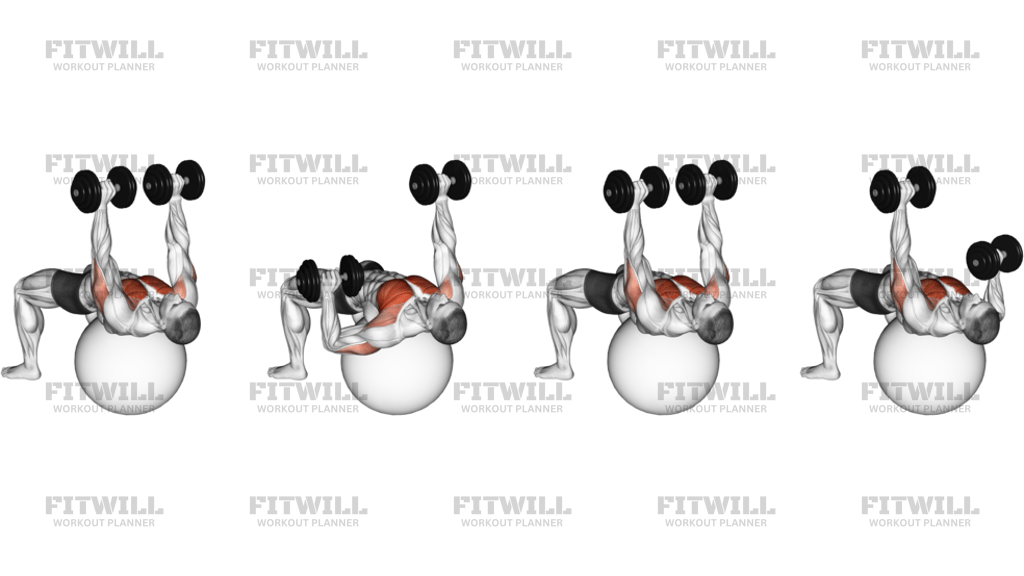
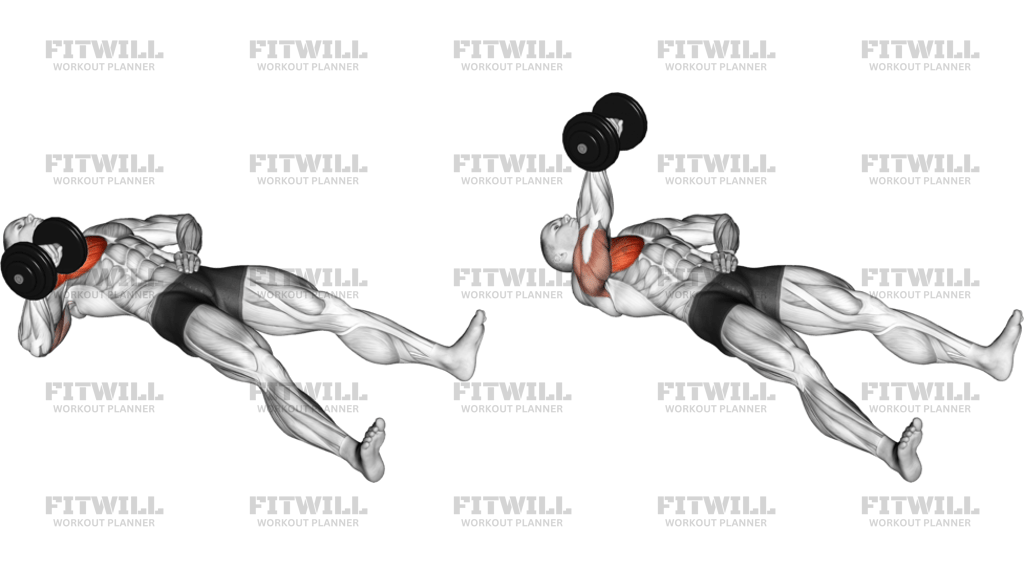
Dumbbell Bench Press
Dumbbell Bench Press is a flat pressing exercise that builds chest strength while asking each arm to work on its own. Because the dumbbells are not fixed to a bar, you have to control the path of each side, keep your wrists stacked, and stabilize the shoulders throughout the rep. That makes it useful for general strength, hypertrophy, and for learning cleaner pressing mechanics without one side hiding the other.
The movement primarily trains the chest, with the front shoulders and triceps helping to finish each press. The upper back also works hard to keep the shoulder blades set on the bench, and the core keeps the torso from sliding or over-arching. In practice, that means this is not just an arm press; it is a full upper-body strength drill that rewards a stable base and a controlled lower.
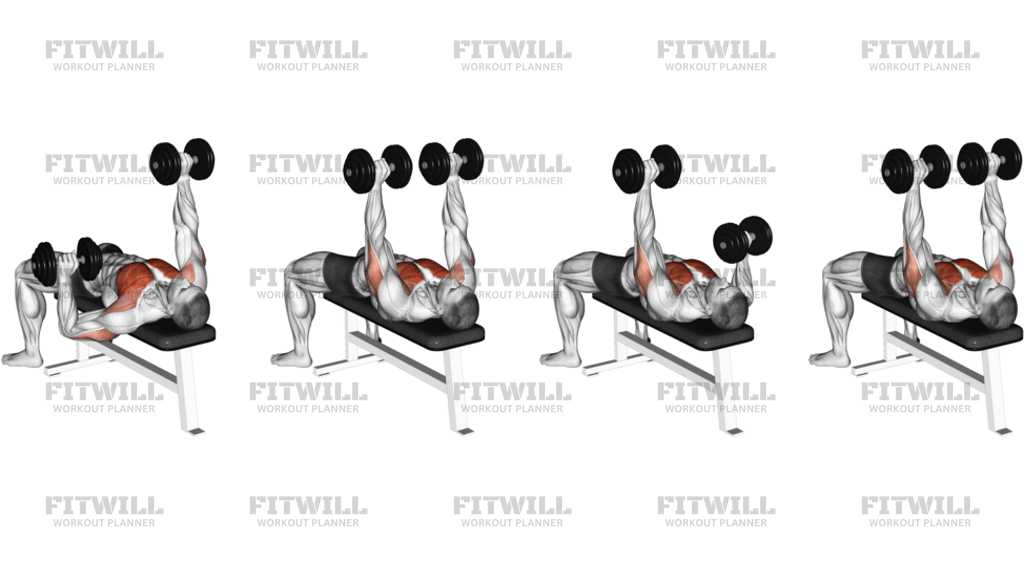
The setup matters a lot. Lie on a flat bench with your eyes under the dumbbells, feet planted firmly, and your shoulder blades pulled back and down before the first rep. Start with the dumbbells over the mid-chest, not drifting toward the face or belly. A small natural arch in the lower back is normal, but the ribcage should stay controlled and the glutes should stay in contact with the bench.
On each rep, lower the dumbbells in a slight arc until the elbows are just below bench level and the handles are close to the outside of the chest. Keep the forearms nearly vertical near the bottom so the wrists do not collapse backward. Press up by driving the dumbbells slightly inward as they rise, then stop before they touch if that helps you keep tension and shoulder position consistent.
Dumbbell Bench Press fits well in chest sessions, upper-body strength work, or any program where you want a stable press with a more natural range than a barbell. It is also useful when one side tends to dominate the other, because each arm has to produce its own force and control. Use a spotter for heavy sets, and end the set if the dumbbells start drifting unevenly, the shoulders roll forward, or the lower back takes over the lift.
[ Workout Log & Planner ]
Put your next workout in Fitwill
Keep your plan and training log ready when you are.


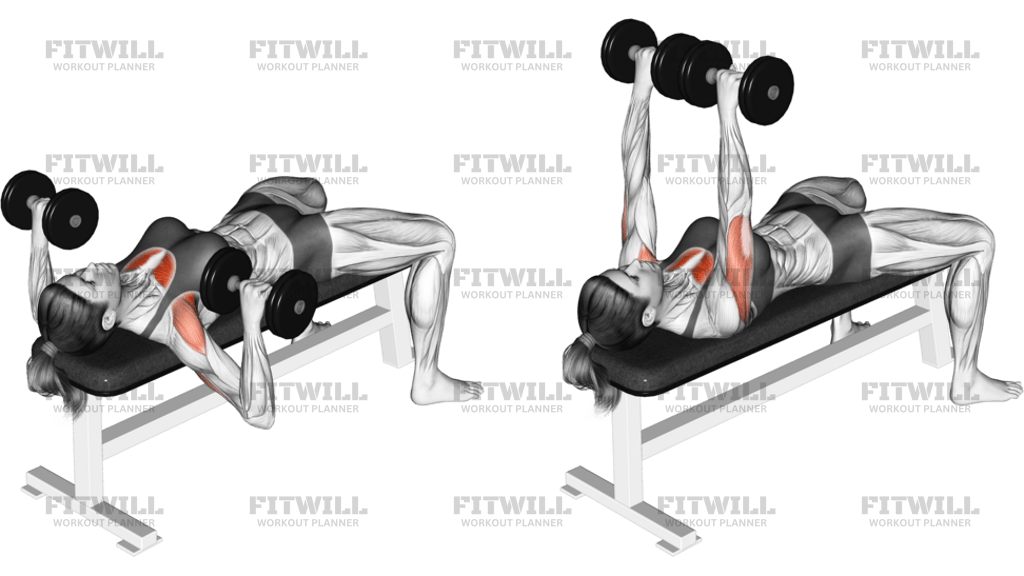
Instructions
- Sit on a flat bench with a dumbbell on each thigh, then lie back so the dumbbells finish over the outside of your chest.
- Plant both feet flat on the floor and pull your shoulder blades back and down against the bench before you start the first rep.
- Bring the dumbbells to the top position with your wrists stacked over your elbows and your palms facing forward or slightly inward.
- Take a breath, brace your torso, and lower both dumbbells under control in a slight arc toward the outer chest.
- Keep your elbows angled just below shoulder level and let the dumbbells stop when your upper arms are a little below the bench line.
- Press the dumbbells back up by driving them slightly inward as they rise, keeping both sides even and steady.
- Exhale through the press and avoid letting the handles drift behind your wrists at the top.
- Stop the set if one dumbbell starts wobbling, then bring the dumbbells back to your thighs before sitting up.
Tips & Tricks
- Choose a load that lets you control both dumbbells independently; if one side shakes earlier, the weight is too heavy.
- A neutral or slightly turned-in grip is often easier on the shoulders than forcing the palms completely forward.
- Lower the bells to the outside of the chest, not to the neck, so the press stays in the chest and triceps instead of the front delts.
- Keep the wrists stacked over the elbows at the bottom; bent-back wrists usually mean the dumbbells are too low or too heavy.
- Do not slam the dumbbells together at the top unless you need that cue to keep both arms synchronized; the press works fine without contact.
- If your lower back arches hard enough to lift your hips, bring your feet closer or reduce the load and keep the ribs from flaring.
- A two- to three-second lower makes the chest work harder and helps you notice when one arm wants to drop faster than the other.
- If your shoulders feel pinched, shorten the bottom range slightly and keep the elbows closer to 30 to 45 degrees from your torso.
Frequently Asked Questions
What muscles does Dumbbell Bench Press work?
It primarily trains the chest, with the front shoulders and triceps helping to press the dumbbells upward. The upper back and core also stay active to keep you stable on the bench.
Is Dumbbell Bench Press good for beginners?
Yes, as long as the load is light enough to control on the way down and the dumbbells stay level side to side. Start with a weight you can lower without wobbling or shoulder discomfort.
Should I use a neutral grip or palms-forward grip on Dumbbell Bench Press?
Both can work, but a slight neutral grip is often friendlier on the shoulders. Use the grip that lets you keep your wrists stacked and lower the dumbbells without pinching the front of the shoulder.
How deep should I lower the dumbbells?
Lower until the upper arms are just below bench level or until you feel a strong chest stretch without the shoulders rolling forward. If the bottom position causes pain or loses wrist position, shorten the range slightly.
What is the biggest mistake in Dumbbell Bench Press?
Letting the elbows flare hard and the dumbbells drift behind the wrists is a common problem. That usually shifts stress toward the shoulders and makes the press feel unstable.
How is Dumbbell Bench Press different from a barbell bench press?
Dumbbells let each arm move on its own, which often feels more natural and exposes side-to-side imbalances. The tradeoff is that they require more stabilization and usually use less total load.
Do I need a spotter for Dumbbell Bench Press?
A spotter is useful for heavy sets, but you can usually manage lighter work safely by keeping control of the dumbbells and sitting them back onto your thighs before standing up.
Why do my shoulders take over during this exercise?
That usually happens when the bench setup is loose, the elbows flare too much, or the dumbbells travel too high toward the face. Re-center the dumbbells over the mid-chest and keep the shoulder blades pinned back.