Dumbbell 4 Ways Lateral Raise
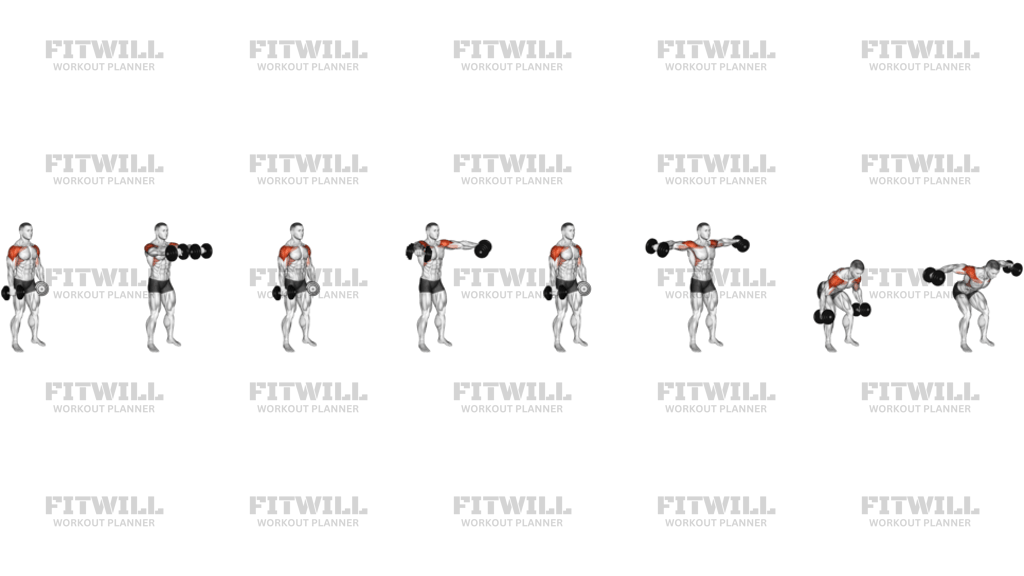
Dumbbell 4 Ways Lateral Raise is a shoulder isolation sequence that moves the dumbbells through several raise paths around the shoulder joint. It challenges the delts from the front, side, diagonal, and rear angles while demanding enough control from the upper back and trunk to keep the torso quiet. It is useful when you want shoulder work that is more varied than a single lateral raise, but still light enough to stay precise.
The exercise starts with a simple standing setup: feet about hip-width apart, dumbbells hanging at your sides, wrists straight, and shoulders relaxed away from your ears. That starting position matters because the moment you begin to shrug, lean back, or swing the weights, the movement stops being a clean shoulder raise and starts turning into momentum work. A small knee bend and a stacked ribcage help keep the lift organized.
Each direction should be deliberate. Raise the dumbbells to about shoulder height in the planned path, pause long enough to feel the shoulder do the work, then lower them under control before switching to the next angle. The exercise usually feels best when the arms travel on smooth arcs rather than straight lines, with the elbows slightly bent and the neck staying long.
Because the four-way pattern accumulates fatigue quickly, it fits best as accessory work, a shoulder-prep drill, or a lighter hypertrophy block after heavier pressing. It can also help expose weak links between the front, middle, and rear delts if one direction feels much harder than the others. The goal is balanced tension, not chasing the heaviest dumbbells in the gym.
Keep the range pain-free and stop the raise before your shoulders roll forward or your traps take over. If the front or side raise pinches, shorten the arc, turn the thumbs slightly up, or reduce the load until you can keep the path smooth. A controlled set with light dumbbells will usually do more for this exercise than a heavier pair that forces body English.
[ Workout Log & Planner ]
Put your next workout in Fitwill
Keep your plan and training log ready when you are.


Instructions
- Stand tall with your feet about hip-width apart, dumbbells hanging at your sides, palms facing in, knees softly bent, and shoulders relaxed away from your ears.
- Set your ribs over your pelvis, keep your neck long, and brace lightly so the dumbbells start from a still, balanced position.
- Raise both dumbbells straight in front of you to shoulder height with a slight bend in the elbows, then pause without shrugging.
- Lower the dumbbells slowly until they return near your thighs and reset your shoulders before the next direction.
- Raise the dumbbells on a slight diagonal in the scapular plane, with the hands a little in front of the shoulders and the thumbs turned slightly up if needed.
- Lower under control again, then lift the dumbbells out to your sides in a wide arc until the upper arms reach shoulder height.
- Hinge slightly at the hips with soft knees and a flat back, then raise the dumbbells out and back in a reverse-fly path for the rear-delt portion.
- Return to standing, repeat the four directions for the prescribed reps, and breathe out on each lift while inhaling on the controlled lowering.
Tips & Tricks
- Use lighter dumbbells than you would for a single lateral raise, because four directions add up fast and expose sloppy reps.
- If your shoulders pinch on the front or diagonal raise, keep the thumbs slightly up instead of turning the palms down.
- On the side raise, think about leading with the elbows and stopping at shoulder height; going higher usually turns into a shrug.
- Keep the dumbbells in smooth arcs instead of jerking them up from the bottom with your lower back or hips.
- In the bent-over portion, hinge from the hips rather than rounding your spine so the rear delts stay loaded.
- Let the lowering phase last longer than the lift so the shoulders stay under tension without swinging.
- If the traps burn more than the delts, soften your grip and lower the load before the set turns into a shrugging contest.
- Use a mirror or a fixed point ahead of you to catch torso sway, because even a small lean can turn this into momentum work.
Frequently Asked Questions
What muscles does Dumbbell 4 Ways Lateral Raise work?
It mainly trains the shoulder muscles, especially the front, side, and rear delts, with the upper traps and upper back helping to stabilize the dumbbells.
Why are there four different dumbbell raise directions?
The different paths let you challenge the shoulder from multiple angles instead of only hitting one part of the delts. That usually makes the exercise feel more complete, but also more fatiguing.
Should I do all four ways in one rep or one direction per set?
Most versions treat one full sequence as a rep, then repeat that sequence for the set. If your program separates the directions, keep each path strict and controlled rather than chasing speed.
How heavy should the dumbbells be for Dumbbell 4 Ways Lateral Raise?
Light enough that you can keep the torso still, the elbows slightly bent, and the dumbbells on clean arcs through every direction. If you have to swing to finish the last raise, the load is too heavy.
Can beginners do Dumbbell 4 Ways Lateral Raise?
Yes, but they should start with very light dumbbells and a smaller range of motion. The exercise is more about control and shoulder awareness than lifting a lot of weight.
Why do my traps take over during the side raise?
Usually the dumbbells are too heavy or the shoulders are creeping toward the ears. Keep the neck long, stop at shoulder height, and lower the load until the delts do the work.
What should I do if the front raise part of the lift hurts?
Shorten the range, keep the thumbs slightly up, and avoid forcing the arms above shoulder height. If it still pinches, use the side and rear-delt paths only for that session.
Is it okay to bend forward for the rear-delt portion?
Yes, but hinge from the hips with a flat back and soft knees. The bend should come from the hips, not from rounding the lower back or throwing the chest down.