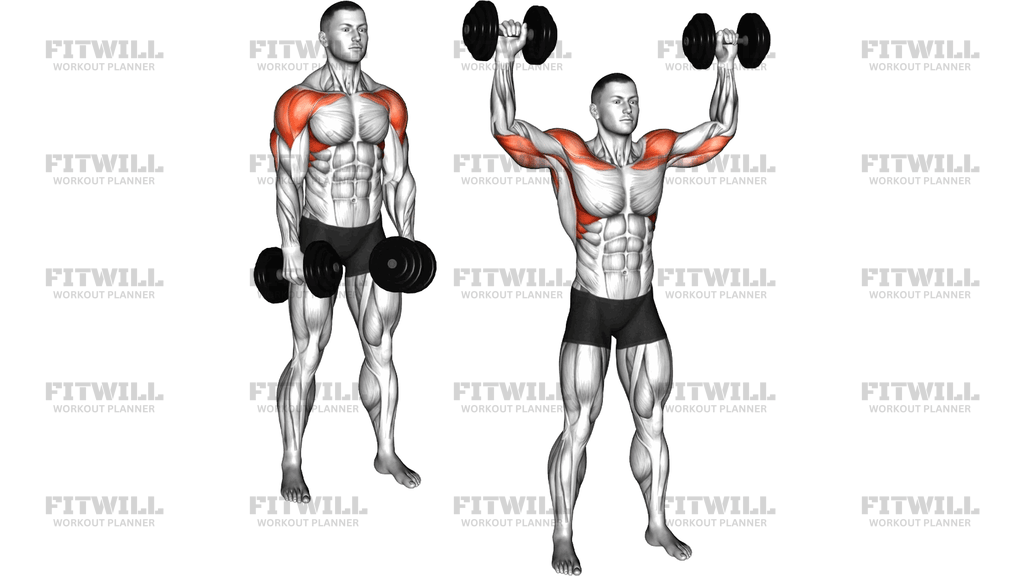
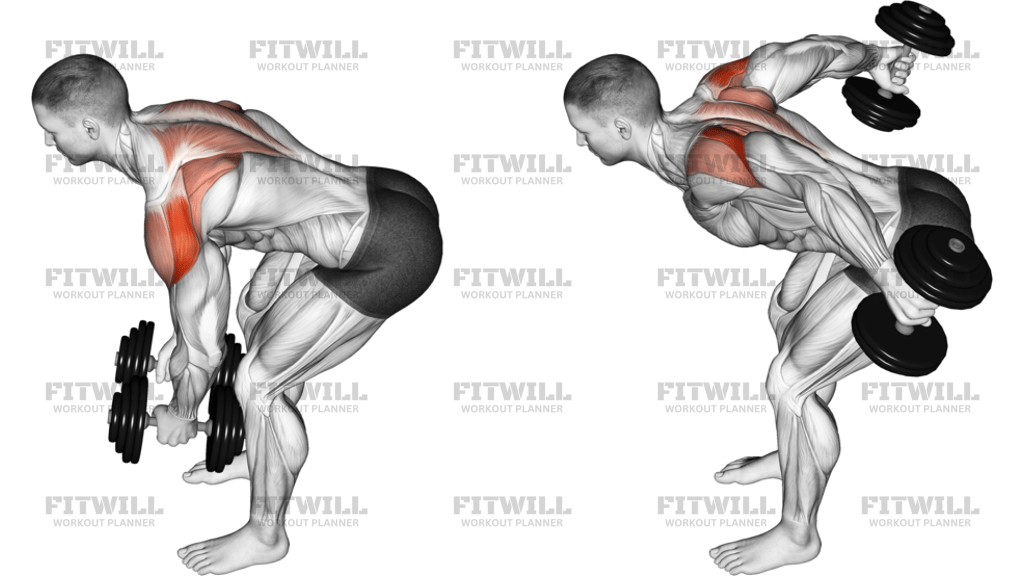
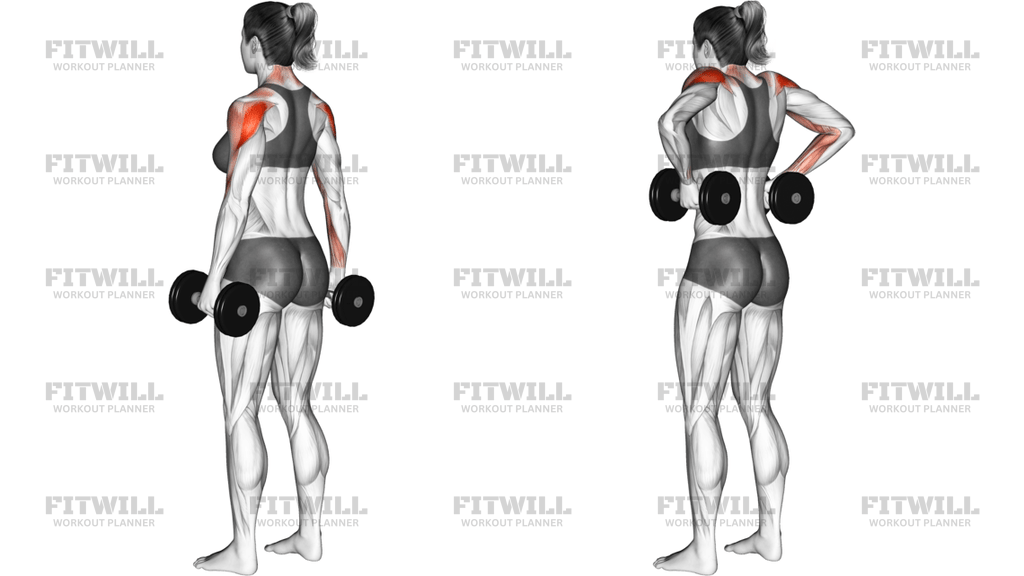
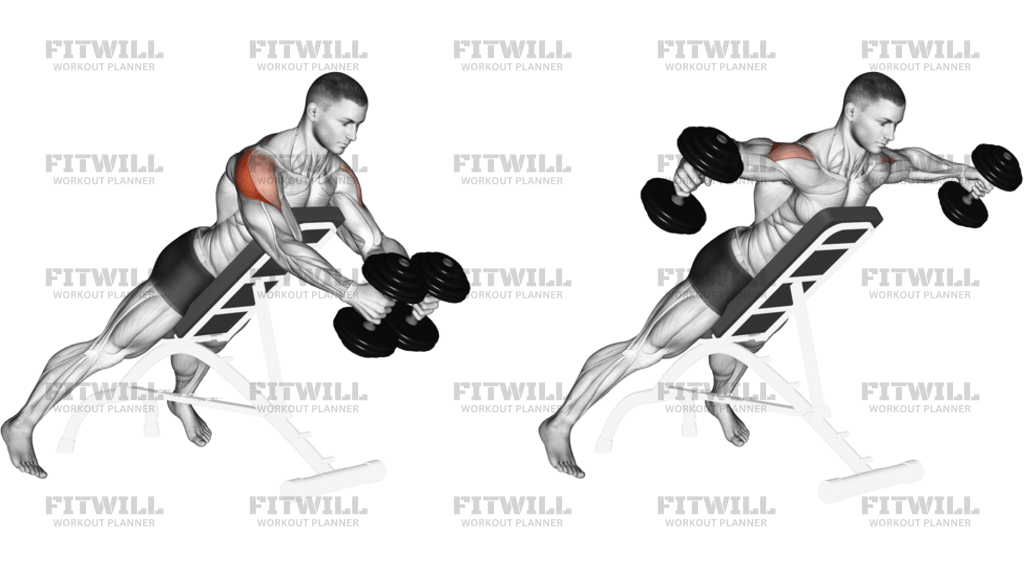
Dumbbell One-Arm Reverse Fly With Support Version 2
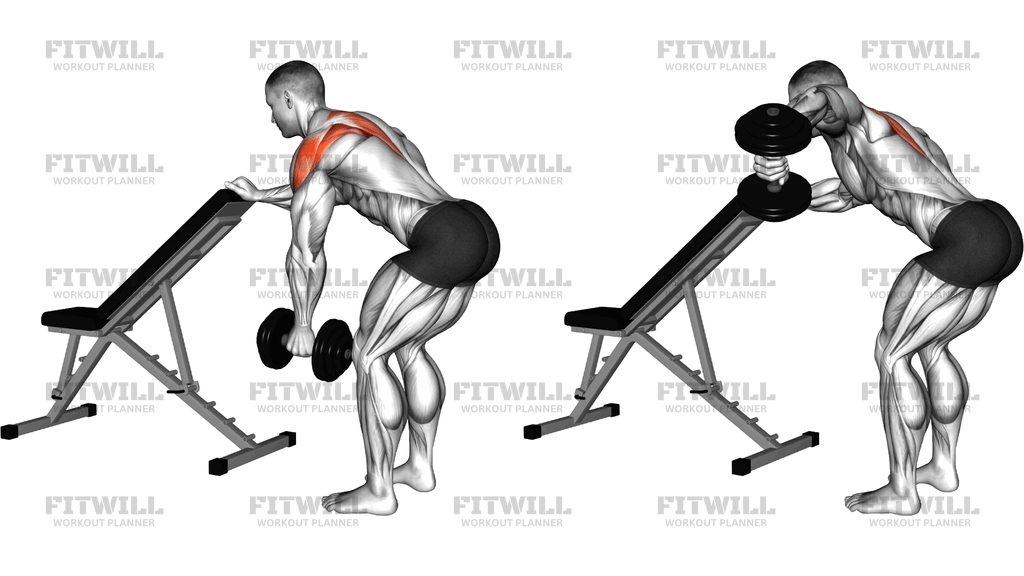
Dumbbell One-Arm Reverse Fly With Support Version 2 is a supported rear-delt isolation exercise done with one hand braced on a bench and the other arm hanging toward the floor with a dumbbell. The support takes a lot of the torso movement out of the rep, which makes it easier to train the back of the shoulder with a clean arc instead of turning the set into a body swing. It is a good choice when you want to build rear-delt size, shoulder balance, and better control through the top half of the shoulder joint.
The bench support matters because it locks in the hinge angle and gives you something stable to brace against while the working arm moves freely. With the torso tipped forward, the dumbbell starts in a long, stretched position below the shoulder, and that setup lets the rear delt do the lifting without the low back or legs helping much. Keep the neck long, ribs stacked, and the non-working shoulder quiet so the movement starts from a stable base instead of a twisted torso.
On each rep, drive the elbow out and slightly back in a wide arc until the upper arm reaches roughly shoulder height or just below. The elbow should stay softly bent, the wrist should stay neutral, and the chest should not roll open to fake extra range. The goal is a smooth lateral raise for the rear shoulder, not a row, shrug, or twist. Pause briefly near the top, then lower under control until the dumbbell hangs again and the rear delt is loaded at the bottom.
This version works well as accessory work, hypertrophy training, warm-up activation, or one-sided corrective work when one rear delt is lagging behind the other. Light to moderate loads usually produce the best result because the support makes cheating easy to notice and easy to stop. If the traps, neck, or lower back start taking over, reduce the load, re-hinge, and keep the repetition strict enough that the shoulder, not momentum, is doing the work.
[ Workout Log & Planner ]
Put your next workout in Fitwill
Keep your plan and training log ready when you are.


Instructions
- Stand beside a flat bench, hinge forward at the hips, and place your non-working hand on the bench for support.
- Set your feet about hip-width apart with a slight bend in both knees and keep your torso angled forward and still.
- Let the working arm hang straight down from the shoulder with a neutral wrist and a soft bend in the elbow.
- Brace your ribs and keep your neck long before you start the lift.
- Drive the elbow out and slightly back in a wide arc until the upper arm reaches shoulder height or just below.
- Keep the chest, hips, and supporting shoulder quiet so the dumbbell does not turn into a row or a twist.
- Exhale as you lift and pause briefly at the top without shrugging toward the ear.
- Lower the dumbbell slowly back to the hanging position, then repeat all reps before switching sides.
Tips & Tricks
- Choose a lighter dumbbell than you would use for a two-arm reverse fly; the bench support makes cheating easier to hide.
- Press the support hand firmly into the bench so the torso does not rotate when the working arm rises.
- Lead with the elbow and keep the hand slightly behind it so the rear delt, not the wrist, sets the path.
- Keep the elbow angle nearly fixed; turning the rep into a bent-arm row shifts too much work to the back.
- Stop the lift when the shoulder starts to shrug or the upper trap grabs the load, even if that means a shorter range.
- Keep the torso hinge unchanged from the bottom to the top so the dumbbell is not helped by standing up.
- Use a slow 2 to 3 second lowering phase to keep tension on the rear delt and upper back.
- Match both sides carefully and start with the weaker side if one shoulder is clearly less stable.
Frequently Asked Questions
What muscles do Dumbbell One-Arm Reverse Fly With Support Version 2 work most?
The rear delts are the main target, with the rhomboids and mid traps helping stabilize and guide the shoulder blade.
Why is the hand on the bench in this reverse fly variation?
The bench gives you a stable brace so the torso stays fixed and the working shoulder can move without extra swinging.
Should I keep my elbow bent during the dumbbell reverse fly?
Yes. Keep a soft bend in the elbow and hold that angle mostly steady so the rear delt does the lifting.
How high should the dumbbell go on the supported reverse fly?
Raise it until the upper arm is about level with the torso or slightly below shoulder height, then stop before the trap takes over.
Can beginners do this one-arm reverse fly?
Yes, as long as they use a light dumbbell, keep the hinge stable, and avoid twisting or shrugging through the rep.
What should I feel if my form is right?
You should feel the back of the shoulder working hardest, with only light assistance from the upper back.
What is the biggest mistake with the supported reverse fly?
The most common problem is turning the rep into a row, a shrug, or a torso twist instead of a clean rear-delt raise.
How can I make this exercise harder without losing form?
Use a slightly heavier dumbbell, slow the lowering phase, or add a brief pause at the top while keeping the torso locked in place.