Dumbbell Straight Arm Crunch
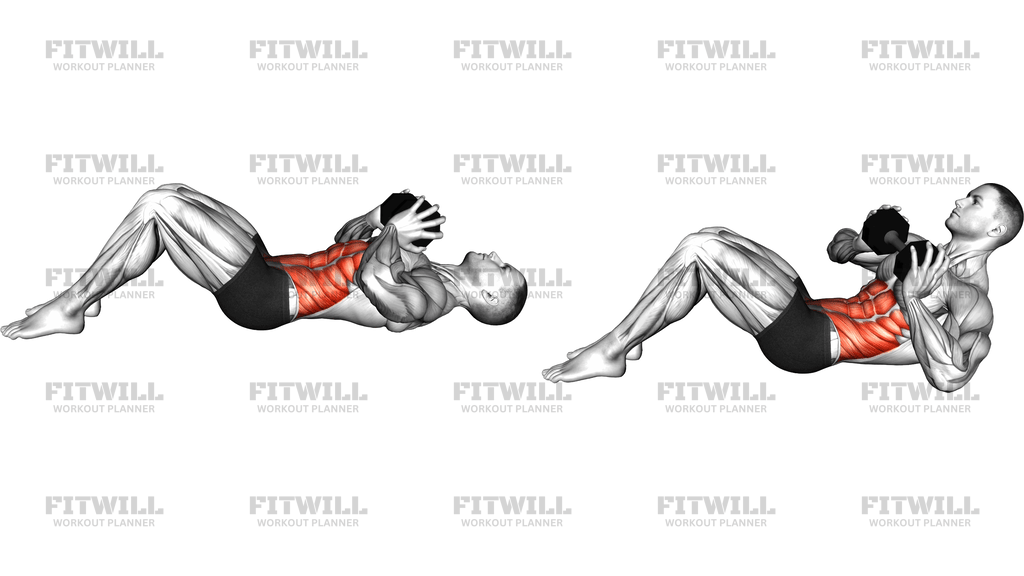
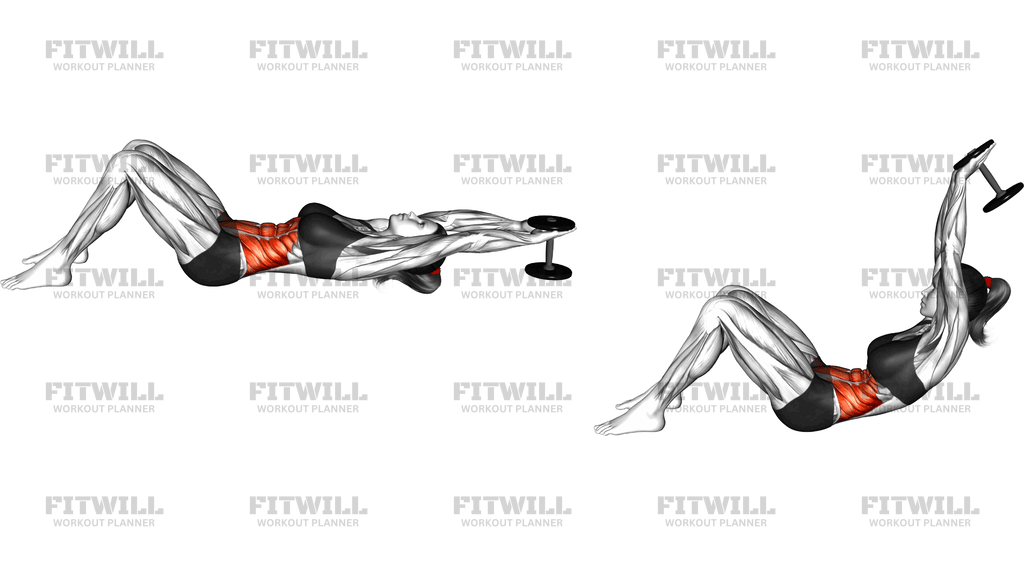
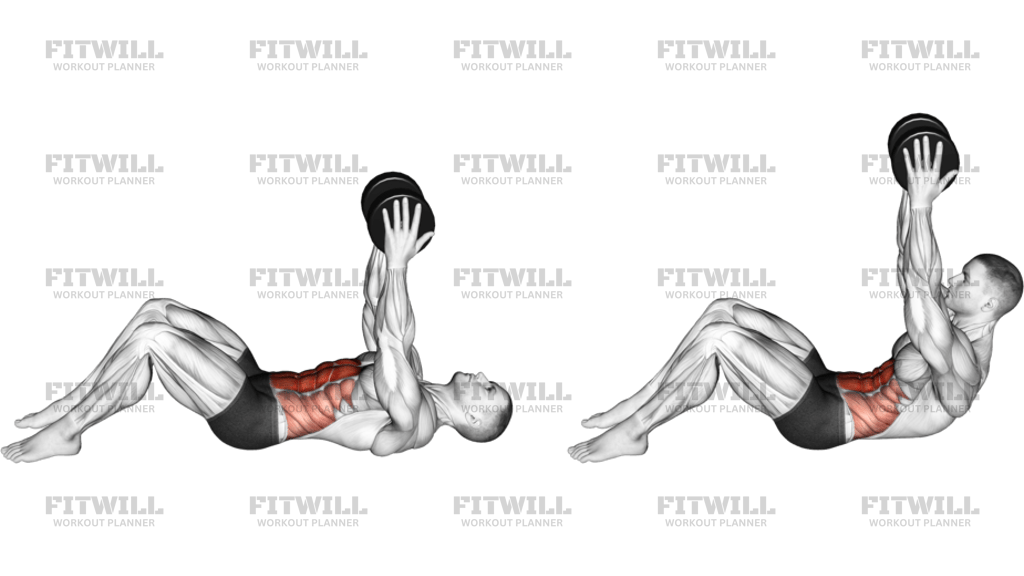
Dumbbell Straight Arm Crunch is a floor-based abdominal exercise that combines a standard crunch with an overhead or vertical dumbbell hold. You lie on your back with your knees bent and feet planted, then keep both arms straight while you curl the rib cage toward the pelvis. The load does not need to be heavy; its job is to make the trunk work harder to resist loss of position while the abs initiate the crunch.
The main training effect is on the rectus abdominis, with the obliques and deep core muscles helping keep the torso organized as the arms stay long and the shoulders travel off the floor. Holding the dumbbell overhead changes the leverage of the rep: the longer arm position makes the abdominal contraction feel more demanding without turning the movement into a hip flexor-dominant sit-up.
The setup matters because the floor contact gives you a clear start and finish for every rep. Keep the lower back gently settled, the ribs down, and the chin slightly tucked so the neck stays relaxed. The dumbbell should stay centered and steady rather than drifting behind the head or wobbling from side to side. If the weight is too heavy, the shoulders will yank forward and the neck will take over.
During the crunch, think about bringing the rib cage toward the pelvis instead of throwing the chest at the knees. The shoulder blades should leave the floor, but the hips stay quiet and the feet stay planted. On the way down, lower under control until the shoulders just touch down again, keeping tension in the abs instead of relaxing completely between reps.
This exercise is useful as a controlled core movement in warmups, accessory blocks, core sessions, or finishers when you want abdominal work without spinal flexion from a bench or machine. It is also easy to scale: beginners can use a very light dumbbell or even no load to learn the pattern, while advanced lifters can increase the challenge with stricter tempo rather than chasing momentum. Keep the range clean, the neck quiet, and the dumbbell path stable so the abs stay in charge from the first rep to the last.
[ Workout Log & Planner ]
Put your next workout in Fitwill
Keep your plan and training log ready when you are.


Instructions
- Lie on your back on the floor with your knees bent, feet flat, and your lower back gently settled against the ground.
- Hold one dumbbell with both hands above your chest, keeping your arms straight and your elbows unlocked but not bent.
- Set your ribs down, lightly tuck your chin, and keep your gaze toward the ceiling before the first rep.
- Exhale and curl your shoulders and upper back off the floor by bringing your rib cage toward your pelvis.
- Keep the dumbbell stacked over your chest or slightly above it as your torso lifts; do not swing it toward your face.
- Pause briefly at the top when the abs are fully shortened and the shoulder blades are clear of the floor.
- Lower slowly until your shoulder blades touch down again while keeping tension through the midsection.
- Reset your breath and repeat for the planned number of repetitions without letting the feet or hips drive the movement.
Tips & Tricks
- Choose a light dumbbell first; the exercise gets hard quickly because the straight-arm hold lengthens the lever.
- If your neck feels strained, lower your chin slightly more and keep your eyes on the ceiling instead of reaching forward with the head.
- Think of curling the ribs toward the pelvis, not of sitting all the way up; the hips should stay quiet on the floor.
- Keep the dumbbell over the chest line rather than drifting backward behind the head, which makes the shoulders and neck work too hard.
- Do not bend the elbows to fake more range; the straight-arm hold is part of the exercise challenge.
- Use a slow descent so the abs stay under tension instead of dropping between reps.
- Exhale as you crunch up, then inhale as you lower with control.
- Stop the set when the dumbbell starts wobbling or the lower back arches off the floor.
- If your feet want to lift, plant them more firmly and reduce the load before you chase more reps.
Frequently Asked Questions
What does Dumbbell Straight Arm Crunch train most?
It mainly trains the rectus abdominis, with the obliques and deep core muscles helping stabilize the torso.
Why keep the arms straight while holding the dumbbell?
The straight-arm hold increases the leverage demand on the abs and makes the crunch harder without needing a heavy weight.
Where should the dumbbell travel during the rep?
It should stay centered above the chest or slightly overhead while the torso curls up, not swing toward the face or drift side to side.
Can I turn this into a sit-up by lifting higher?
No. The goal is a crunch, so the shoulder blades leave the floor while the hips stay down and the lower back stays controlled.
Is this exercise beginner-friendly?
Yes, if you start with a very light dumbbell or no load and learn to keep the neck and shoulders relaxed.
What is the most common mistake with this crunch?
People usually pull with the neck, bend the elbows, or swing the dumbbell instead of curling the rib cage with the abs.
Should my feet stay flat on the floor?
Yes. Keeping the feet planted helps isolate the trunk instead of turning the rep into a leg-driven sit-up.
How should I progress this movement over time?
Increase the dumbbell slightly only after you can keep the arms straight, the neck quiet, and the lowering phase slow and controlled.