Single Dumbbell Decline Overhead Sit-Up
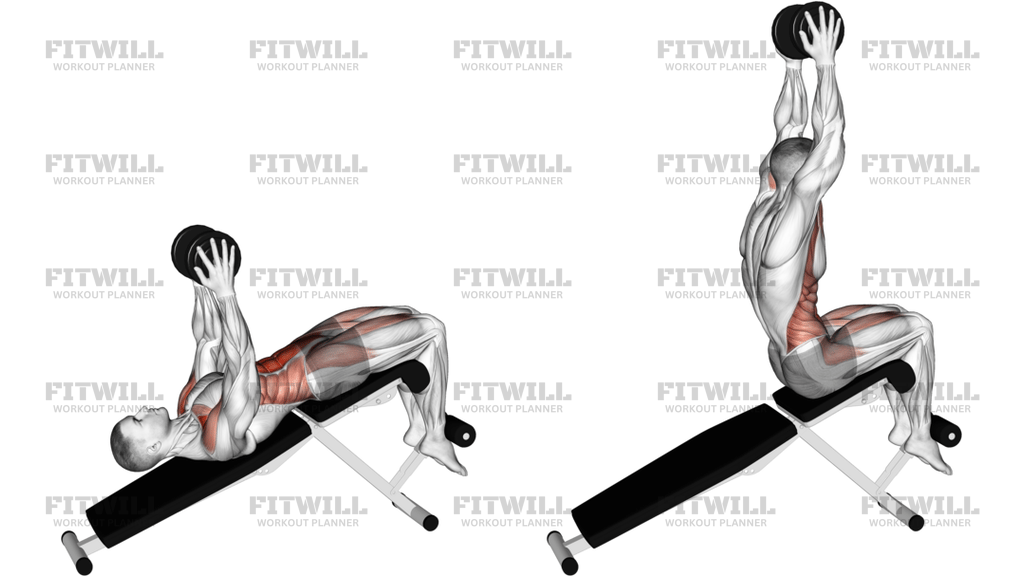
The Single Dumbbell Decline Overhead Sit-Up is a loaded trunk-flexion exercise performed on a decline bench with the arms extended overhead. It is designed to challenge the abs through a longer range than a flat sit-up while also asking the hip flexors and stabilizers to keep the torso organized as you curl up and lower back down. The overhead position raises the leverage demand, so the exercise feels much harder than a bodyweight sit-up even with a modest load.
This movement is most useful when you want direct abdominal work that still carries over to controlled athletic movement, bracing, and torso endurance. The decline angle increases the stretch at the bottom and makes the descent just as important as the sit-up itself. Because the weight stays overhead, the shoulders, upper back, and grip also have to stay steady so the torso can do the work instead of the arms swinging for momentum.
A good rep starts with the body locked into the bench. Your feet need to stay secured under the rollers, your pelvis should be settled on the pad, and your lower ribs should not flare as you lie back. Holding the weight overhead changes the lever arm immediately, so the starting position must be crisp and repeatable before you begin the first crunch off the bench.
As you sit up, think about curling the ribcage toward the pelvis rather than yanking the torso forward. Keep the weight stacked over the shoulders, rise under control, and finish tall without over-arching the lower back at the top. On the way down, lower slowly until the shoulder blades touch the bench again so the abs stay loaded through the full repetition instead of bouncing off the bottom.
Because this is a decline variation, small form errors show up fast. Too much speed, too much load, or an aggressive swing can shift the effort into the hip flexors and lower back. When it is done well, the Single Dumbbell Decline Overhead Sit-Up is a focused core exercise that rewards clean setup, steady breathing, and a strict tempo more than raw repetition count.
[ Workout Log & Planner ]
Put your next workout in Fitwill
Keep your plan and training log ready when you are.


Instructions
- Set the decline bench to a moderate angle and hook your feet securely under the roller pads.
- Lie back with your hips and shoulder blades on the bench, knees bent, and your lower back resting on the pad.
- Hold one dumbbell with both hands directly above your chest, arms straight and wrists stacked over your shoulders.
- Draw your lower ribs down and brace your abs before the first rep.
- Curl your head, shoulders, and upper back off the bench while keeping the weight fixed overhead.
- Continue sitting up until your torso is tall and your abs are fully shortened.
- Pause briefly at the top without flaring your ribs or swinging the dumbbell forward.
- Lower yourself under control until your shoulder blades touch the bench again.
- Reset your brace, keep your feet anchored, and repeat for the planned reps.
Tips & Tricks
- Keep the weight stacked over your shoulders; if it drifts behind your head, the sit-up becomes harder to control.
- Use a decline angle that lets you sit up smoothly without jerking off the bottom pad.
- Let your shoulder blades touch down between reps, but do not relax enough to bounce off the bench.
- Exhale as you curl up and inhale on the way down to keep your torso from bracing too late.
- Keep your chin slightly tucked so the neck does not lead the movement.
- If your hip flexors take over, shorten the range and slow the lowering phase.
- Choose a light load first; the overhead position makes this much harder than a regular sit-up.
- Keep your feet locked under the rollers without pushing hard through the legs.
- Stop the set when the lower back starts arching or the dumbbell drifts out of line.
Frequently Asked Questions
What does the Single Dumbbell Decline Overhead Sit-Up train most?
It mainly trains the abs, especially the rectus abdominis, with help from the hip flexors and obliques.
Is the Single Dumbbell Decline Overhead Sit-Up beginner friendly?
Beginners can do it, but only with a very light dumbbell or no load at all until they can control the decline sit-up without swinging.
How heavy should the dumbbell be on this exercise?
Use the lightest load that still keeps the weight steady overhead for every rep. If you have to bend your elbows or rock your torso to finish the set, it is too heavy.
Should the dumbbell stay over my chest or over my face?
Keep it stacked over your shoulders and upper chest line as you sit up, not drifting behind your head or out toward your toes.
Why use a decline bench instead of a flat bench?
The decline bench increases the challenge at the bottom and gives the abs a longer range of motion, which makes each rep more demanding.
Why do my hip flexors feel this more than my abs?
That usually happens when you swing up too fast or cut the sit-up short. Slow the descent, curl your ribs toward your pelvis, and avoid yanking with the legs.
Can I bend my elbows during the Single Dumbbell Decline Overhead Sit-Up?
A slight bend is acceptable if it helps you control the weight, but the arms should stay mostly straight and quiet throughout the rep.
What should I do if my lower back arches on the way down?
Reduce the load, shorten the range a little, and lower more slowly so your torso stays braced against the bench instead of dumping into the lumbar spine.