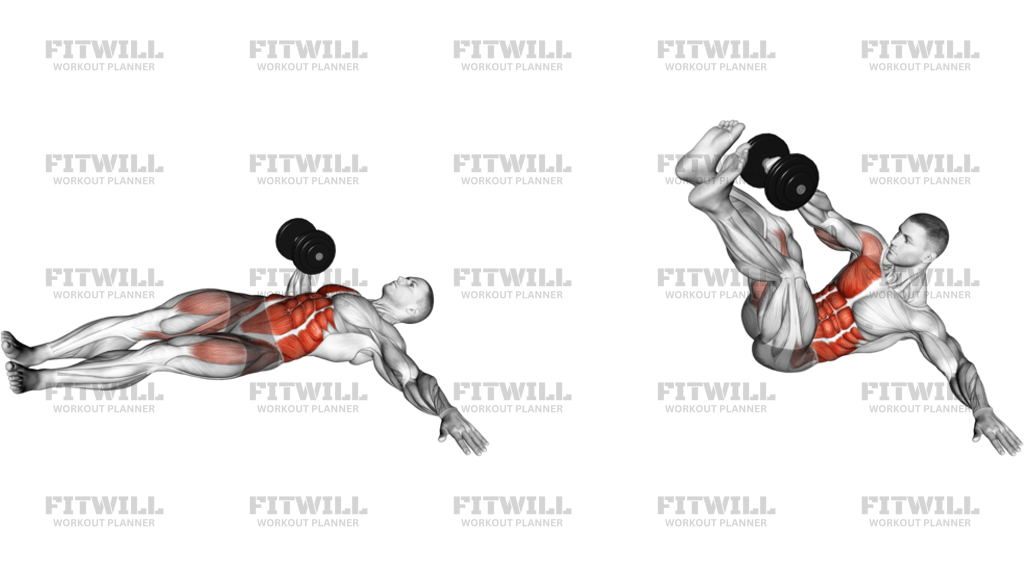
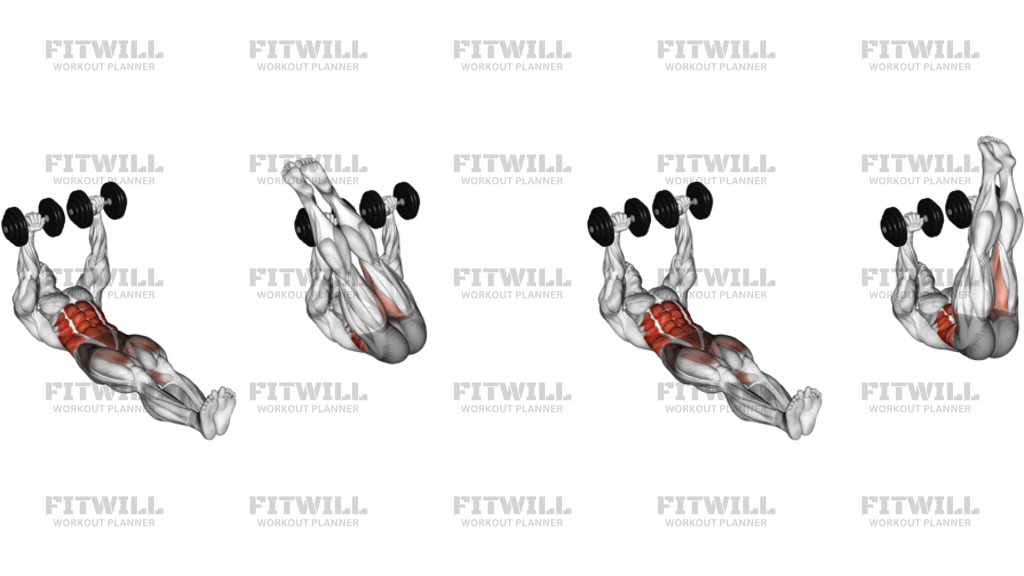
Dumbbell Seated Tuck Crunch On Floor
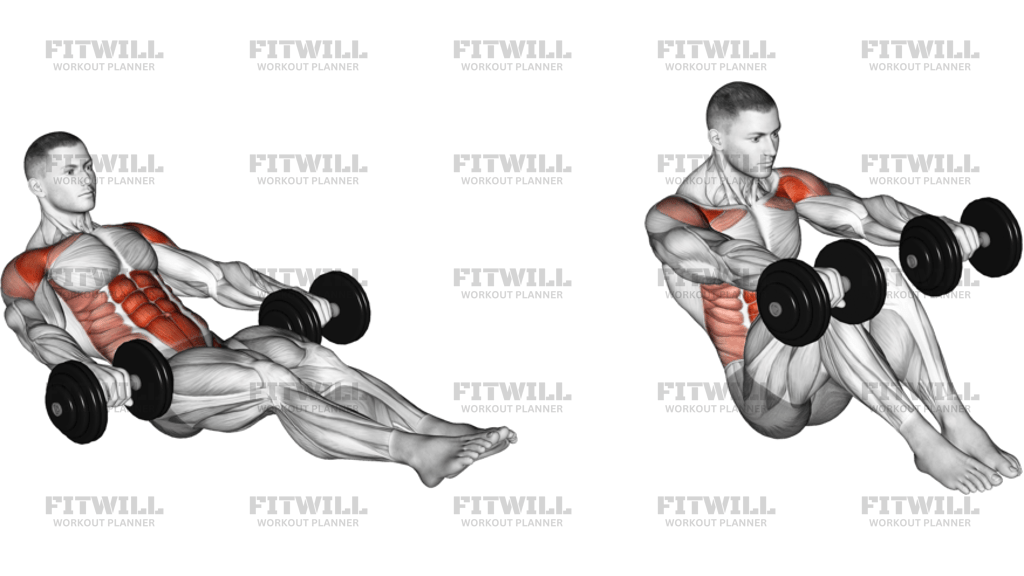
Dumbbell Seated Tuck Crunch On Floor is a floor-based core exercise that combines a tucked knee position with a controlled spinal curl. It challenges the front of the trunk, the hip flexors, and the muscles that keep the torso steady while the legs fold in and the chest comes toward the thighs. The dumbbells add load and make it harder to cheat with speed, so the set feels more like a strict core drill than a casual sit-up variation.
The starting position matters because you are balancing on your sit bones, leaning back, and controlling two separate levers at once: the torso and the legs. When you set up well, the lower back stays organized, the neck stays relaxed, and the crunch comes from the ribs closing toward the pelvis rather than from swinging the arms. That makes Dumbbell Seated Tuck Crunch On Floor useful for athletes and lifters who want a direct abdominal movement without a bench or machine.
Hold the dumbbells in a stable position and keep your chest lifted enough that the spine can curl under control. As you tuck the knees in, let the abdomen shorten and the pelvis roll slightly underneath you instead of collapsing backward onto the floor. The best reps have a clear pause at the top, where the body is compact and the abs are doing the work before you lower with control.
This exercise is often used as accessory work after heavy compound lifts, as a core-finisher, or as a lower-impact alternative to hanging knee raises and full sit-ups. Because the body is already seated on the floor, the range is easy to standardize and the movement can be scaled by changing the dumbbell load, the speed of the tuck, or how far back you lean at the start. A lighter load is usually enough if you want clean contraction rather than hip-dominant momentum.
Dumbbell Seated Tuck Crunch On Floor is also a good option when you want an exercise that exposes sloppy trunk control quickly. If the shoulders shrug, the neck tightens, or the feet slam down, the load is too heavy or the range is too large. Keep the movement compact, deliberate, and repeatable, and the exercise becomes a very honest test of abdominal strength and control.
[ Workout Log & Planner ]
Put your next workout in Fitwill
Keep your plan and training log ready when you are.


Instructions
- Sit on the floor and lean back on your sit bones with your knees bent, heels lightly hovering or set close to the floor, and a dumbbell in each hand.
- Hold the dumbbells just outside your thighs or slightly in front of your hips with straight wrists and relaxed shoulders.
- Set your chest up, keep the spine long enough to stay balanced, and brace before you start the first rep.
- Exhale as you draw your knees toward your chest and curl your ribcage toward your pelvis.
- Let the dumbbells stay quiet while the abs pull the torso and thighs closer together instead of yanking with the arms.
- Pause briefly when your knees are tucked in and your trunk is at its shortest, without collapsing your neck forward.
- Inhale as you slowly extend the legs and lean back to the starting angle under control.
- Stop the return before your lower back feels dumped into the floor, then reset your balance on the sit bones.
- Repeat for the planned reps, keeping each tuck smooth and identical.
- After the last rep, lower the feet and set the dumbbells down before sitting upright.
Tips & Tricks
- Choose dumbbells that let you keep the torso curled under control; if you have to swing the weights, the load is too heavy.
- Keep the motion compact. A smaller, cleaner tuck is better than forcing the knees too far in and losing balance.
- If your feet keep touching down between reps, start with them hovering only a few centimeters off the floor instead of chasing a big V-sit.
- Think about bringing the bottom of your ribs toward your hips, not just pulling the knees up with the hip flexors.
- Keep your neck long and your chin slightly tucked so the crunch comes from the trunk instead of from jutting the head forward.
- A slow lower catches the abs in their lengthened position and makes the exercise much harder without changing the load.
- If the dumbbells drift around, hold them still at your sides and let the torso do the work, not the arms.
- Stop the set when your low back starts to arch hard or you can no longer control the lean-back angle.
- Use a mat or soft floor if the sit bones get sore, but keep the surface stable enough that you can balance without wobbling.
- For a stricter set, pause for a full breath at the tucked position before you lower back down.
Frequently Asked Questions
What does Dumbbell Seated Tuck Crunch On Floor train most?
It mainly trains the rectus abdominis and the deep trunk muscles that control spinal flexion and pelvic tuck.
Are the dumbbells meant to move during Dumbbell Seated Tuck Crunch On Floor?
No, the dumbbells are there as load and balance challenge. Keep them steady so the crunch comes from the abs, not from swinging the arms.
How far should I lean back at the start?
Lean back far enough to make the abs work, but not so far that you lose the sit-bone balance point. If your lower back dumps into the floor, the setup is too low.
Can beginners do Dumbbell Seated Tuck Crunch On Floor?
Yes, but start with very light dumbbells or no load and keep the tuck small. The exercise gets difficult fast once the feet stay off the floor.
Why do my hip flexors feel this more than my abs?
Usually the torso is staying too upright or the knees are doing all the work. Curl the ribcage toward the pelvis and let the trunk shorten on each rep.
Should I touch the floor with my feet between reps?
Only if you need to reset balance. Keeping the feet lightly hovering makes the abs stay active through the whole set.
What is the safest way to finish the set?
Lower the feet, set the dumbbells down, and then sit upright. Don’t try to stand up while you are still leaning back and holding the load.
Can I substitute one dumbbell for two?
Yes, a single dumbbell held at the chest or between the thighs can make the balance challenge simpler. Two dumbbells usually make the set more demanding on control.