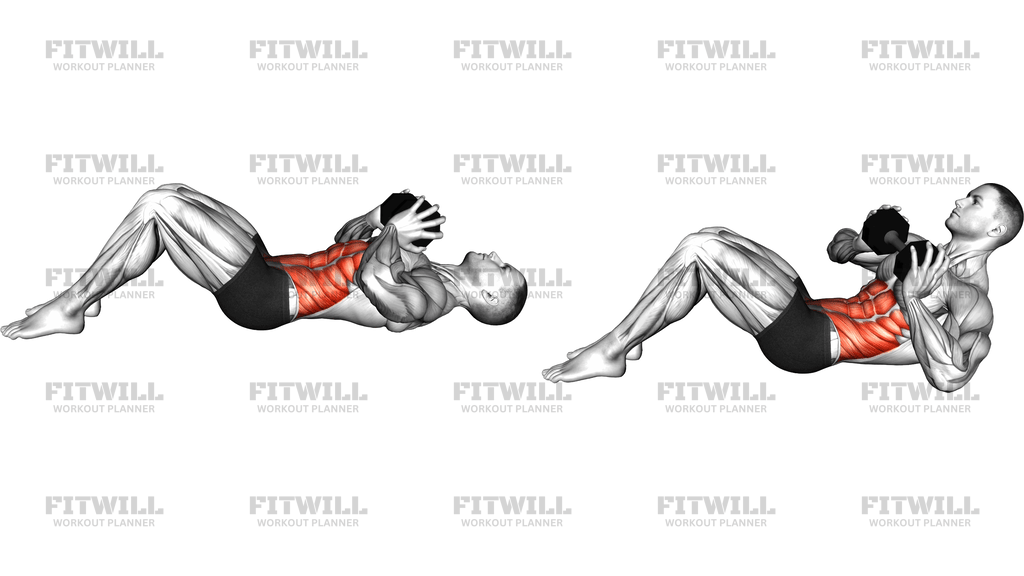
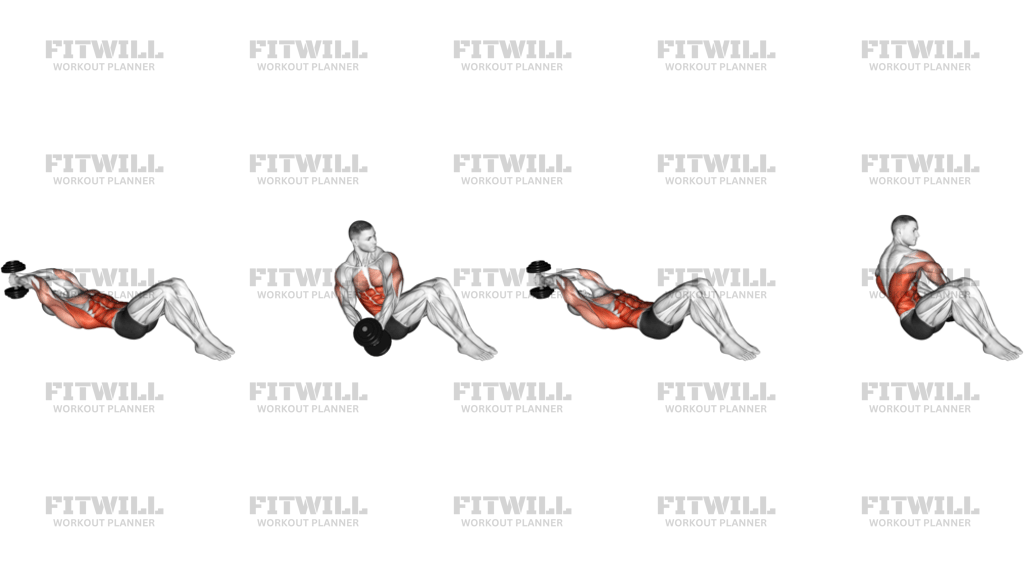
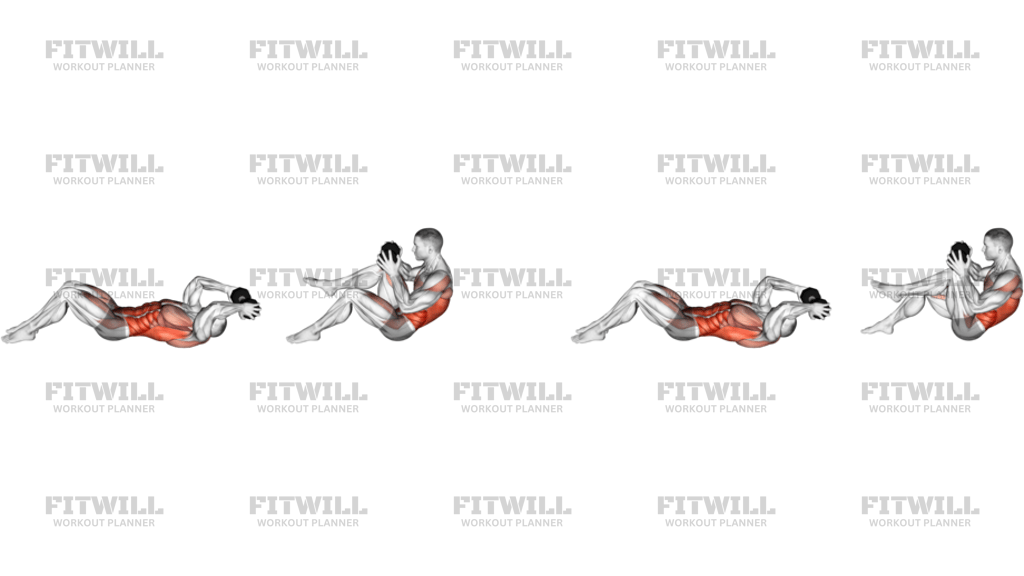
Dumbbell Alternate V-Up
The Barbell Bench Press is a flat-bench pressing exercise that builds pressing strength through the chest, front shoulders, and triceps. With a barbell fixed in both hands, it lets you load the movement heavily while keeping the range of motion consistent from rep to rep. That makes it one of the clearest strength builders for upper-body pushing, especially when you want measurable progress on the bench itself.
The setup matters as much as the press. Lie on a flat bench with your eyes under the bar, feet planted firmly, and your shoulder blades pulled back and down into the pad. A slightly wider-than-shoulder-width grip usually keeps the forearms stacked under the bar near the bottom, which helps the wrists stay straighter and the elbows track in a shoulder-friendly path. The image shows a standard rack-and-bench setup, so the lift should start from a stable unrack rather than from an awkward handoff.
A clean Barbell Bench Press lowers the bar under control to the lower chest or upper sternum, then drives it back up in a smooth arc toward the shoulders. The bar does not need to bounce off the chest, and the elbows do not need to flare straight out to the sides. A moderate tuck, steady upper-back tension, and a brief pause at the bottom make the rep more honest and usually stronger in the long run. Inhale on the way down, brace, then exhale as you press through the sticking point.
This exercise is useful for strength work, hypertrophy blocks, and upper-body programming where a bilateral press is the main lift. It also teaches good pressing mechanics that carry over to sports and general pushing tasks, but it rewards discipline more than speed. Heavier sets are best done with a spotter or safety arms, especially if you train close to failure. When the bar path, wrist position, and shoulder-blade tension stay consistent, the Barbell Bench Press becomes easier to load without irritating the shoulders or losing control at the chest.
[ Workout Log & Planner ]
Put your next workout in Fitwill
Keep your plan and training log ready when you are.


Instructions
- Lie on a flat bench with your eyes under the bar, feet planted on the floor, and your shoulder blades pulled back and down into the pad.
- Grip the bar slightly wider than shoulder-width, wrap your thumbs around it, and stack the bar over the heel of your palm with straight wrists.
- Unrack the bar to straight arms above the mid-chest, then settle your shoulders and upper back before the first descent.
- Inhale, brace your torso, and lower the bar under control toward the lower chest or upper sternum.
- Keep your elbows angled slightly down from the shoulders instead of flaring them straight out as the bar descends.
- Let the bar touch lightly or pause just above the chest without bouncing, while your feet stay planted and your glutes remain on the bench.
- Press the bar up in a smooth line back over the shoulders, keeping the wrists stacked and the forearms close to vertical through the drive.
- Exhale as the bar passes the hardest part of the press, then finish with elbows extended but not aggressively locked out.
- Guide the bar back into the rack under control after the final rep, and reset your shoulders before standing up.
Tips & Tricks
- Think about pulling the bar out of the rack and down to your chest, not dropping it straight down with loose shoulders.
- Keep your shoulder blades pinned to the bench the whole set; if they slide forward, the bar usually drifts and the shoulders take over.
- A touch point around the lower chest or upper sternum usually keeps the press path efficient for most lifters.
- If your wrists bend back, move the bar deeper into the palm so the knuckles stay stacked over the forearm.
- Tuck the elbows just enough that the upper arms are not straight out at shoulder height; too much flare usually irritates the shoulders.
- Use leg drive after the bar leaves the chest, but do not let your hips pop off the bench to fake the press.
- Pause the bar for a count on the chest if you want cleaner strength work and less rebound from the ribcage.
- Choose a load that lets you keep the same touch point every rep; inconsistent bar paths are usually a sign the set is too heavy.
- Use safety arms or a spotter on heavier sets so you can press confidently without getting pinned.
- If the bar travels toward your face or your wrists fold, reduce the load and recheck your setup before continuing.
Frequently Asked Questions
What muscles does the Barbell Bench Press work most?
It primarily trains the chest, with the front shoulders and triceps helping to drive the press. The upper back also works hard to keep the bench position locked in.
How wide should my grip be on the Barbell Bench Press?
A slightly wider-than-shoulder-width grip is a good starting point for most people. At the bottom, your forearms should look close to vertical and your wrists should stay stacked over the bar.
Where should the bar touch on the Barbell Bench Press?
For most lifters, the bar should touch the lower chest or upper sternum. That touch point usually creates a smoother press path back toward the shoulders.
Do I need a big arch for the Barbell Bench Press?
No. A small natural arch is normal, but the key is keeping your shoulder blades retracted and your glutes on the bench. Avoid turning it into an exaggerated low-back bend.
Is the Barbell Bench Press good for beginners?
Yes, if the load is light enough to learn the setup and bar path. Beginners often do well starting with the empty bar, controlled reps, and a spotter or safeties nearby.
Why do my wrists hurt during the Barbell Bench Press?
The bar is probably sitting too far into the fingers instead of over the heel of the palm. Re-stack the bar over the forearm and keep the knuckles pointing up.
Should I bounce the bar off my chest?
No. A light touch or short pause is better because it keeps tension on the chest and makes the rep easier to control. Bouncing usually shortens the range and stresses the shoulders and sternum.
What should I do if my shoulders feel crowded on the Barbell Bench Press?
Tuck the elbows a little more, lower the bar to a slightly lower touch point, and make sure your shoulder blades stay back and down. If it still feels off, switch to a lighter load or a dumbbell press variation.