Medicine Ball Crunch
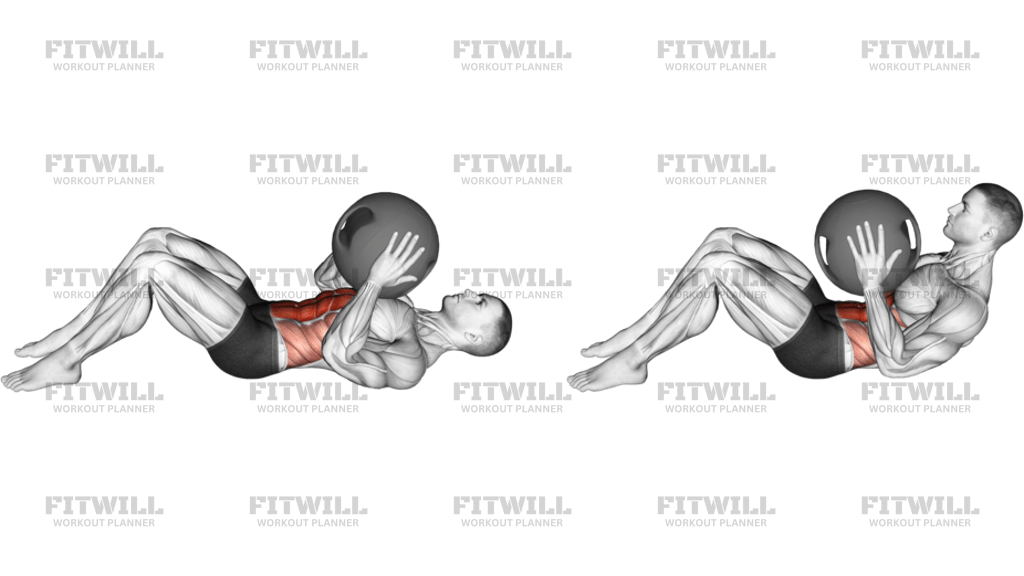
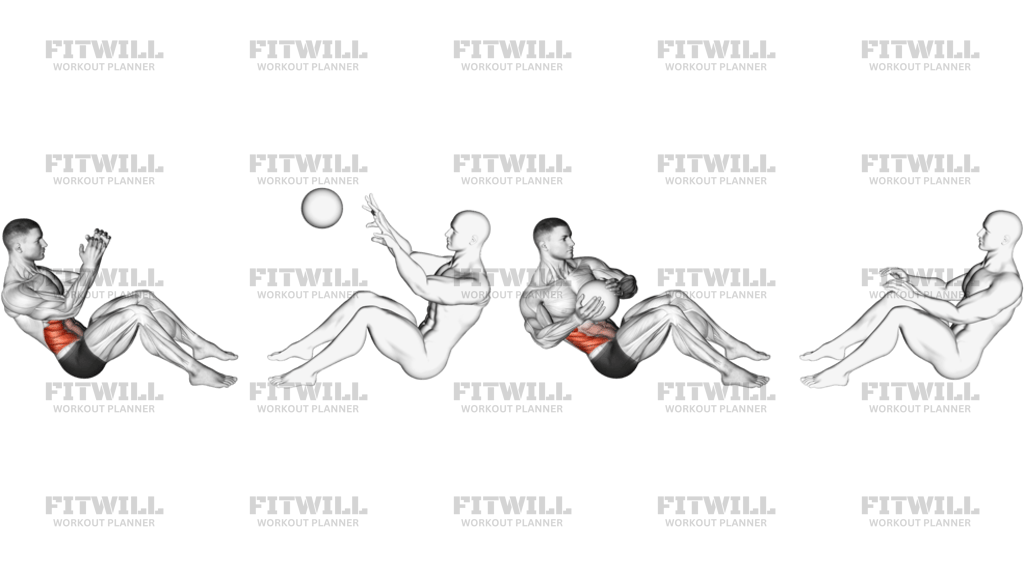
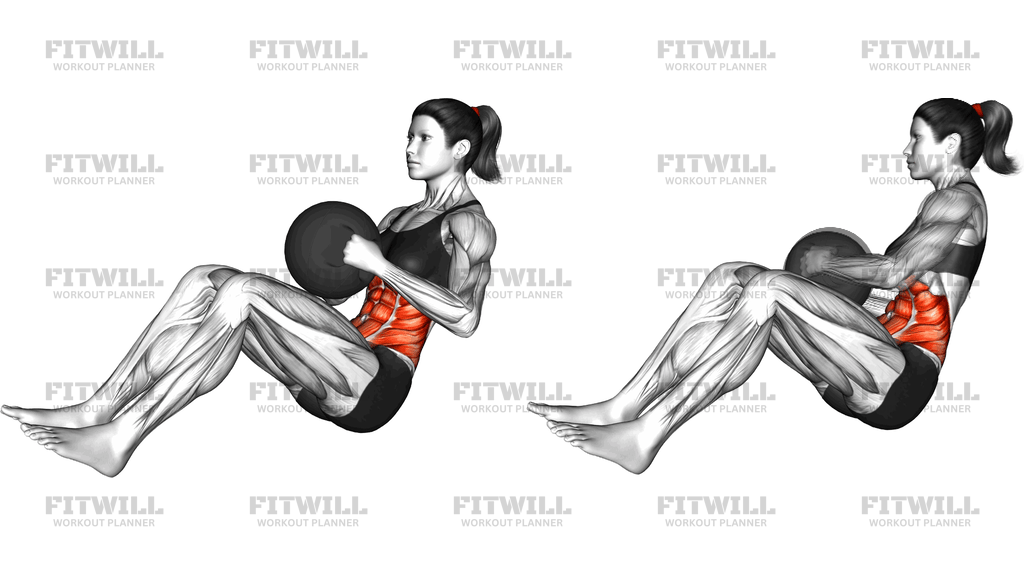
Medicine Ball Crunch is a weighted floor crunch that trains the rectus abdominis through spinal flexion while also asking the deep core to keep the trunk organized. The medicine ball adds a little resistance and gives you a fixed hand position on the chest, so the torso has to do the lifting instead of the arms or neck. That small load is enough to make the rep more honest without turning it into a complicated drill.
This movement is useful when you want a simple abdominal exercise that can be loaded without complicated setup. It fits well in core circuits, accessory blocks, and warmups because it teaches the body to brace, curl, and lower under control while the feet and hips stay quiet. It is also easy to scale, which makes it practical for beginners who need a straightforward crunch and for experienced lifters who want a cleaner abdominal finisher.
The setup matters because the crunch should start from a stacked, stable position rather than from a floppy lower back or an overextended neck. Lie on your back with your knees bent, feet flat, and the ball held close to your sternum with both hands. Keep your elbows tucked and your ribs down so the first rep begins with tension in the abs, not momentum. If your lower back arches before you even start, adjust your rib position and reset before the first curl.
On each repetition, curl your head, shoulders, and upper back off the floor until your shoulder blades just clear the ground. Think about bringing your ribcage toward your pelvis instead of trying to sit all the way up, and avoid turning the movement into a fast half-sit-up. Lower slowly until your back and head settle back down, and keep breathing steady so the abs stay active from start to finish. A brief pause at the top can help remove momentum and make the contraction more deliberate.
Because the load is held in front of the chest, it is easy to turn this into a neck-driven movement if you rush or yank. The best reps are short, crisp, and controlled, with the neck relaxed and the lower back staying calm. Use this as a direct abdominal builder when you want a cleaner, more focused crunch than an unweighted floor sit-up, especially when you want high-quality reps without the setup demands of cable or machine work.
[ Workout Log & Planner ]
Put your next workout in Fitwill
Keep your plan and training log ready when you are.


Instructions
- Lie on your back with your knees bent, feet flat on the floor, and the medicine ball held against your chest with both hands.
- Tuck your elbows in, relax your shoulders, and flatten your lower ribs so your torso starts in a stacked position.
- Set your feet about hip-width apart and keep them planted before each rep so the hips do not take over.
- Exhale and curl your head and shoulders off the floor, lifting your shoulder blades just clear of the ground.
- Keep the ball pinned to your chest and bring your ribcage toward your pelvis instead of trying to sit all the way up.
- Pause briefly at the top with your abs fully shortened and your neck still relaxed.
- Inhale as you lower under control until your upper back and head return to the floor.
- Reset your ribs, keep the ball steady, and repeat for the planned number of reps.
Tips & Tricks
- Hold the medicine ball on your chest, not behind your head, so the neck does not get pulled into the rep.
- Keep your chin slightly tucked and your eyes angled upward to stop the crunch from turning into a head nod.
- If your hip flexors feel dominant, move your feet a little farther from your hips and keep the heels heavy on the floor.
- A smaller curl with a clean exhale is better than trying to sit all the way up and losing abdominal tension.
- Lower slowly enough that your shoulder blades and ribs fully reset before the next rep.
- Choose a ball that lets you keep the same curl angle for the whole set without straining your neck or shoulders.
- If your low back arches off the floor, shorten the range and keep the ribs tucked down before you start each rep.
- Pause for a beat at the top to remove momentum and make the abs finish the work.
- Higher reps work well here, but the set should stop once the ball starts bouncing or the curl gets sloppy.
Frequently Asked Questions
What does Medicine Ball Crunch work?
It mainly trains the rectus abdominis, with the deeper core muscles helping stabilize the trunk while you curl.
Is Medicine Ball Crunch different from a regular crunch?
Yes. The ball adds front-loaded resistance, so you get more demand on the abs and a little less temptation to swing the arms.
Where should I hold the medicine ball?
Hold it against your chest with both hands and keep your elbows tucked so the load stays centered over your torso.
How high should I come up on Medicine Ball Crunch?
Only curl until your shoulder blades leave the floor and your ribs move toward your pelvis. A small, controlled crunch is the right range.
Can beginners do this exercise?
Yes. Beginners should start with a light ball and focus on keeping the neck relaxed and the lower back quiet.
Why do my hips or hip flexors feel this more than my abs?
Your feet may be too close, or you may be trying to sit up instead of curling the ribcage. Keep the feet planted and shorten the movement.
Should my lower back stay on the floor during Medicine Ball Crunch?
Yes, your low back should stay mostly settled while the torso curls. If it arches hard, reduce the range and reset your rib position.
How many reps should I use?
This exercise usually works well for moderate-to-higher reps with a light or medium ball, as long as each rep stays smooth and controlled.
What is a good substitute if I do not have a medicine ball?
A standard floor crunch or a cable crunch is a practical substitute, depending on whether you want bodyweight or loaded resistance.