Medicine Ball Reverse Wood Chop Squat
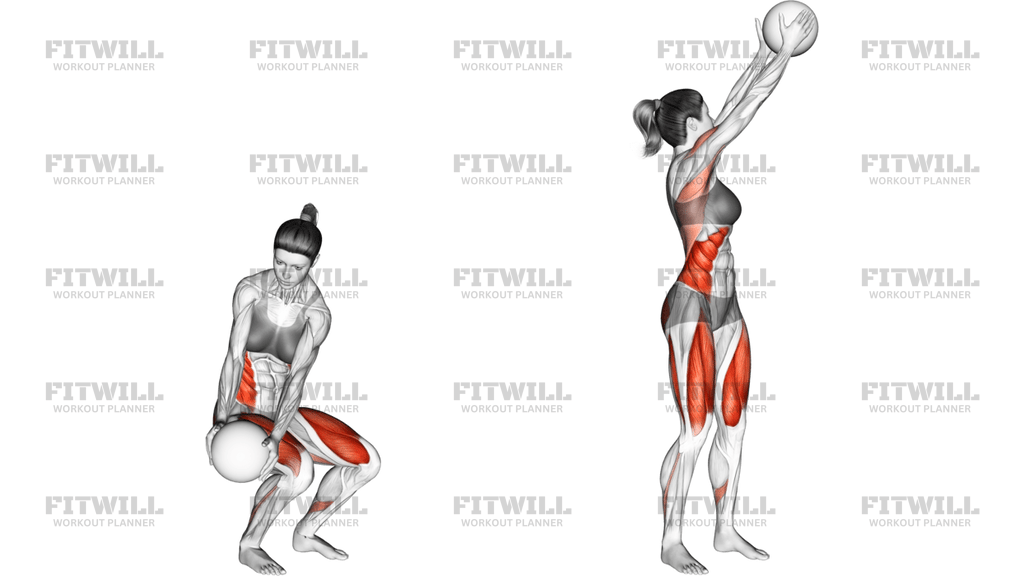
Medicine Ball Reverse Wood Chop Squat combines a squat with a diagonal lift, taking the ball from a low outside-hip position to an overhead finish on the opposite side. It trains the trunk to transfer force from the floor through the hips, waist, and shoulders while you stay organized under load. Because the movement includes both a lower-body drive and a rotational pattern, it is useful for athletes and anyone who wants more coordinated core work than a simple crunch or basic squat.
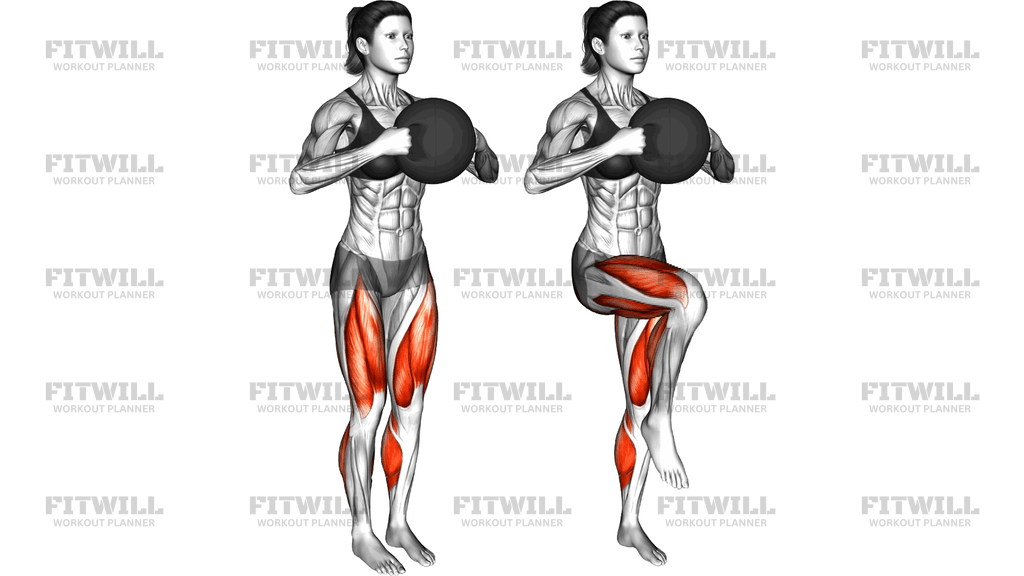
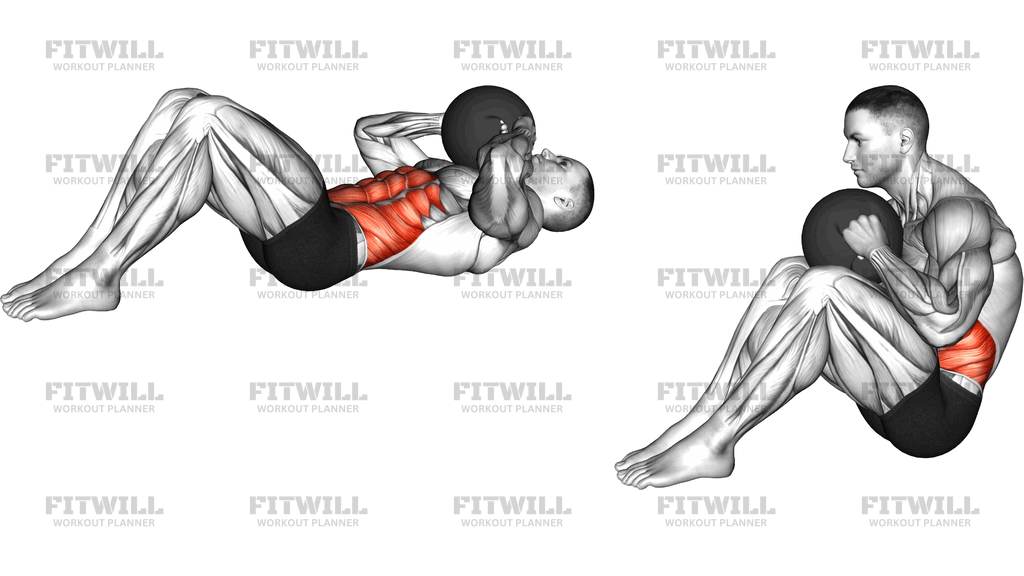
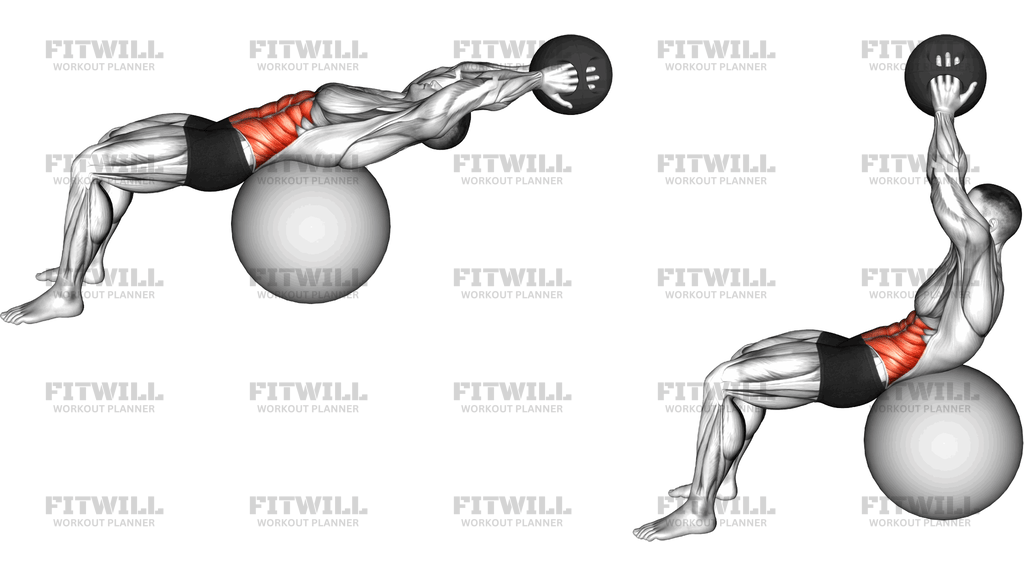
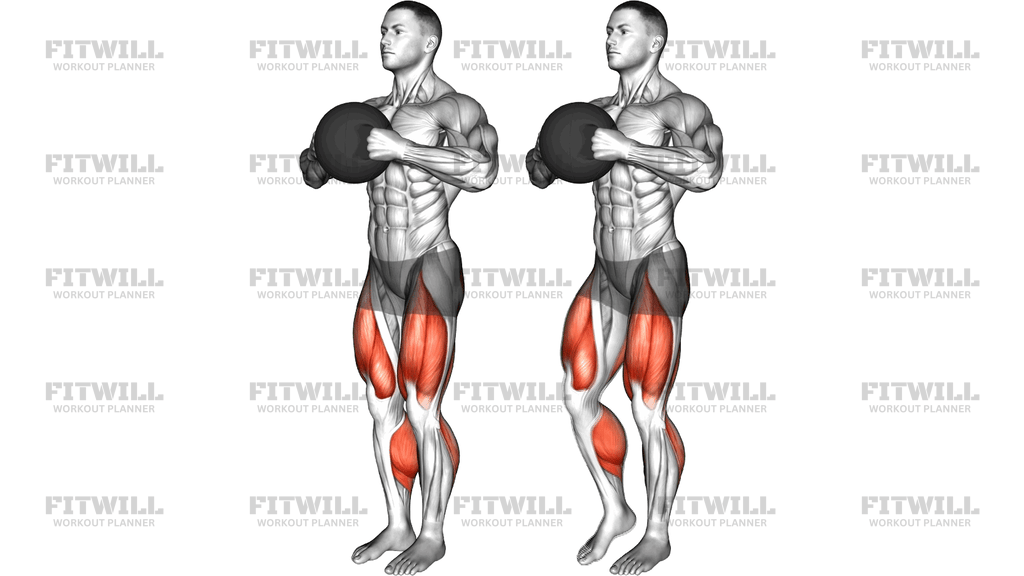
Set up with feet about shoulder width, knees soft, and the torso in a shallow squat so the ball can start low beside the lead hip. The image shows the ball beginning near the left thigh and finishing high to the right, which is the reverse wood chop path you want to control. Keep the chest open, the spine long, and the ball close enough to your body that you can move it with your legs and trunk instead of swinging it with straight arms.
On each rep, drive through the feet, extend the hips and knees, and sweep the ball diagonally across the body until it finishes overhead on the opposite side. Let the ribs and shoulders follow the path without collapsing the low back or twisting the knees. Reverse the motion slowly, bringing the ball back down to the starting hip as you sit back into the squat. A clean rep should feel smooth and athletic, with the return just as controlled as the lift. Exhale on the drive, inhale as you lower.
This exercise is a good choice for warm-ups, conditioning circuits, and core sessions where you want standing, full-body trunk work rather than floor-based ab training. Light to moderate loads usually work best because the overhead finish can turn sloppy quickly if the ball is too heavy. If the shoulders shrug, the heels rise, or the low back takes over, reduce the load or shorten the range. Repeating crisp reps on both sides matters more than chasing speed.
[ Workout Log & Planner ]
Put your next workout in Fitwill
Keep your plan and training log ready when you are.


Instructions
- Stand with your feet about shoulder-width apart and hold the medicine ball with both hands outside your left hip.
- Sit back into a shallow squat, keeping your heels rooted, knees tracking over your toes, and chest lifted.
- Brace your torso and set your shoulders down before you start the chop.
- Drive through your feet to stand as you exhale and sweep the ball diagonally up and across your body.
- Continue the path until the ball finishes overhead above your right side without leaning back.
- Inhale as you reverse the same arc, lowering the ball under control back toward your left hip.
- Sit back into the squat again as the ball returns to the start position.
- Complete the planned reps on one side, then switch directions and repeat on the other side.
Tips & Tricks
- Keep the ball close to your torso on the diagonal so the hips and trunk do the work, not the shoulders.
- Start with a light ball; if the finish overhead makes you lean back, the load is too heavy.
- Let the chest rotate slightly, but do not let the knees spin inward or outward as the ball moves.
- Think stand first, then lift, so the squat drive creates the chop instead of the arms swinging it.
- Keep the return slower than the lift; the lowering phase is where control is built.
- If your heels pop up, shorten the squat or widen your stance a little.
- Finish with the arms overhead but the ribs stacked over the pelvis, not flared forward.
- Alternate sides evenly so one hip or oblique does not take over every set.
Frequently Asked Questions
What muscles does Medicine Ball Reverse Wood Chop Squat work?
It targets the obliques and rectus abdominis while also loading the glutes, quads, and shoulders. The diagonal ball path asks the whole trunk to stabilize the body as you stand.
Is this more of a core exercise or a leg exercise?
It is both, but the squat drive creates most of the power and the core controls the diagonal transfer. If the legs stop driving, the movement turns into an arm raise.
How heavy should the medicine ball be?
Use a light to moderate ball that you can keep close to your body and still finish overhead without arching your back. If the path gets jerky, the ball is too heavy.
Should the ball travel in a straight line or an arc?
It should follow one smooth diagonal arc from the low hip to the opposite overhead finish. A loose swing away from the body usually means you are using momentum instead of control.
Do I need to rotate my hips on the chop?
A small amount of hip and rib rotation is normal, but the knees should stay aligned with the toes and the pelvis should not spin aggressively. Think of it as a loaded transfer, not a full twist.
Can beginners do this exercise?
Yes, as long as they use a light ball, a shallow squat, and a shorter diagonal path. Beginners should earn the overhead finish before adding more load.
What are the most common mistakes with the overhead finish?
Leaning back, shrugging the shoulders, and letting the ball drift away from the body are the big ones. The finish should be tall, stacked, and controlled.
How can I make the movement easier or harder?
Make it easier by reducing squat depth or using a lighter ball. Make it harder by controlling the return more slowly, covering a cleaner diagonal, or doing more reps per side.