Straight Leg Hip Bridge
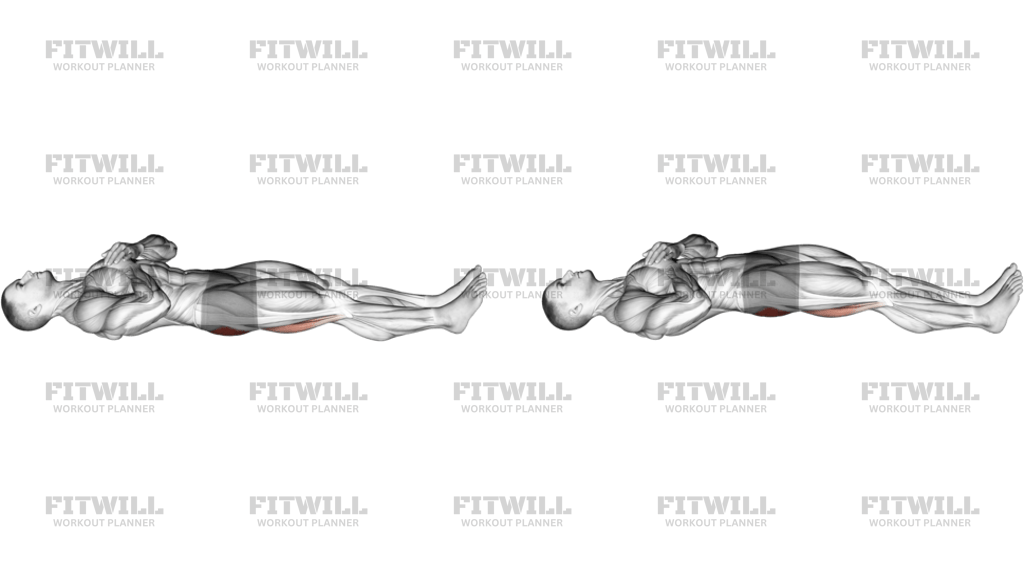
Straight Leg Hip Bridge is a floor-based posterior-chain exercise that keeps the knees extended so the hips, glutes, and hamstrings have to work together to lift and lower the pelvis. It is a simple bodyweight movement, but the straight-leg position makes it more demanding than a standard bent-knee bridge because the hamstrings stay under tension while the pelvis moves through a short, controlled range.
The exercise is useful when you want to train hip extension without a barbell or machine and without loading the spine heavily. It fits well into warm-ups, glute activation work, accessory circuits, and home training sessions. Because the legs stay long, the quality of the rep depends on where your feet are placed, how well you keep your ribs down, and whether the lift comes from the hips instead of the lower back.
Set up on a mat with your back flat on the floor, heels planted, toes pointing upward or slightly forward, and arms folded across your chest or resting by your sides. Keep the knees almost straight but not aggressively locked, then organize the pelvis before the first rep. If the feet are too far away, the low back will usually take over; if they are too close or you lift too high, the hamstrings can cramp and the movement stops feeling clean.
Press through the heels, tighten the glutes, and lift the hips until the body forms a straight line from shoulders to ankles. Pause briefly at the top without flaring the ribs or arching the lower back, then lower under control until the hips hover just above the floor. The best reps feel smooth and repeatable, with the pelvis staying level and the effort centered in the back of the hips and thighs rather than the lumbar spine.
Use Straight Leg Hip Bridge when you want a low-equipment exercise that builds better hip control, glute endurance, and posterior-chain awareness. It can be a good choice for beginners because the load is easy to scale, but the form still needs attention. Keep the range honest, keep the feet planted, and stop the set if you lose pelvic control or feel the movement shifting into the lower back.
[ Workout Log & Planner ]
Put your next workout in Fitwill
Keep your plan and training log ready when you are.


Instructions
- Lie on a mat with your back flat on the floor, heels planted, legs long, and arms folded across your chest or resting lightly by your sides.
- Set your feet about hip-width apart and far enough away that your knees stay almost straight without locking hard at the top.
- Point your toes upward or slightly forward, then tuck your ribs down so your lower back stays neutral before you lift.
- Press your heels into the floor and squeeze your glutes to start raising your hips off the mat.
- Lift until your shoulders, hips, and ankles form one straight line, keeping the knees soft and the thighs long.
- Hold the top briefly without arching your lower back or letting the ribs flare up.
- Lower your hips slowly until they hover just above the floor, keeping tension in the glutes and hamstrings.
- Reset your pelvis and breathing at the bottom, then repeat for the planned number of reps.
- Stop the set if your feet slide, your knees bend a lot, or the lift turns into a lower-back extension.
Tips & Tricks
- If your hamstrings cramp, bring your heels a little closer and shorten the top range instead of forcing a higher bridge.
- Keep the pressure in your heels, not your toes, so the glutes and hamstrings do the lifting.
- The top position should finish in a straight line, not a high arch that pushes the ribs forward.
- A small posterior pelvic tilt at the start helps keep the lower back from taking over.
- If the floor feels slippery, use a mat or train barefoot so your heels stay fixed.
- Moving too fast usually turns this into a swing; use a slow lower and a brief pause at the top.
- Folded arms across the chest make the trunk work harder than hands-on-floor support.
- Stop the set before the pelvis starts dropping side to side or the knees begin to bend noticeably.
Frequently Asked Questions
What muscles does Straight Leg Hip Bridge work?
It mainly trains the glutes and hamstrings, with the core and back-side stabilizers helping keep the pelvis level.
How is Straight Leg Hip Bridge different from a regular glute bridge?
The straighter knee angle keeps the hamstrings under more tension and makes pelvic control more important than in a bent-knee bridge.
Where should my heels be during Straight Leg Hip Bridge?
Set them on the floor far enough away that your legs stay long, but not so far that your lower back starts taking over or your hamstrings cramp immediately.
Should my knees be locked in Straight Leg Hip Bridge?
No. Keep them almost straight with a soft knee so the bridge stays controlled and you do not jam the joints at the top.
Why do my hamstrings cramp in Straight Leg Hip Bridge?
Your feet may be too far away, the lift may be too high, or you may be trying to finish the rep with the hamstrings instead of squeezing the glutes first.
Can beginners do Straight Leg Hip Bridge?
Yes. Start with a small range, short sets, and a slow lower so you can learn where the pelvis and feet need to stay.
What should I do if I feel Straight Leg Hip Bridge in my lower back?
Lower your hips less, keep your ribs down, and make sure the movement starts with the glutes instead of pushing the pelvis into a big arch.
Can I place my arms on the floor instead of crossing them over my chest?
Yes. Arms on the floor make the movement slightly easier, while folded arms reduce outside support and make the trunk work harder.