Shuffle
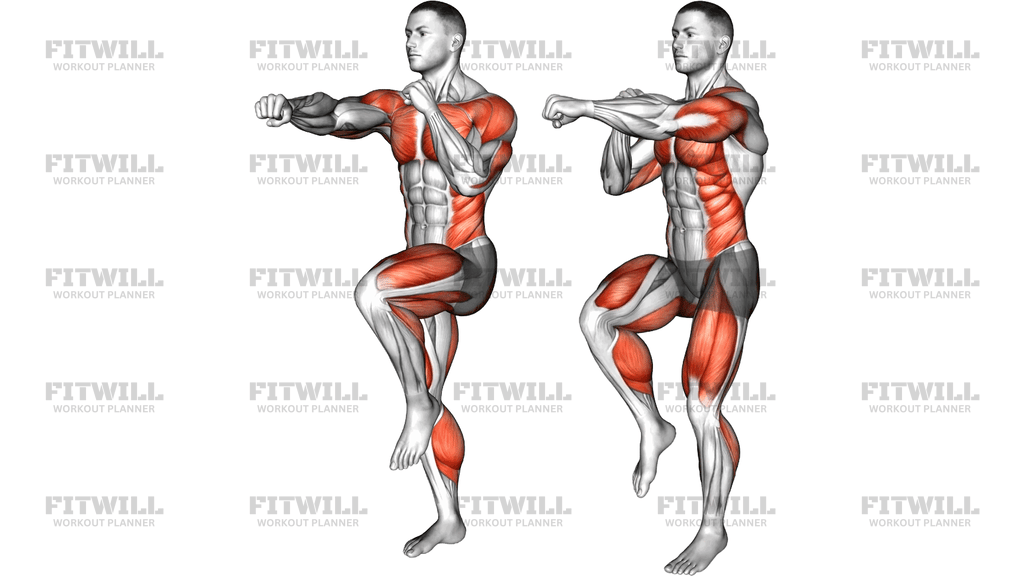
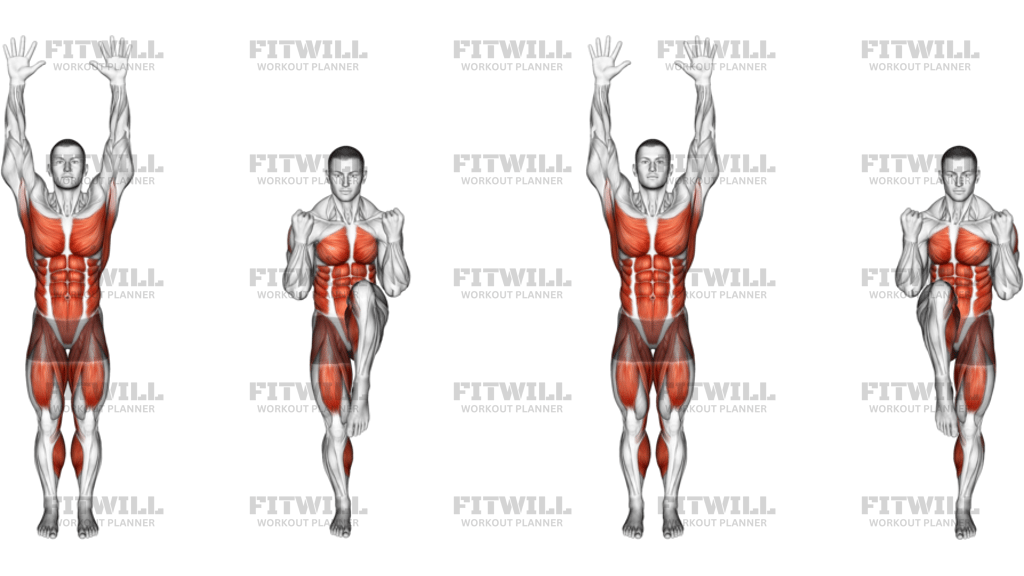
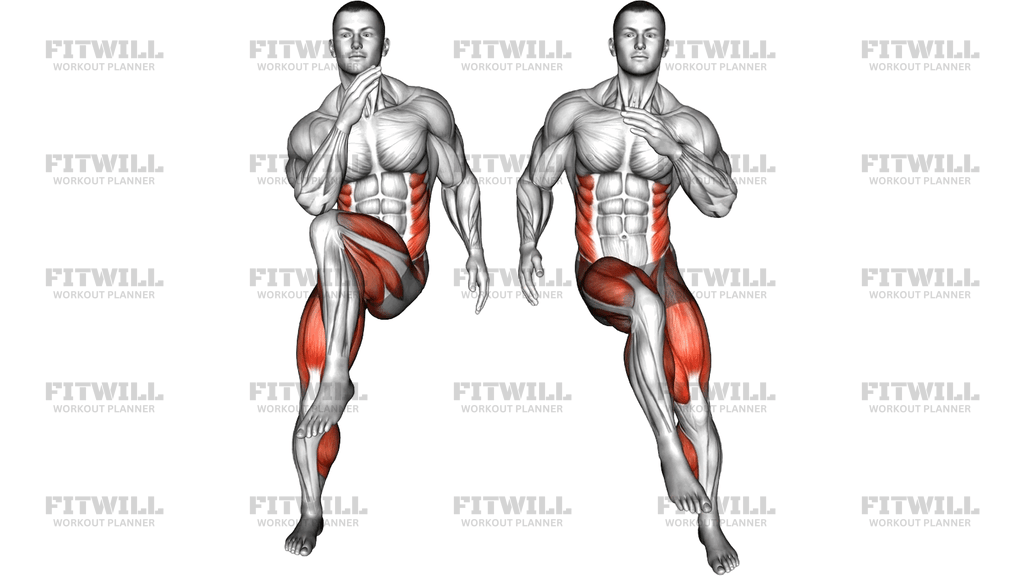
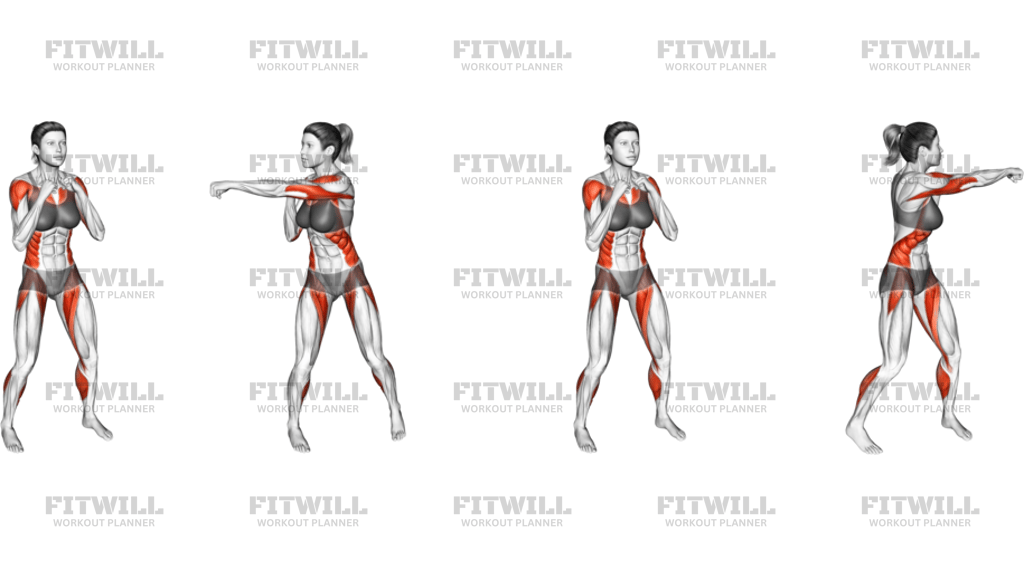
Shuffle is a bodyweight lateral agility drill built around quick side-to-side footwork, soft landings, and a low athletic stance. It is used to train change-of-direction control, coordination, and lower-body reactivity rather than maximum speed. The main value of the movement comes from how cleanly you can move from one side to the other without letting your torso wobble, your feet cross, or your hips rise too high.
Even though the exercise looks simple, the setup matters. The stance should feel ready for movement: feet under control, knees slightly bent, chest tall, and weight balanced toward the midfoot so you can push off in either direction. Good shuffles stay springy but not bouncy. Each rep should look like a deliberate athletic reset, not a loose sideways walk.
During the drill, the working legs create the force while the trunk and arms keep you organized. The lead foot places and accepts weight, the trail foot follows quickly, and the body stays square to the front unless the workout specifically calls for a turn. That forward-facing control is what makes the shuffle useful for sport prep, warm-ups, conditioning blocks, and reactive footwork training.
Because the movement is fast and repetitive, posture and landing quality matter more than distance. You want short, efficient steps, quiet contact, and stable knees that track over the feet. If the stance gets too narrow, the feet cross, or the hips start bouncing, the drill stops training clean direction change and turns into sloppy side-stepping. The goal is to stay light, low, and composed while still moving with intent.
Shuffle fits well early in a session as part of a warm-up, movement prep, or conditioning circuit. It is also useful for athletes who need to improve lateral quickness and rhythm without adding equipment. Keep the effort controlled enough that you can repeat the same pattern on every rep, then increase speed only after the foot placement, trunk position, and braking mechanics stay consistent.
[ Workout Log & Planner ]
Put your next workout in Fitwill
Keep your plan and training log ready when you are.


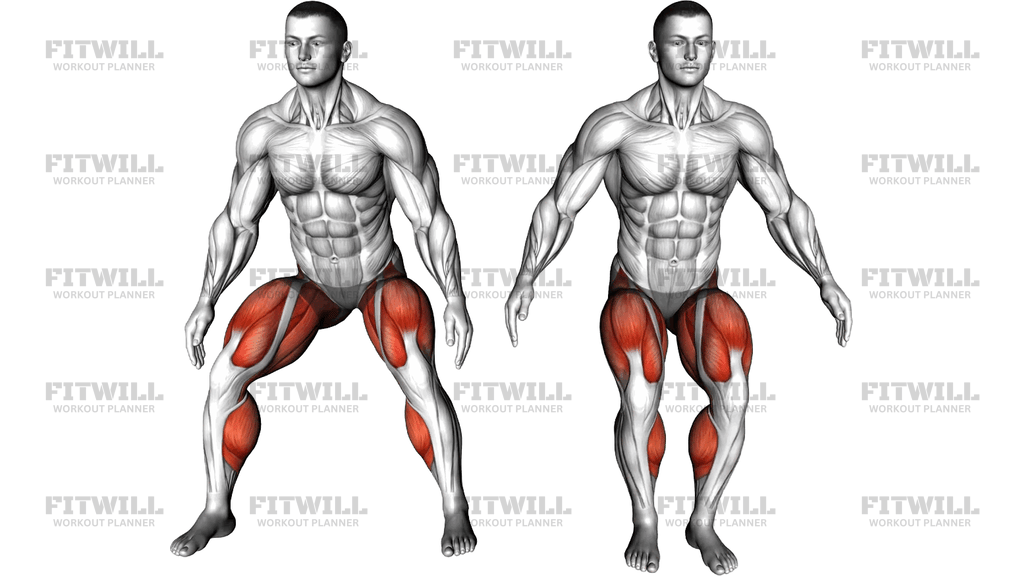
Instructions
- Stand in a light athletic stance with your feet about shoulder-width apart, knees softly bent, chest up, and hips ready to sit back slightly.
- Brace your midsection and keep your shoulders level before you take the first step so your torso stays square to the front.
- Push off one foot and step sideways with the lead foot, landing quietly on the midfoot or forefoot instead of reaching with a stiff leg.
- Bring the trailing foot in quickly to re-establish your base without letting your feet cross or collapse together.
- Keep your hips low enough to stay athletic, but not so low that your steps become slow or choppy.
- Move for the planned distance or number of steps, keeping each shift short, fast, and controlled rather than exaggerated.
- Use your arms to help rhythm and balance, but do not swing them across your body or twist your torso.
- Exhale steadily as you travel side to side and reset your breathing as you change direction.
- Finish the set by slowing the final steps, standing tall, and checking that your knees, ankles, and hips feel stable before resting.
Tips & Tricks
- Keep your toes pointed mostly forward so the knees track cleanly when you push and land.
- Think about sliding across the floor in short bursts instead of jumping laterally from one spot to another.
- If you are bouncing upward, lower the center of gravity and reduce the step length.
- Stay quiet on contact; loud footfalls usually mean you are overreaching or landing too stiffly.
- Do not let the trailing foot drag behind so long that it turns the drill into a slow side-step.
- Keep your eyes level and your chin relaxed so head movement does not pull the torso off line.
- Use a smaller, cleaner shuffle pattern when fatigue starts to make the feet cross or the hips rise.
- Stop the set if the knees cave inward or if you cannot keep the chest facing forward.
Frequently Asked Questions
What does Shuffle train most?
It trains lateral quickness, coordination, and the ability to change direction while staying balanced and low.
Is this the same as a side step?
No. A shuffle is quicker and more athletic, with short reactive steps and a stance that stays ready to move in either direction.
Should my feet cross during the shuffle?
No. The lead foot should step and the trail foot should follow quickly without crossing over unless a sport-specific variation calls for it.
How low should I stay in the shuffle stance?
Low enough to feel springy and ready to push, but not so low that your steps become slow or your lower back rounds.
What muscles work during this exercise?
The drill relies mainly on the hips, glutes, thighs, calves, and core to control side-to-side acceleration and braking.
Can beginners do Shuffle safely?
Yes, as long as they keep the steps small, the pace controlled, and the stance stable before trying to move faster.
What is the most common mistake?
The most common problem is standing too tall and letting the feet slap, cross, or land too far apart.
How can I make the drill harder?
Increase the speed, cover more distance, or add a reactive cue, but only after you can keep the torso square and the landings quiet.