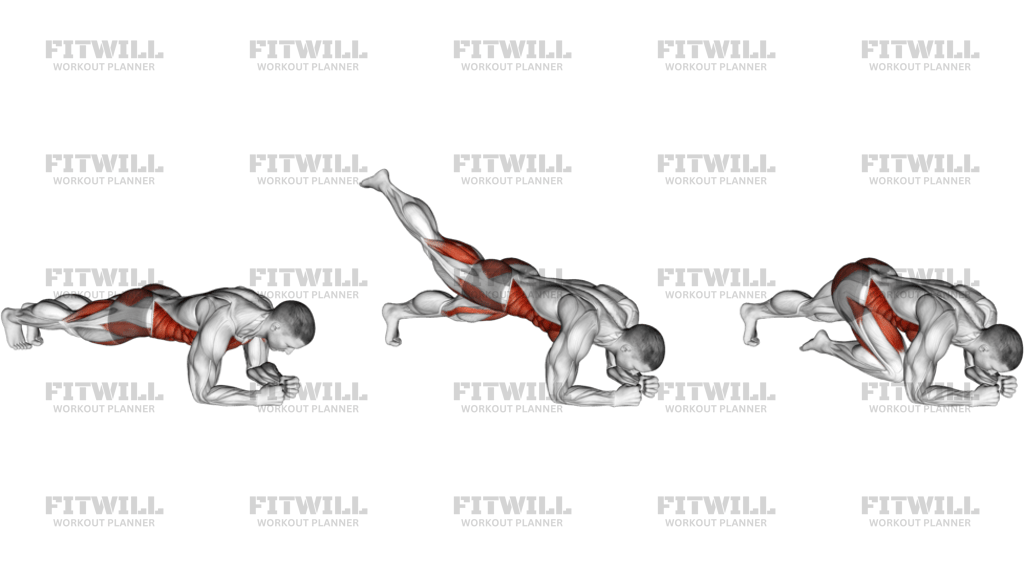
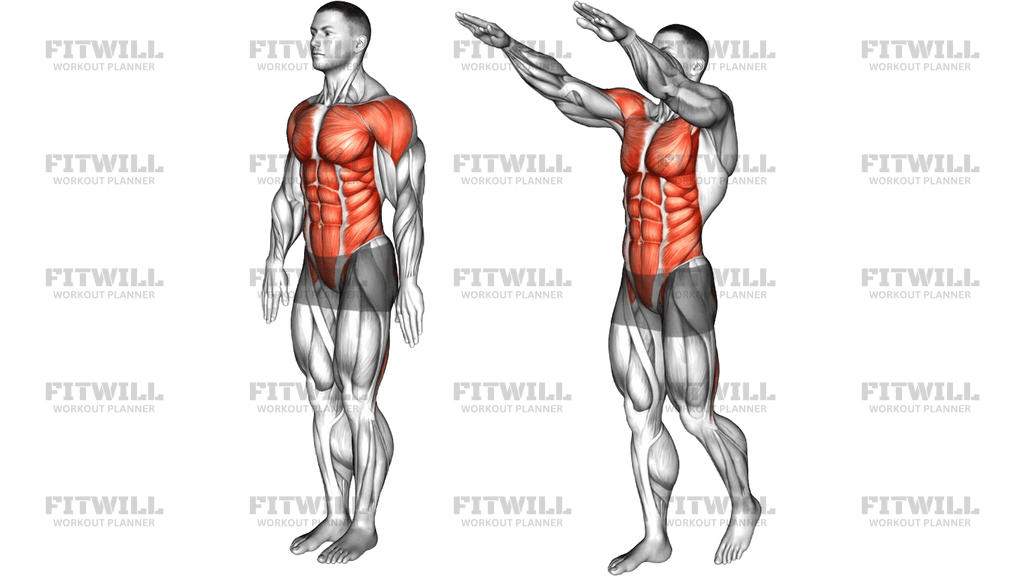
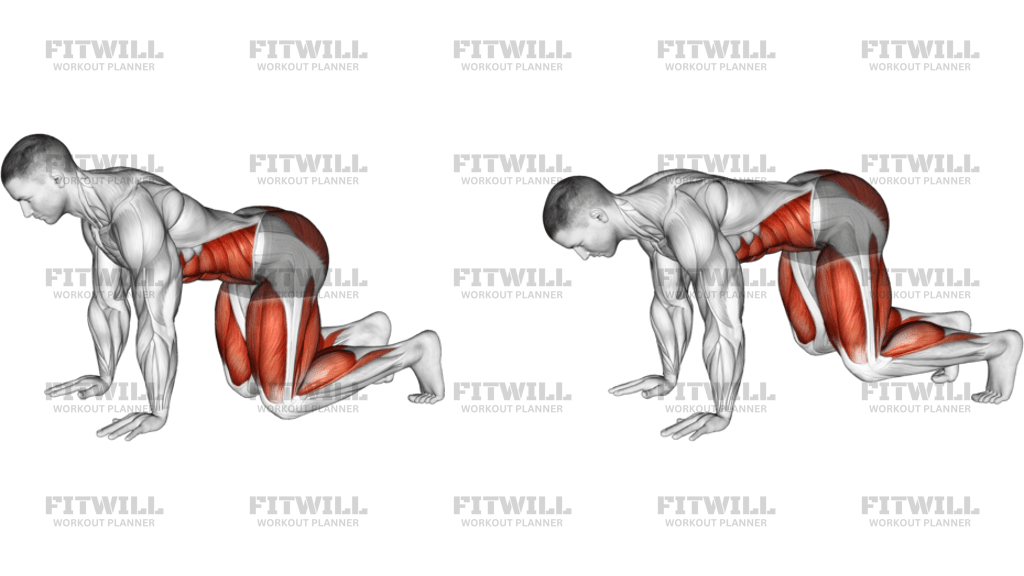
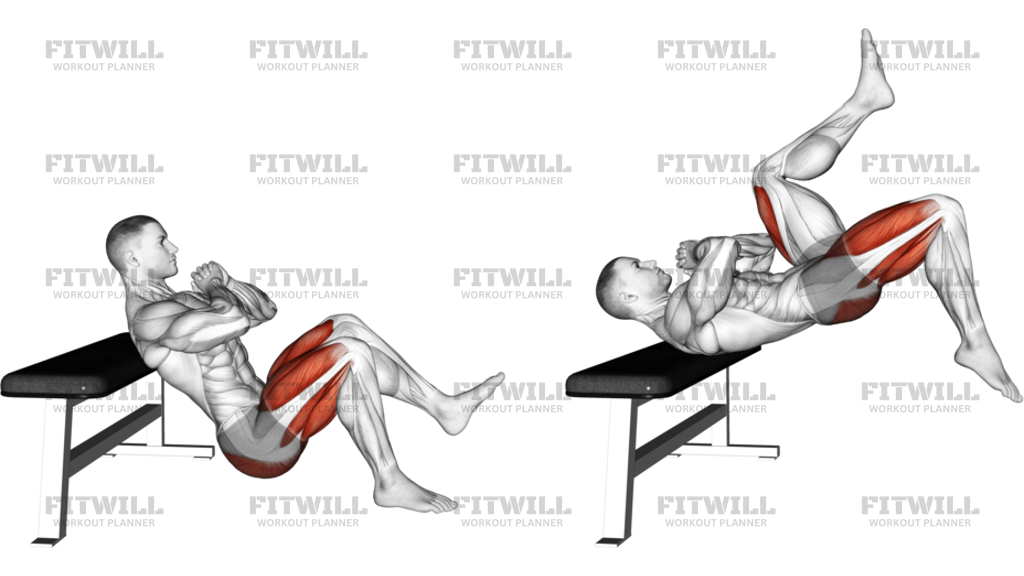
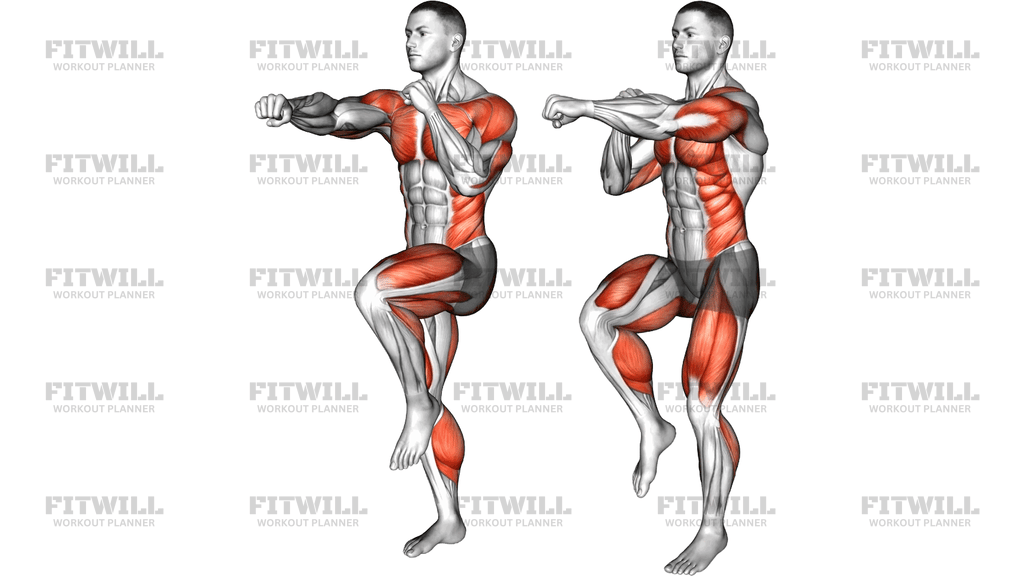
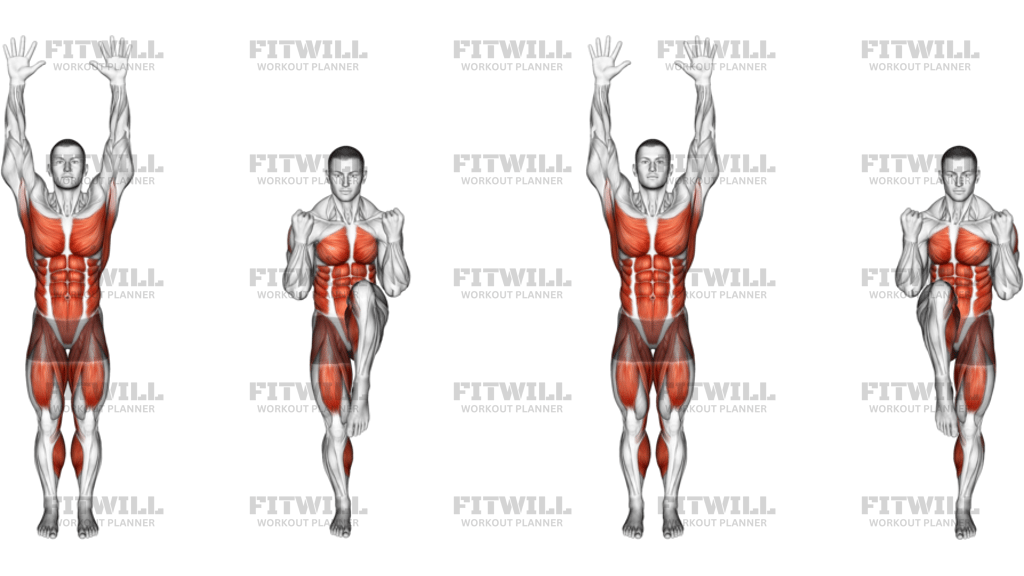
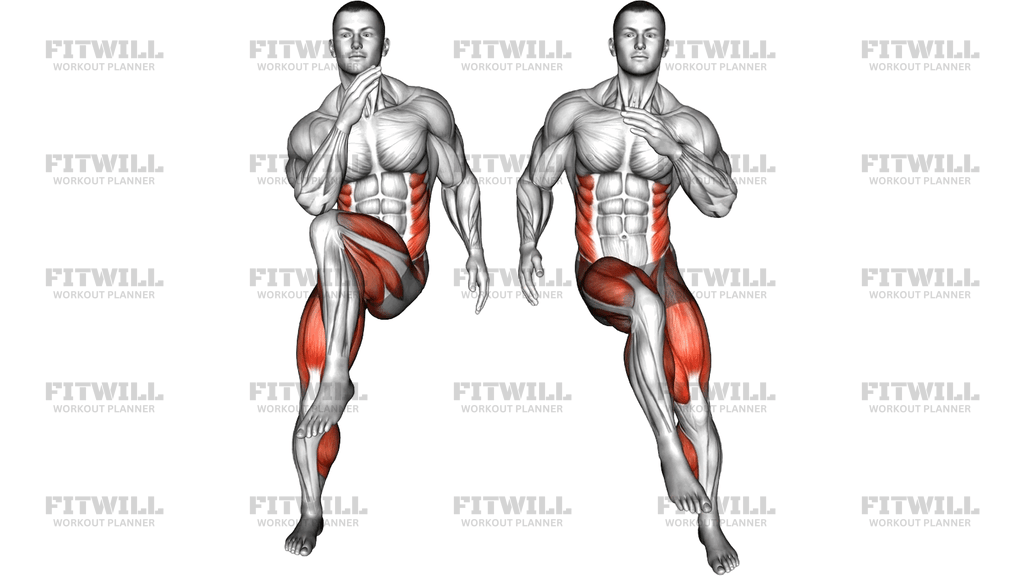
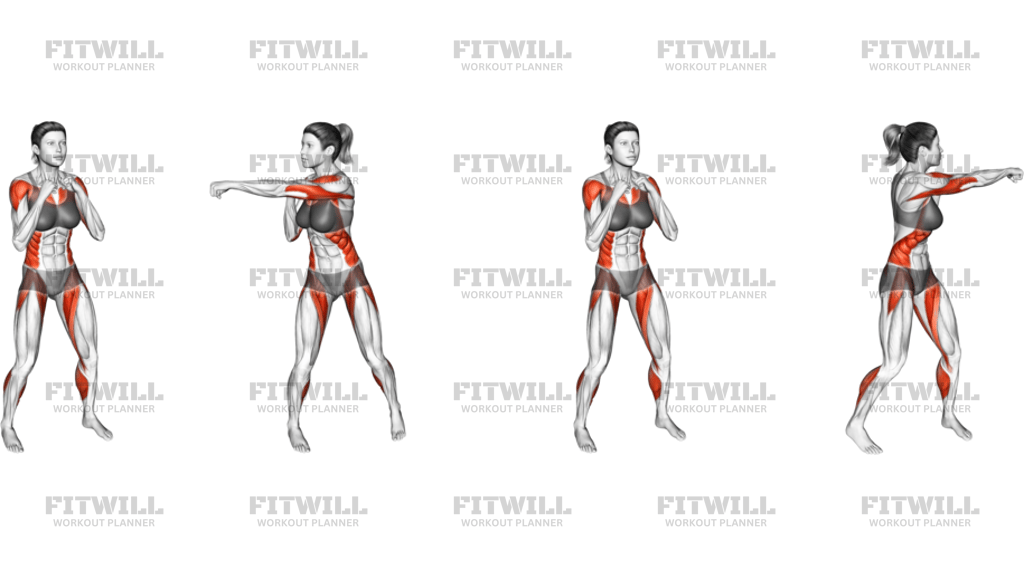
Standing Scissors
Standing Scissors is a fast bodyweight plyometric drill that trains rhythm, coordination, and lower-body snap. It is most useful when you want a conditioning movement that still asks your hips, knees, and ankles to control quick changes of direction. Because the legs keep opening and crossing, the exercise also challenges balance and body awareness, not just raw speed.
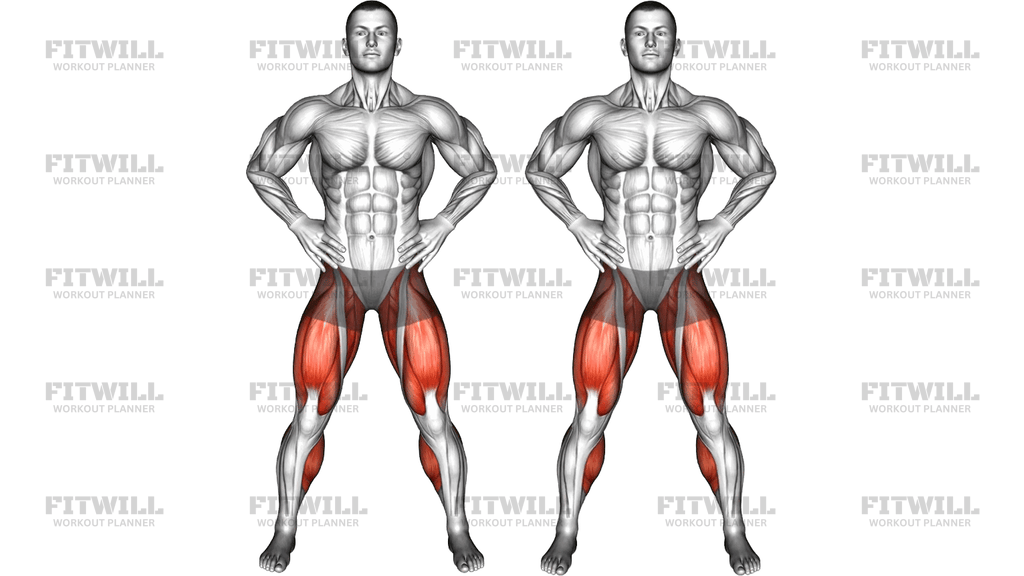
The main work comes from the quads, glutes, calves, adductors, and the muscles that stabilize the hips and trunk. Each landing asks one leg to accept force while the other leg prepares to cross, so the movement has a strong coordination component. If you keep the torso tall and the pelvis steady, the legs do more of the work instead of the upper body twisting.
Start with your feet under your hips, hands on your hips, chest lifted, and a soft bend in the knees. From there, hop or step into the first open position, then cross one leg in front on the next beat and switch sides on the following beat. The feet should skim the floor, the landings should be quiet, and the knees should stay stacked over the toes instead of collapsing inward.
Standing Scissors fits well in warm-ups, athletic prep, bodyweight circuits, and conditioning blocks where you want a quick heart-rate spike without equipment. Keep the range small if you are learning the pattern, then increase the speed before you try to make the movement bigger. A clean set looks springy and controlled, not like a scramble from one crossed stance to the next.
For safety, treat every landing as a reset point. If the feet start slapping the floor, the knees cave in, or the hips drift side to side, shorten the pattern or switch to a step-based version. The goal is repeated, crisp footwork with stable posture, so you can accumulate quality reps without turning the exercise into sloppy cardio.
[ Workout Log & Planner ]
Put your next workout in Fitwill
Keep your plan and training log ready when you are.


Instructions
- Stand tall with your feet under your hips, hands on your hips, chest up, and knees softly bent.
- Shift your weight onto the balls of your feet and keep your ribs stacked over your pelvis.
- Hop or step one foot out and across the other into the first scissors position, landing lightly.
- Bring the other leg through and switch sides on the next beat so the legs keep alternating open and crossed.
- Keep your hips level and your torso facing forward instead of twisting with the legs.
- Let the ankles, knees, and hips absorb the landing together, then rebound into the next switch.
- Use quick, small contacts with the floor rather than reaching for height.
- Finish the set by stepping both feet back under your hips and standing tall before you stop.
Tips & Tricks
- Keep the foot crosses small enough that your knees never rub or twist.
- If the landings get loud, lower the jump and focus on faster, lighter contacts.
- Hold the hands on the hips so the torso stays quiet and the work stays in the legs.
- Think about pushing the floor away under you instead of throwing the feet sideways.
- Let the front knee track in line with the second toe on every landing.
- Use a step pattern when fatigue blunts the rhythm or your ankles feel unstable.
- The exercise should feel springy in the calves and thighs, not like a deep squat.
- Stop the set when the crossings become uneven or you start leaning from side to side.
Frequently Asked Questions
What muscles does Standing Scissors work?
It mainly hits the quads, glutes, calves, adductors, hip flexors, and core stabilizers.
Is Standing Scissors a cardio or strength exercise?
It is mostly a plyometric conditioning drill, but the repeated landings still demand lower-body strength and control.
Do I have to jump, or can I step it?
You can step the pattern if you want a lower-impact version or are still learning the timing.
How do I keep my knees from caving in?
Make the cross smaller, keep your weight on the balls of your feet, and land with each knee tracking over its toes.
Should my upper body move much?
No. Keep your chest tall and your hands on your hips so the legs do the switching without trunk sway.
Can beginners use Standing Scissors?
Yes, but they should start with a slow step-through version before moving to quick hops.
How long should I do it for?
Short bursts of 15-30 seconds work well for conditioning, or use 10-20 alternating switches per set.
What's the difference between Standing Scissors and jumping jacks?
Standing Scissors keeps the hands on the hips and uses a crossing leg pattern, while jumping jacks open both arms and legs symmetrically.