Dumbbell Side Bend Version 2
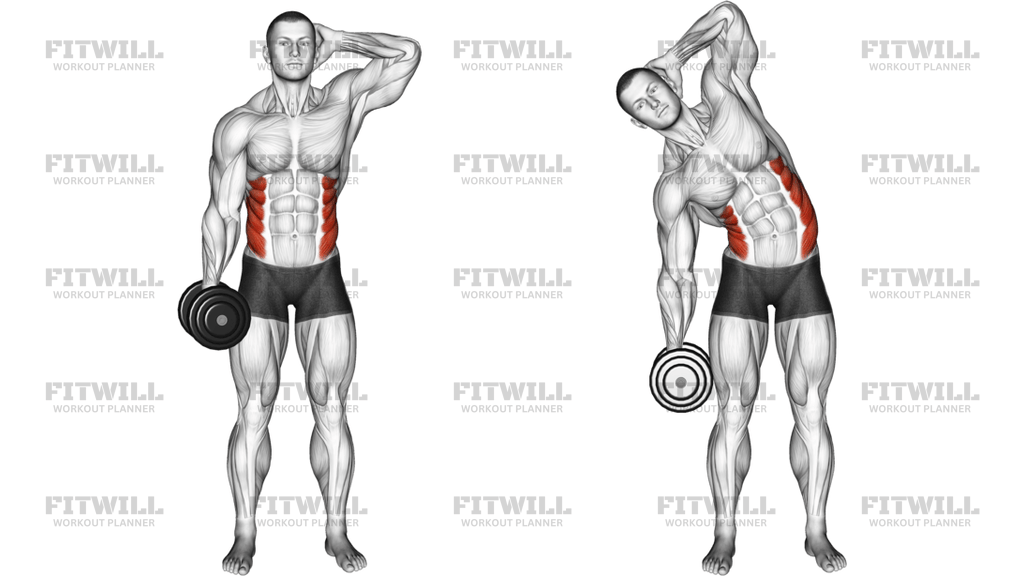
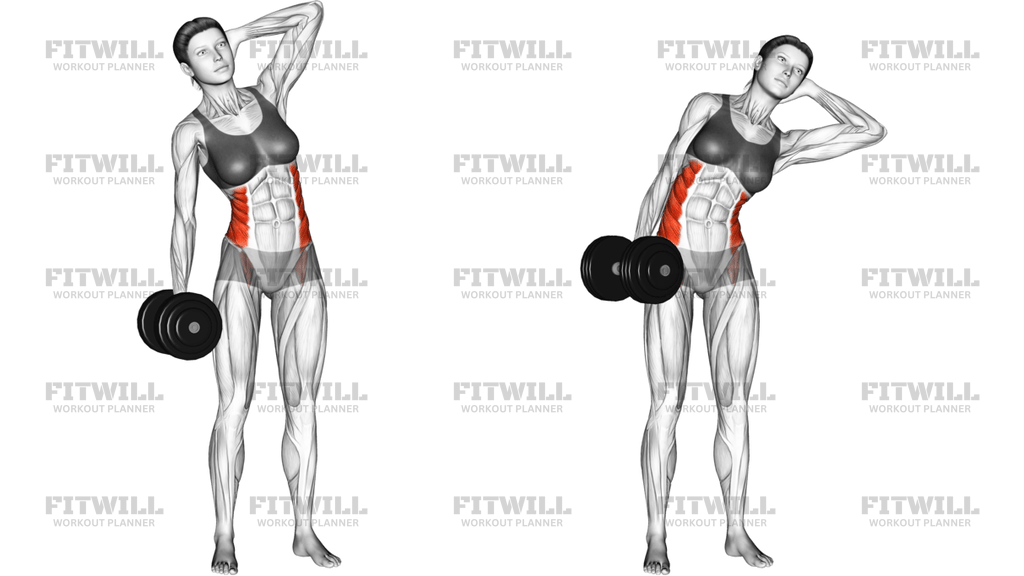
Dumbbell Side Bend Version 2 is a standing one-dumbbell trunk exercise that loads the side of the waist while the opposite hand stays behind the head. The image shows a tall stance with the dumbbell hanging by one leg and the torso bending laterally away from the weight, which makes this version more about controlled side flexion than about swinging the load. It is most useful when you want to train the obliques and the muscles that resist unwanted side-to-side movement through a short, deliberate range.
The setup matters more here than people expect. A narrow, sloppy stance turns the rep into a hip shift, while a solid stance lets the torso do the work. Keep the feet planted, ribs stacked over the pelvis, and the free elbow open instead of collapsing forward. The hand behind the head is not there to yank the neck; it simply helps keep the upper body organized and makes it harder to cheat the rep with shoulder movement.
On each rep, think about lowering the dumbbell straight toward the outside of your knee, then bringing your ribs back up until you are tall again. The side bend should happen in the torso, not from twisting, leaning backward, or dipping the shoulder. A small pause at the bottom can help you feel the loaded side, but only if you can still return without jerking. Exhale as you come back to center and keep the neck relaxed the whole time.
This movement is usually best used as accessory work, core conditioning, or part of a trunk-focused session rather than a max-strength lift. Light to moderate loads are usually enough because the lever arm becomes challenging quickly and extra weight often turns into momentum. If your range collapses, your hips slide, or you have to swing the dumbbell up, the set is too heavy or the reps are too fast.
Treat the exercise as a controlled strength drill for the side body. Use it to build awareness of lateral bracing, improve control through side bending, and train the trunk to resist collapsing under load. The best reps look calm, even, and repeatable from the first rep to the last, with the torso staying long and the movement staying in one clean plane.
Fitwill
Log Workouts, Track Progress & Build Strength.
Achieve more with Fitwill: explore over 9600 exercises with images and videos, access built-in and custom workouts, perfect for both gym and home sessions, and see real results.
Start your journey. Download today!




Instructions
- Stand tall with your feet about hip-width apart and hold one dumbbell at your side in the working hand.
- Place the free hand behind your head with the elbow open so your chest stays wide and your neck stays long.
- Set your ribs over your pelvis, keep both knees soft, and let the dumbbell hang straight beside the thigh.
- Brace lightly, then slowly bend the torso toward the weighted side without turning the hips or shoulders.
- Lower only as far as you can keep the waist controlled and the standing side of the body organized.
- Pause briefly in the bottom position if you can hold the shape without twisting or bouncing.
- Drive the ribs back up until you are tall again, using the side of the trunk to bring you back to center.
- Exhale as you return to standing and keep the dumbbell from swinging away from the body.
- Reset fully at the top before the next rep and repeat for the planned number of repetitions.
Tips & Tricks
- Keep the dumbbell close to the outside of the leg; letting it drift forward turns the set into an awkward shoulder exercise.
- Think about shortening the side of the waist on the loaded side on the way down, then lengthening back to tall on the way up.
- Do not push the elbow forward when the hand is behind your head; that usually twists the torso and reduces the side-bend stimulus.
- A smaller range with perfect control is better than a deep bend that forces the hip to shift or the lower back to pinch.
- Use a slow descent so the weight does not pull you into the bottom position.
- Stop the set when the torso starts to rotate or the standing foot begins to roll to the outside edge.
- Choose a load you can lift back to center without jerking, because the return phase is where the exercise gets most useful.
- If your neck tightens, relax the free hand and keep the chin level instead of cranking the head toward the floor.
- Keep the non-working hip stacked over the ankle; leaning the pelvis sideways reduces the challenge on the trunk.
Frequently Asked Questions
What does Dumbbell Side Bend Version 2 train most?
It mainly trains the side of the trunk, especially the obliques and the muscles that help control lateral flexion.
Why is one hand behind the head in this version?
The hand behind the head helps keep the torso organized and makes it harder to cheat by dropping the shoulder or drifting the chest forward.
How low should I bend on the weighted side?
Only bend as far as you can while keeping the hips level and the dumbbell moving in one clean plane beside the leg.
Should the exercise feel like a twist?
No. It should feel like a side bend, not a rotation. Keep the shoulders and hips facing forward the whole time.
Can beginners use this exercise?
Yes, but only with a light dumbbell and a short, controlled range so the torso stays stacked instead of leaning and swinging.
What is the most common mistake with the dumbbell?
The biggest mistake is letting the weight pull the body forward or away from the thigh, which turns the rep into a swing.
How should I breathe during the rep?
Breathe in as you lower, then exhale as you bring the ribs back to center and stand tall again.
Where does this fit in a workout?
It works well as accessory core work, as part of a trunk circuit, or after your main strength lifts when you want controlled lateral loading.