Dumbbell One-Arm Triceps Extension
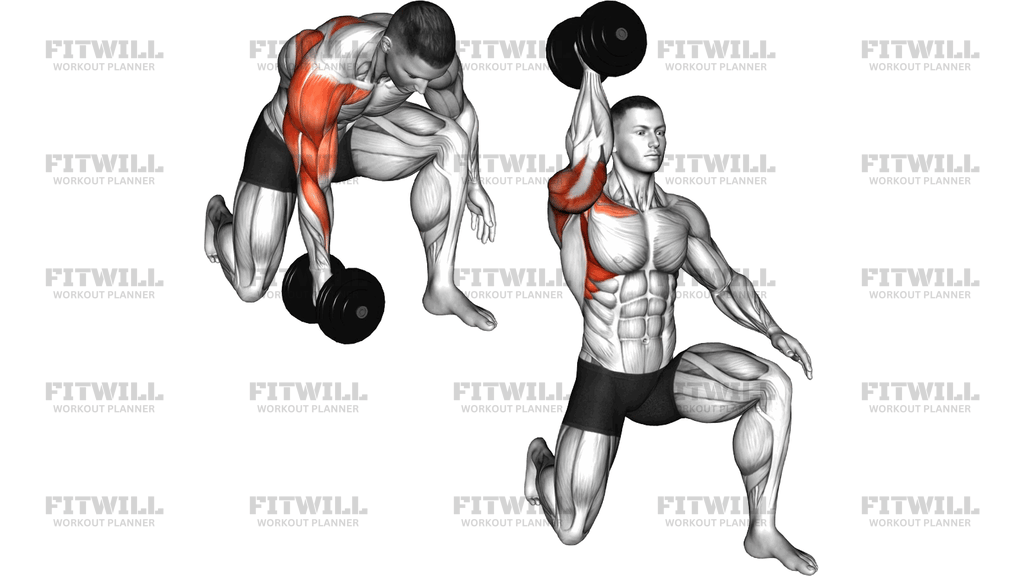
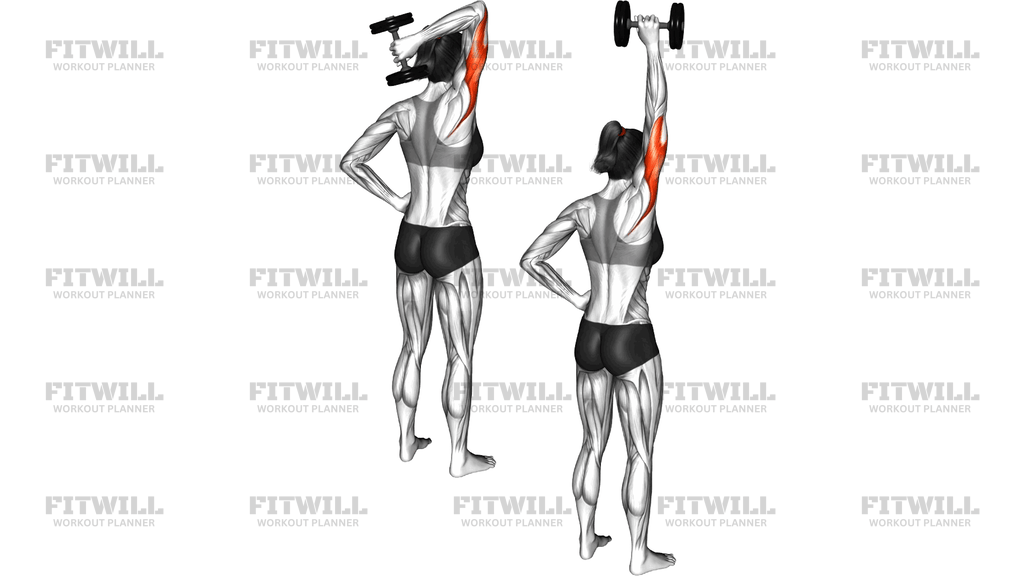
The Dumbbell One-Arm Triceps Extension is a single-arm overhead pressing isolation exercise that trains the back of the upper arm while asking the shoulder and trunk to stay quiet. In the standing version shown here, one dumbbell is held overhead while the free hand helps you stay balanced, making it a useful choice when you want direct triceps work without a lot of body swing.
Because the arm works from a fully flexed elbow into extension overhead, the triceps do most of the work through a long range. The shoulder stabilizers, upper back, grip, and core help keep the upper arm pointed upward so the dumbbell moves on a clean vertical path instead of drifting forward or backward. That makes setup more important here than on many simpler arm exercises.
A solid rep starts by fixing the upper arm in place. Once the elbow is tucked near the head, only the forearm should move as you lower the dumbbell behind or just above the head, then press it back up until the elbow is straight without forcefully locking out. If the rib cage flares or the torso leans, the load is usually too heavy or the set is getting sloppy.
This exercise fits well in an arm day, an upper-body accessory block, or any program that needs extra triceps volume without heavy joint stress from compound pressing. It is also useful as a unilateral drill when one side is weaker or less coordinated, because each arm has to control its own path and range instead of hiding behind the stronger side. Many lifters use it after pressing work to finish the triceps with a cleaner elbow-focused pattern than dips or close-grip presses.
The main safety point is keeping the shoulder comfortable while the elbow bends and straightens overhead. Use a controlled load, keep the wrist stacked over the elbow, and stop the rep if the upper arm starts drifting or the lower back begins to arch. Done well, the Dumbbell One-Arm Triceps Extension gives you a simple, focused way to load the triceps through a clean overhead line of force. It is most useful when you want tension on the triceps without turning the set into a full-body heave.
Fitwill
Log Workouts, Track Progress & Build Strength.
Achieve more with Fitwill: explore over 9600 exercises with images and videos, access built-in and custom workouts, perfect for both gym and home sessions, and see real results.
Start your journey. Download today!




Instructions
- Stand tall with your feet about hip-width apart or in a split stance, and hold one dumbbell overhead in one hand.
- Keep the working elbow close to your ear, your wrist stacked over the elbow, and your free hand on your hip or rib cage for balance.
- Brace your midsection so your ribs stay down and your torso does not lean back as you start the rep.
- Bend only the working elbow to lower the dumbbell behind your head until you feel a strong triceps stretch.
- Keep the upper arm pointed mostly straight up; let the forearm travel while the shoulder stays quiet.
- Press the dumbbell back overhead by straightening the elbow until the arm is vertical again.
- Pause briefly at the top without snapping the elbow hard or shrugging the shoulder toward your ear.
- Lower the weight again under control for each rep, and switch sides only after the set is complete.
Tips & Tricks
- If your upper arm drifts forward, lighten the dumbbell and keep the elbow lined up beside your head.
- A split stance often makes this movement steadier than standing with both feet parallel.
- Do not arch your lower back to get the dumbbell higher; keep the ribs stacked over the pelvis.
- Let the dumbbell travel just behind the head, not so far back that the shoulder has to roll forward.
- A slow lowering phase makes the triceps do more work and keeps the elbow path cleaner.
- Keep the wrist neutral so the dumbbell sits over the forearm instead of folding backward.
- Stop the set when the elbow starts flaring outward, because that usually shifts tension away from the triceps.
- Use the free hand on your hip or ribs to keep your torso from twisting toward the working side.
Frequently Asked Questions
What does the Dumbbell One-Arm Triceps Extension train most?
It primarily targets the triceps, especially when you keep the upper arm fixed and let only the elbow bend and straighten.
Why is one arm used at a time in this exercise?
Working one side at a time makes it easier to spot strength differences and keep the elbow path clean without one arm compensating for the other.
Should my elbow stay right next to my head?
Yes, that is usually the best cue. If the elbow drifts far forward or out to the side, the dumbbell becomes harder to control and the triceps lose tension.
How low should the dumbbell go behind my head?
Lower it until you feel a clear triceps stretch without letting the shoulder roll forward or your lower back arch to chase more range.
Can beginners do the Dumbbell One-Arm Triceps Extension?
Yes, as long as they start light and keep the upper arm still. A lighter dumbbell and a split stance usually make the movement easier to learn.
What are the most common mistakes on this movement?
The biggest errors are flaring the ribs, letting the elbow drift, and turning the rep into a shoulder movement instead of an elbow extension.
Do I need to lock the elbow hard at the top?
No. Straighten the arm fully, then stop under control instead of snapping into a hard lockout.
What can I use instead if overhead work bothers my shoulder?
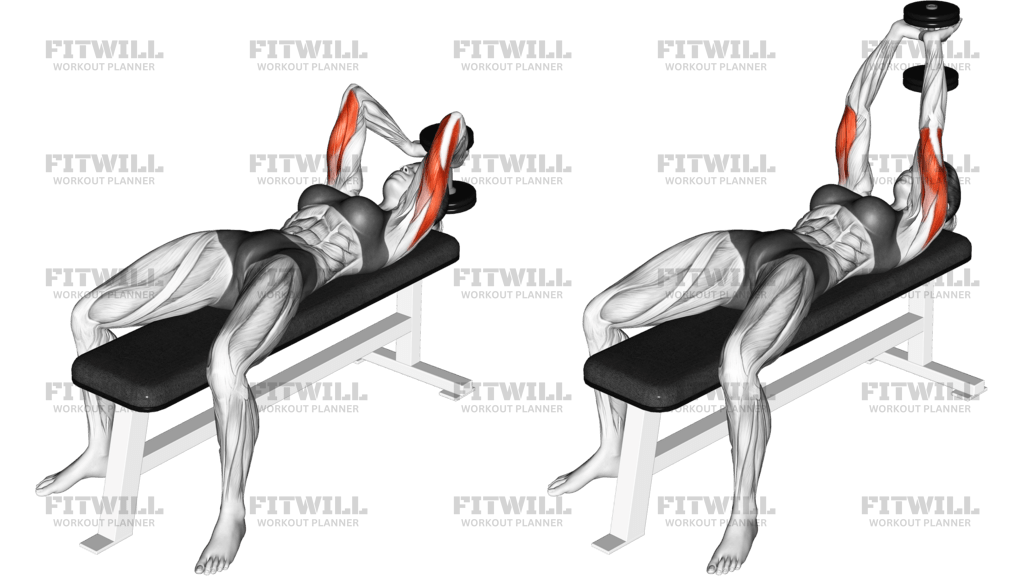
Use a single-arm cable triceps extension or a lying dumbbell triceps extension, which keeps the shoulder in a less demanding position.