Prayer Squat Yoga Pose
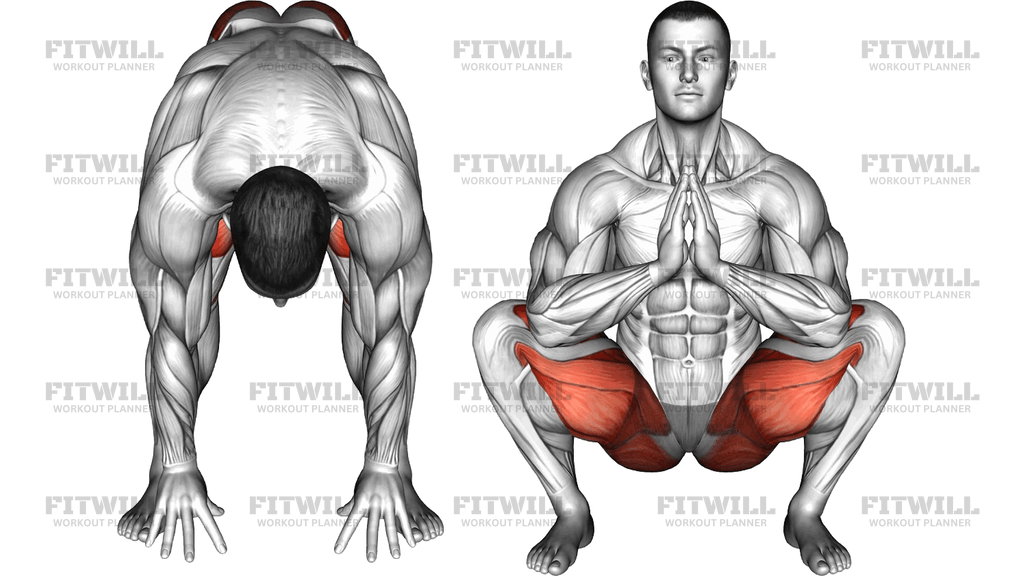
Prayer Squat Yoga Pose is a deep bodyweight squat hold with the palms pressed together at the chest and the elbows driving gently inside the knees. The image shows a mobility-focused position rather than a loaded strength lift, so the main training value comes from hip opening, ankle dorsiflexion, adductor length, and the ability to stay upright while the pelvis sits low between the heels.
This pose is useful when you want to open the groin and inner thighs without completely relaxing the trunk. The elbows create a light outward pressure on the knees, which helps the hips find a more comfortable path into external rotation and abduction. At the same time, the spine stays tall and the chest stays lifted, so the stretch is spread across the hips instead of collapsing into the lower back.
The setup matters more than depth. A good prayer squat starts with the feet slightly wider than hip width, toes turned out enough to let the knees track naturally, and the heels as close to the floor as your mobility allows. From there, the hips sink straight down while the knees open and the torso remains braced. If the heels lift sharply or the chest folds forward, reduce depth, widen the stance a little, or use a heel wedge so the position stays controlled.
Use this pose as a warm-up drill, a hip mobility reset, or part of a recovery session. It can also work as a technical squat patterning tool for beginners who need more confidence in a deep bottom position. The goal is not to force maximum range; the goal is to own a stable, pain-free position and breathe through it long enough for the hips and ankles to settle.
Keep the pressure in the knees gentle, not aggressive. You should feel a strong stretch in the inner thighs, hips, and ankles, but never a sharp pinch in the groin or knees. If the squat is uncomfortable, shorten the hold, raise the heels slightly, or come out of the bottom position before form breaks. Quality and control matter more than how low you can sit.
Fitwill
Log Workouts, Track Progress & Build Strength.
Achieve more with Fitwill: explore over 9600 exercises with images and videos, access built-in and custom workouts, perfect for both gym and home sessions, and see real results.
Start your journey. Download today!




Instructions
- Stand with your feet slightly wider than hip width and turn your toes out enough that your knees can travel in line with them.
- Bring your palms together in front of your chest and lift your sternum so your upper back stays long.
- Brace lightly through your trunk, then begin sitting your hips down between your heels instead of pushing them far back.
- Keep your heels rooted as long as you can while your knees open out and your elbows move inside the knees.
- Press your elbows gently against the inner knees to help lengthen the groin without forcing the position.
- Lower into the deepest squat you can hold with a tall chest, neutral neck, and steady balance through the whole foot.
- Breathe slowly into the ribs and hips while you hold the bottom position for the planned time or rep count.
- To finish, release the pressure from the knees, plant the feet evenly, and stand up under control.
Tips & Tricks
- If your heels pop up early, elevate them on a small wedge or plate so you can stay upright instead of folding forward.
- Let the knees travel over the toes if the feet are stable; forcing them to stay too narrow usually makes the hips feel jammed.
- Keep the palms pressing together at the chest rather than dropping the hands to the floor, which helps the torso stay tall.
- The elbows should guide the knees open gently, not shove them apart; the stretch should feel strong but controlled.
- If the bottom position rounds your low back, come up a few inches and hold that cleaner depth instead.
- Keep pressure distributed across the whole foot, especially the big toe mound, little toe mound, and heel.
- Breathe slowly through the nose or with controlled exhales so the hips can relax instead of bracing harder.
- Stop if you feel sharp knee pain or a pinch in the front of the hip; this pose should feel like a mobility stretch, not a joint jam.
Frequently Asked Questions
What does Prayer Squat Yoga Pose train most?
It mainly targets hip opening, ankle mobility, and inner-thigh length while also demanding trunk control in a deep squat.
Why are the elbows inside the knees in this squat?
That light elbow pressure helps guide the knees outward and gives the hips a clearer path into the bottom position.
Do my heels need to stay flat on the floor?
Flat heels are ideal, but a small heel lift is fine if it lets you keep a tall chest and a controlled squat.
What is the most common form mistake in this pose?
Most people either collapse the chest forward or force the knees open too hard instead of staying tall and relaxed.
How long should I hold the prayer squat?
A short hold is enough for a warm-up, while longer holds work better for mobility as long as the position stays pain-free.
What should I feel during this squat hold?
You should feel a strong stretch in the inner thighs, hips, and ankles, plus some steady work in the trunk to keep you upright.
Is this a good beginner mobility drill?
Yes, beginners can use it if they stay shallow at first and add depth only as the hips and ankles allow.
What can I use if the bottom position feels too difficult?
Raise the heels, widen the stance slightly, or sit onto a yoga block or bench to reduce the depth.