Prisoner Get-Up
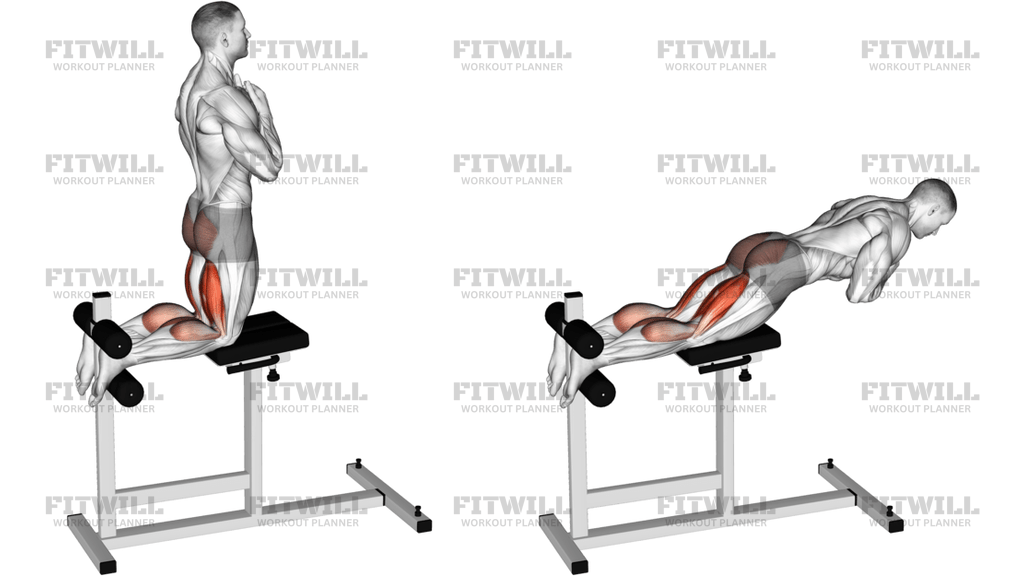
Prisoner Get-Up is a bodyweight rising drill that moves from a kneeling or half-kneeling floor position to a tall standing position while the hands stay locked behind the head. The exercise looks simple, but it demands a lot of coordination: one leg has to drive the body up, the hips have to stay stacked over the feet, and the trunk has to stay upright instead of folding forward. That makes it a useful drill for lower-body strength, balance, and control.
Because the hands stay behind the head, Prisoner Get-Up removes the help of the arms and forces the legs, glutes, and trunk to do the work. The front leg usually takes most of the load as you rise, while the back leg and core help keep you steady through the transition. It is especially helpful if you want a squat- and lunge-like pattern without external resistance, or if you want a controlled warmup before loaded training.
The setup matters more than it first appears. Start with the front foot planted firmly, the back knee on the floor or hovering close to it, and the chest tall. Keep the elbows open, the ribs stacked over the pelvis, and the eyes forward so you do not turn the movement into a crunch or a forward hinge. If the stance is too narrow or the front foot is too far away, the rise gets unstable and the knee often shifts around instead of tracking cleanly.
On the way up, drive through the full front foot and stand without throwing the torso forward. The goal is a smooth transfer from kneeling to half-kneeling, then to a tall stand, followed by the same control on the way back down. A good rep feels deliberate, balanced, and quiet rather than rushed. If you lose balance, shorten the range, slow the descent, or pause in the half-kneeling position before standing.
Prisoner Get-Up is a practical choice for warmups, movement prep, and bodyweight strength circuits because it challenges the hips, quads, glutes, and core together. It also works well as a regression for people who are rebuilding squat pattern confidence or need a lower-impact leg drill. Keep the reps clean, use a knee-friendly surface if needed, and stop the set before the torso starts leaning or the front knee caves inward.
[ Workout Log & Planner ]
Put your next workout in Fitwill
Keep your plan and training log ready when you are.


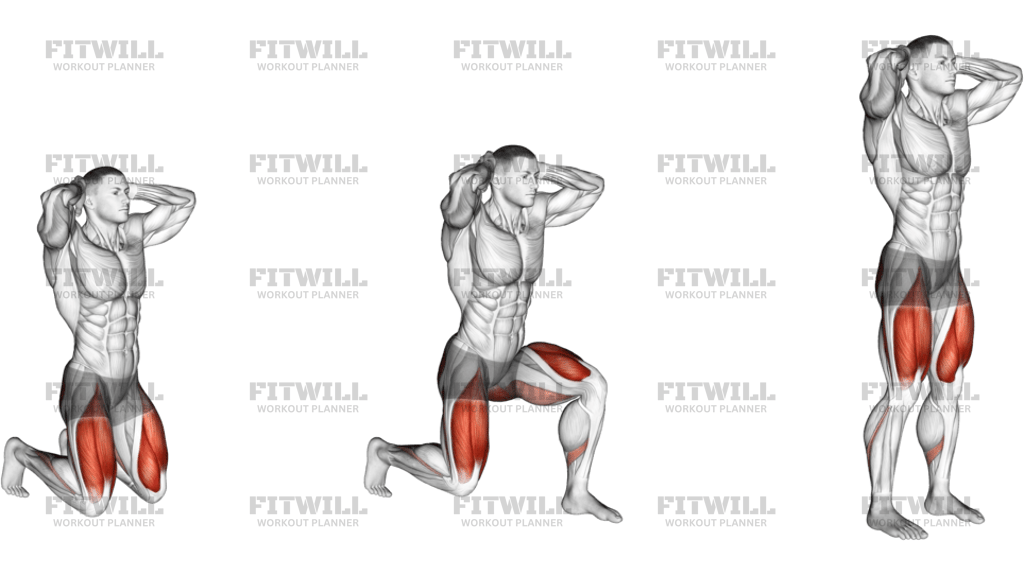
Instructions
- Start in a tall kneeling or half-kneeling position with your hands behind your head, elbows slightly open, chest up, and ribs stacked over your pelvis.
- If you begin from both knees down, step one foot forward so that the front foot is flat and the front shin is close to vertical.
- Press the front foot into the floor and brace your trunk before you try to stand.
- Drive through the heel and midfoot of the front leg to lift your hips and come up to standing without leaning forward.
- Keep the elbows back and the head tall as you finish the rise so the movement stays in the legs instead of turning into a crunch.
- Pause briefly at the top with both feet planted, glutes tight, and weight centered over the arches.
- Reverse the motion by sending the hips back, bending the front knee, and lowering under control to the same half-kneeling or kneeling position.
- Reset your balance before the next rep, then alternate sides if the exercise is programmed that way.
Tips & Tricks
- A folded mat or pad under the back knee makes the transition smoother and keeps the setup stable on hard floors.
- Keep your front foot far enough forward that the knee can stack over the ankle; if it crowds the toes, the stand-up turns into a wobble.
- Think about pushing the floor away with the whole front foot, not just the toes, so the rise stays strong through the glute and quad.
- Do not let the chest dive toward the thigh on the way up; the prisoner position should stay upright and controlled the whole time.
- If you cannot stand without tipping, pause in half-kneeling for a second before finishing the rep instead of rushing through it.
- Keep the elbows softly open instead of yanking them back hard, which can pull the ribcage out of position.
- Lower slowly enough that you can place the back knee quietly instead of dropping into the floor.
- Use this as a quality drill, not a speed drill; the rep should look smooth from kneeling to standing and back again.
Frequently Asked Questions
What does Prisoner Get-Up train most?
It mainly trains the quads, glutes, and core, with a strong balance and coordination demand as you move from kneeling to standing.
Why are the hands behind the head in Prisoner Get-Up?
That position removes arm assistance and forces you to keep your torso upright while the legs do the standing work.
Can beginners do Prisoner Get-Up?
Yes. It is beginner-friendly if you use a slow tempo, a comfortable knee pad, and a short range before progressing to a full stand.
What should the front knee do during Prisoner Get-Up?
The front knee should track over the toes without collapsing inward or drifting far outside the foot as you rise.
Is Prisoner Get-Up more of a mobility drill or a strength exercise?
It can be both, but most people use it as a bodyweight strength and movement-control drill for the hips, knees, and trunk.
What are common mistakes in Prisoner Get-Up?
Leaning the torso forward, pushing off the back leg too much, and losing balance because the front foot is too narrow or too far back are the biggest ones.
Do I need a mat or bench for Prisoner Get-Up?
You only need floor space, but a mat helps under the back knee. A bench is not part of the movement.
How many reps should I do?
This exercise usually works best for controlled sets of low to moderate reps, because quality and balance matter more than speed.