Straight Angle Yoga Pose
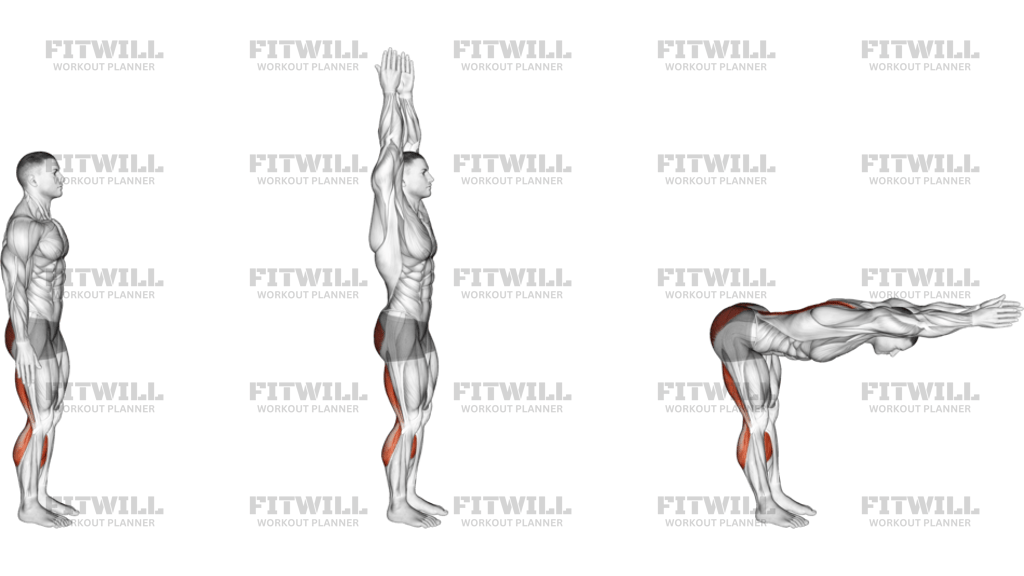
Straight Angle Yoga Pose is a standing bodyweight hinge that asks you to keep the spine long while folding at the hips and reaching the arms in line with the torso. It is useful when you want to open the hamstrings, calves, glutes, and upper back without turning the movement into a sloppy toe touch. The shape also trains body awareness, because the position only feels clean when the ribs, pelvis, shoulders, and breath stay organized together.
The setup matters more than most people expect. Start tall with your feet about hip-width apart, weight spread across the whole foot, and your arms reaching overhead or forward in a long line. From there, send the hips back and hinge until the torso is close to parallel to the floor, keeping a soft bend in the knees if your hamstrings or lower back start to resist. The goal is a long, flat shape from fingertips through the crown of the head to the tailbone, not a collapsed rounded spine.
Straight Angle Yoga Pose is often used as a mobility drill, a warm-up hinge pattern, or a controlled stretch between strength sets. It can help lifters who sit a lot, athletes who need better hamstring length, and beginners who want a simple way to practice loading the hips without weights. When it is done well, the hamstrings do the lengthening work, the glutes help control the hinge, and the shoulders stay active without shrugging up toward the ears.
Breathing is part of the exercise, not an afterthought. Exhale as you fold and keep the ribs from flaring, then inhale into the back of the body while you hold the position or return to standing with the same hip hinge. If you feel the stretch shifting into the lower back, reduce the range and keep more bend in the knees. If the shoulders take over, bring the arms a little lower and keep the neck relaxed so the pose stays long and deliberate.
Use Straight Angle Yoga Pose when you want a controlled forward hinge that improves how the back line of the body feels and how the trunk stays stacked over the hips. It works best as a calm, precise movement rather than a maximal stretch. The safest version is the one where you can keep the spine long, the hips working, and the breath steady from the first rep to the last.
[ Workout Log & Planner ]
Put your next workout in Fitwill
Keep your plan and training log ready when you are.


Instructions
- Stand tall with your feet about hip-width apart, your weight spread through heels, big toe, and little toe, and your arms reaching overhead or forward in line with your ears.
- Soften your knees slightly and stack your ribs over your hips before you move so the fold starts from the hip joints instead of the lower back.
- Send your hips straight back and hinge forward until your torso is close to parallel to the floor, keeping your spine long from tailbone to fingertips.
- Reach the arms forward without shrugging your shoulders, and keep the back of the neck long as you lengthen through the crown of the head.
- Hold the position briefly or keep the pose active for the planned rep or time target while keeping your balance centered over mid-foot.
- Breathe out gently as you settle into the fold, then keep breathing into the sides and back of your ribs without losing the long shape.
- If you are returning to standing, drive the hips forward under control and keep the torso rising as one long unit instead of snapping upright.
- Finish by re-stacking your ribs over your pelvis, lowering the arms only after you are fully upright and stable.
Tips & Tricks
- A small knee bend usually makes the pose cleaner than forcing locked legs and rounding the lower back.
- Think hips back first, not chest down first; that cue keeps the fold where the hamstrings can actually control it.
- If your shoulders creep toward your ears, lower the arms a few inches and keep the shoulder blades wide instead of pinched hard together.
- Keep pressure even through both feet so one hip does not drift back and twist the fold.
- Stop the descent the moment your spine starts to shorten; depth is less useful than a long line through the back of the body.
- Move slowly out of the pose so you do not stand up with a sudden head rush.
- If the stretch is too intense in the hamstrings, shorten the range and keep the torso higher rather than forcing a deeper fold.
- Use the breath to soften the ribs on the exhale and keep the neck relaxed instead of staring at the floor.
Frequently Asked Questions
What does Straight Angle Yoga Pose train the most?
It mainly trains hamstring and posterior-chain length with support from the glutes, calves, core, and shoulders.
Is Straight Angle Yoga Pose a good beginner exercise?
Yes. Beginners can keep a bigger knee bend and a shorter hinge range while learning how to move the hips without rounding the spine.
How deep should I fold in Straight Angle Yoga Pose?
Fold only as far as you can keep a long back and steady balance. A torso near parallel to the floor is enough if the hamstrings limit you.
Why do my lower back and shoulders take over in Straight Angle Yoga Pose?
That usually means the hinge is coming from the spine instead of the hips, or the arms are being lifted too high. Reduce the range and keep the ribs stacked over the pelvis.
Should my knees stay straight in Straight Angle Yoga Pose?
Not necessarily. A soft knee bend is often better because it lets the pelvis hinge back without pulling the lower back into a round position.
Is Straight Angle Yoga Pose more of a stretch or a strength move?
It is mostly a controlled mobility and stretch drill, but the posture also teaches hip-hinge control and trunk organization.
When is the best time to use Straight Angle Yoga Pose?
It fits well in a warm-up, recovery flow, or cooldown, especially before or after lower-body training.
How do I make Straight Angle Yoga Pose easier?
Keep the torso higher, bend the knees more, and lower the arms slightly so the hamstrings and shoulders are not forced to the end range.